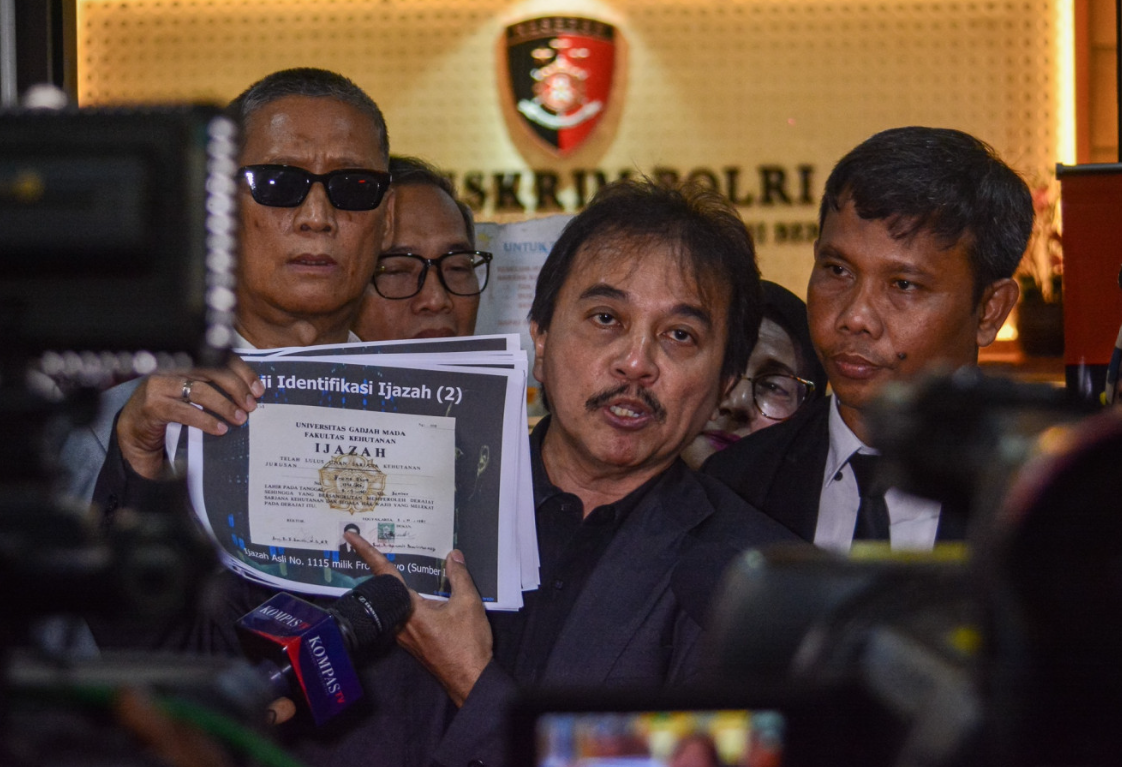
The Jakarta Police detained former youth and sports minister Roy Suryo and health activist Tifauzia 'Tifa' Tyassuma on Friday morning in connection with defamation allegations centred on the authenticity of ex-president Joko 'Jokowi' Widodo's university diploma. The arrests represent a significant turning point in what has become Indonesia's most persistent political-academic controversy, drawing international attention and raising questions about the boundaries between free speech, public accountability, and defamation law in Southeast Asia's largest democracy.
Police apprehended both suspects at their residences as part of standard procedure preceding the handover of the case to Jakarta prosecutors, according to Roy's lawyer Ahmad Khozinudin. The General Crimes Directorate characterised the detention as a routine step in the criminal investigation workflow rather than punitive action. Investigation director Sr Comr Iman Imanuddin explained at a press conference that the measure aimed to prevent administrative delays and complete procedural requirements including health checks and evidence verification before forwarding the case file to the prosecutor's office.
The charges against Roy and Tifa extend beyond mere defamation. Police have accused them of manipulating electronic documents to substantiate claims that Jokowi's diploma from Universitas Gadjah Mada was fraudulent. This allegation carries particular weight given Indonesia's persistent challenges with document forgery and credential verification across government institutions. The Electronic Information and Transactions Law under which they face prosecution carries maximum sentences of six years imprisonment, underscoring the gravity authorities assign to these allegations.
The diploma controversy itself has deep roots in Indonesian politics. Claims questioning the legitimacy of Jokowi's academic credentials first surfaced on social media in 2019, reflecting broader scepticism about transparency in Indonesia's political establishment. Rather than dissipating, the dispute has metastasised into multiple legal battles spanning civil lawsuits, police investigations, and court proceedings across 2022 through 2025. Roy Suryo, who previously served in the administration of former president Susilo Bambang Yudhoyono, became one of the most vocal sceptics, using his political platform and public profile to amplify concerns about documentation authenticity.
A turning point arrived in May 2025 when Indonesia's National Police formally declared Jokowi's diploma authentic and closed their initial investigation into forgery allegations. This declaration might have laid the matter to rest, but Roy and other critics refused to accept the police findings. During a case review hearing in July 2025, Roy and his associates reiterated their objections, essentially reopening a chapter authorities had seemingly closed. This recalcitrance appears to have prompted prosecutors to pivot toward pursuing defamation charges rather than engaging further with substantive questions about the diploma's authenticity.
The detention of Roy and Tifa has drawn immediate criticism from legal observers and free speech advocates who question whether using defamation law represents proportionate response. Their lawyer Refly Harun characterised Friday's arrest as excessive, noting that his clients had consistently complied with police summonses and reporting requirements. He pointed out the illogic of detaining them when the case transfer to prosecutors would not occur until Monday, suggesting the arrest served purposes beyond procedural necessity.
The case implicates fundamental tensions within Indonesia's legal framework and political culture. Defamation law has historically served as a tool for powerful figures to silence critics, raising concerns about chilling effects on public discourse. When applied against individuals making allegations about high-office credentials, defamation prosecutions risk conflating legitimate accountability journalism with criminal conduct. This dynamic carries particular resonance for Southeast Asian media observers who have watched similar cases unfold across the region, from Thailand to Cambodia, where powerful actors have weaponised legal mechanisms against political opponents and investigative voices.
Interestingly, the police case against alleged defamers originally named nine individuals, but authorities subsequently dropped charges against three suspects—Eggi Sudjana, Damai Hari Lubis, and Rismon Sianipar—following mediation efforts. This inconsistency raises questions about selective prosecution and the criteria determining which critics face legal consequences. The distinction between those charged and those released suggests negotiations, deal-making, or differential assessments of culpability that remain opaque to public scrutiny.
For Malaysian observers, the Roy Suryo case offers instructive parallels and contrasts. Both countries grapple with questions about managing high-profile political controversies, balancing freedom of expression against protection from defamation, and ensuring institutional accountability. Yet Indonesia's handling appears more aggressive in pursuing critics than Malaysian practice, where defamation cases against political figures, while not uncommon, typically follow different procedural pathways and evidentiary standards. The Indonesian approach of escalating from fraud investigations to defamation prosecutions reflects institutional choices that merit careful consideration about proportionality and democratic norms.
Moving forward, the case trajectory will depend substantially on prosecutor decisions and judicial interpretation. If courts convict Roy and Tifa under the ITE Law, the verdicts could establish troubling precedent regarding when public advocacy about official credentials constitutes criminal defamation. Conversely, acquittals would validate arguments that such allegations, however controversial, merit protection as political speech. The outcome will reverberate across Indonesia's media landscape and opposition politics, potentially deterring future scrutiny of government officials' qualifications or encouraging more aggressive investigative approaches depending on how courts ultimately rule.
The diploma controversy itself, despite police certification of authenticity, may never fully disappear from Indonesian public discourse. Institutional trust deficits run deep, and segments of the population remain sceptical about official findings. Prosecuting critics rather than addressing underlying credibility questions risks perpetuating suspicions that authorities prioritise protecting Jokowi's legacy over transparent governance. Whether Indonesian legal institutions can navigate this minefield while preserving both institutional integrity and democratic freedoms remains an open question with significance extending well beyond Jakarta's courtrooms.