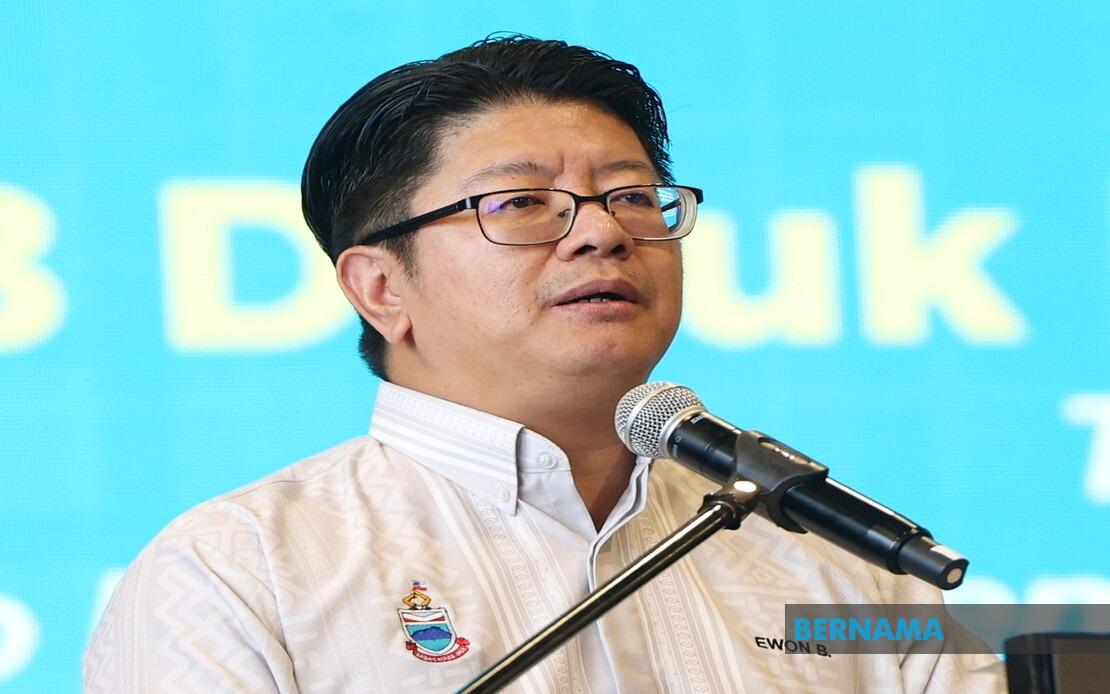
Datuk Ewon Benedick and Datuk Donald Peter Mojuntin have secured their positions as president and deputy president of the United Progressive Kinabalu Organisation (UPKO) for the 2026-2029 term following the party's leadership election held in Penampang. The outcome reflects strong internal party cohesion, with no challengers emerging for either of the two senior posts, signalling broad acceptance of the current direction within UPKO's hierarchy.
Beyond the top two positions, UPKO's five vice-presidential roles went uncontested, with Jairaiaz Joseph, Datuk Wong Thien Fook, Datuk Pangiran Lalung, Datuk Basari Sarikun, and Datuk Dr Laurentius Nayan Ambu retaining their places. This consensus approach to leadership succession occurred during the 17th UPKO triennial delegates conference, where party members gathered to chart the organisation's course through the coming three-year cycle. The lack of competitive races in these elevated offices underscores either considerable satisfaction with incumbents or a calculated strategy by potential challengers to avoid divisive contests that might fracture party unity ahead of the next electoral cycle.
In his remarks at the conference's conclusion, Ewon articulated a vision centred on democratic participation and inclusive party governance. He acknowledged the significance of the electoral process, regardless of its competitive nature, framing the exercise as essential to party legitimacy and member engagement. His emphasis on democratic norms carries particular weight in Malaysian politics, where intra-party elections serve as crucial mechanisms for maintaining internal democratic credentials and member confidence in leadership selection processes.
Ewon's statement that the election should strengthen rather than weaken UPKO addresses a common concern in Malaysian political parties: that unopposed elections or consensus decisions might suppress internal debate or indicate forced alignment rather than genuine agreement. By explicitly noting that all party members constitute UPKO's extended family, he attempted to bind together any potential factions and create psychological investment in collective outcomes, a technique common in coalition politics where party unity directly translates to electoral viability.
The new leadership structure has immediate implications for UPKO's representation within the Gabungan Rakyat Sabah (GRS) coalition framework. As a constituent party of GRS, UPKO's elected representatives and party leaders now carry responsibility for articulating party positions to Sabah Chief Minister Datuk Seri Hajiji Noor, who chairs the coalition. This relationship shapes how UPKO members engage with government policymaking and ensures that party resolutions receive consideration during coalition decision-making processes. The clarification of these leadership lines establishes the formal channels through which UPKO influences broader GRS political direction in Sabah.
Beyond parliament and state assembly, UPKO representatives will play crucial roles in legislative debates and policy discussions. Ewon's specific reference to parliamentary and state assembly forums emphasises that leadership legitimacy depends not merely on internal party recognition but on active engagement with government institutions and public accountability through legislative proceedings. This positions UPKO's elected members as bridges between party organisation and state governance structures.
Significant shifts occurred within UPKO's subsidiary wings, suggesting that while senior leadership achieved consensus, the party continued evolving its intermediate structures. Carlye Lajimin assumed the UPKO Youth chief position, with Newbaxter Tibin as deputy, replacing previous occupants and bringing fresh energy to youth mobilisation efforts. Youth wings function as crucial recruitment and training grounds for future party leaders, making leadership changes in these structures important bellwethers of organisational renewal even when senior posts remain stable.
Within the UPKO Women's wing, Mohina Sidom successfully defended her position as chief, demonstrating her ability to retain membership confidence and continue shaping the party's engagement with female voters and members. Lomiti Jahan's election as deputy chief represents advancement for women in party hierarchy. Women's political participation remains significant in Malaysian electoral dynamics, and UPKO's attention to women's wing leadership reflects recognition that female voters constitute vital constituencies in Sabah's electoral landscape.
The Young Generation wing saw Emmanuel Atin elected as chief with Alison Chan as deputy, indicating UPKO's commitment to developing generational leadership succession. This structural focus on younger cohorts carries implications for party sustainability, as Malaysian political organisations increasingly emphasise youth development to address demographic shifts and changing voter expectations. UPKO's deliberate cultivation of young leadership tiers suggests strategic thinking about medium-term party evolution.
The cascading leadership changes across multiple wings, even as senior positions remained unchanged, illustrate sophisticated internal management. Rather than wholesale leadership overhauls that might disrupt party functioning, UPKO appears to have adopted a measured approach allowing for gradual renewal while preserving institutional continuity at the apex. This balancing act between stability and evolution reflects political maturity and understanding that sustainable organisations require both consistency and adaptive capacity.
For Malaysian observers of Sabah politics, UPKO's leadership continuity matters because this party wields disproportionate influence in state coalition mathematics. As a component of GRS and participant in the state government, UPKO's internal decisions ripple through Sabah's political architecture. The unopposed election of Ewon and Mojuntin suggests the party enters its next three-year cycle without apparent internal tensions threatening coalition coherence, though observers should monitor whether consensus masques underlying disagreements that might later surface.
The broader significance extends to regional coalition dynamics in East Malaysia. UPKO's demonstrated stability and internal cohesion contrast with volatility in other parties, potentially positioning the organisation as a reliable coalition partner as Sabah approaches future electoral cycles. The leadership's emphasis on democratic processes and inclusive governance provides ballast against accusations of authoritarian party management, which periodically plague Malaysian political organisations.
Looking ahead, this leadership structure will navigate critical issues affecting Sabah's political future, including fiscal federalism, resource management, and representation of indigenous interests. UPKO's ability to translate party resolutions into concrete government outcomes during the 2026-2029 term will ultimately determine whether the unopposed leadership renewal represents a genuine mandate or a missed opportunity for revitalising internal debate and accountability mechanisms within the party structure.

