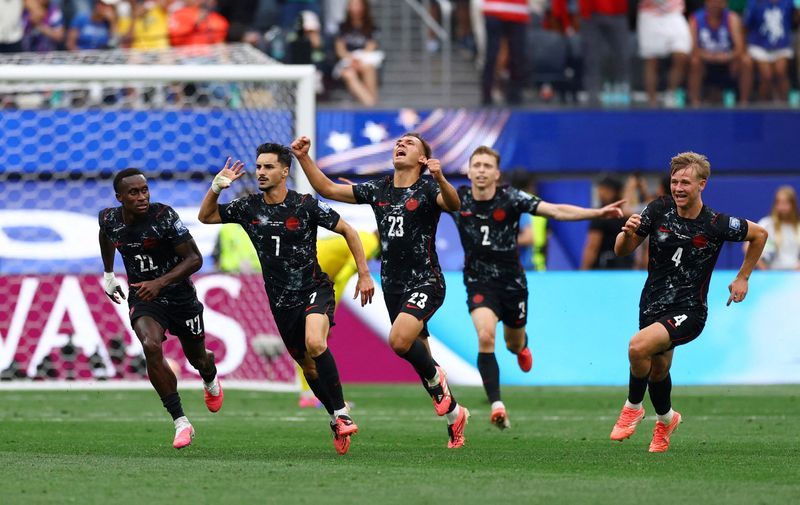
Canada has achieved a historic milestone in World Cup football, securing a place in the knockout stages for the first time as co-hosts of the tournament. The decisive moment came when Stephen Eustaquio unleashed a powerful strike from just outside the penalty area in the 92nd minute, beating South African goalkeeper Ronwen Williams at Los Angeles Stadium on Sunday. The 1-0 victory over South Africa represents a watershed moment for Canadian football, marking their first progression beyond the group stage in three World Cup appearances and rewarding their recent investment in the sport on home soil.
The match itself reflected the cautious nature of two nations competing in their first knockout fixture at a World Cup. South Africa appeared content to absorb Canada's attacking play and probe for opportunities on the counter, seemingly willing to test their fortune in extra time or a penalty shootout if necessary. This defensive approach yielded little in the way of clear chances, leaving the contest tightly contested throughout a relatively quiet first half where both teams measured their opponent and avoided taking unnecessary risks.
Canada's most promising opportunity before the interval came from a corner kick that created chaos in the South African box. Moise Bombito directed a header toward goal, but Aubrey Modiba cleared the danger off the line with a crucial intervention. Tajon Buchanan's immediate follow-up struck goalkeeper Williams directly in the chest, denying what would have been an early breakthrough. Minutes later, Richie Laryea went to ground under a challenge in the penalty area, prompting an appeal for a penalty kick that seemed to have merit. However, after VAR review, the referee maintained his decision not to award a spot kick, a call that incensed Canada's vocal supporters and drew animated protests from coach Jesse Marsch as teams departed for halftime.
Frustration mounted for the Canadians in the opening stages of the second half as South Africa maintained their cautious approach, showing little urgency to press forward or create attacking situations. This passive strategy left the contest a tense affair, with neither side willing to commit fully to an attacking posture. Canada generated another half-chance just before the scheduled hydration break when Tani Oluwaseyi's shot found Williams, and Jonathan David's header from the rebound went wide after Mbekezeli Mbokazi threw himself in front of the danger to clear the ball.
The breakthrough finally arrived in stoppage time, when Eustaquio received the ball at the edge of the South African penalty area and struck it with considerable venom past the diving Williams. The goal sparked scenes of euphoria among Canada's supporters, whose red jerseys dominated the stands at the Los Angeles venue. Eustaquio, reflecting on the moment, expressed the collective emotion coursing through the team and their fans. "When I shot it, I felt everybody shot it with me," he said afterward, capturing the sense that the entire nation had channelled its determination into that single strike.
Canada's accomplishment carries particular significance given the circumstances surrounding their participation. As co-hosts, they had competed primarily on home soil throughout the group stage before being forced to travel to California for their knockout match, managing only three days of recovery after a disappointing 2-1 defeat to Switzerland in their final group fixture. This compressed schedule, combined with the pressure of performing in front of their own supporters, makes their advancement all the more impressive from a psychological standpoint.
Coach Jesse Marsch acknowledged that his team had created opportunities throughout the contest but had failed to convert them with the clinical finishing required at the World Cup's business end. "We weren't lethal enough," he conceded, before praising his players' character and determination. When describing Eustaquio's crucial contribution, Marsch highlighted the hope he felt as the ball left the Canadian midfielder's boot. The coach's post-match comments reflected an understanding that his squad had displayed the resilience and mentality expected of a side competing at home. He designated his players as "Canadian heroes," acknowledging the historical weight of their achievement.
Canada will face either the Netherlands or Morocco on July 4 in Houston for a place in the quarter-finals, a matchup that could see them advance even further in the tournament. Their progression represents a vindication of the federation's long-term strategy and investment in player development, offering hope that the nation can establish itself as a consistent competitive force in international football. The victory also provides inspiration for other emerging nations in CONCACAF, demonstrating that with organization and determination, established football powers can be challenged.
South Africa, meanwhile, can take pride in reaching the knockout rounds for the first time in their fourth World Cup appearance. The Bafana Bafana advanced from their group ahead of teams including Portugal and Uruguay, suggesting genuine progress in their continental standing. However, their conservative approach in the knockout phase backfired spectacularly, with their failure to impose themselves offensively leaving them vulnerable to precisely the type of sucker punch that Eustaquio delivered. The South African exit raises questions about their tactical approach and whether a more positive mentality might have yielded different results.
Uncertainty surrounds the future of South African coach Hugo Broos, the 74-year-old Belgian tactician who guided his team to the knockout stages. While Broos declined to make any firm commitments regarding his continued involvement with the national team, he made clear that this World Cup represents his final opportunity at the tournament level. His remarks suggest a likely retirement from international coaching, bringing to a close a tenure that achieved the notable feat of qualifying from a challenging group but ultimately delivered a disappointing knockout performance.

