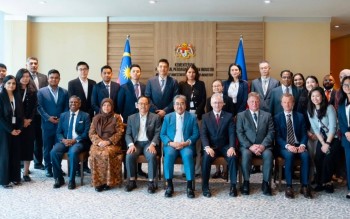
A substantial European business delegation wrapped up three days of high-level discussions with Malaysian government ministries this week, signalling sustained European interest in deepening economic ties with Malaysia. The visit, organised by the EU-ASEAN Business Council, brought together more than 70 representatives from over 25 European companies to engage directly with policymakers and explore avenues for strengthened bilateral cooperation across multiple sectors.
The timing of the visit underscores the mounting momentum in Malaysia-EU relations, particularly as negotiations toward a comprehensive free trade agreement enter a critical phase. EU-ASEAN Business Council executive director Chris Humphrey characterised the three-day window from August 4-6 as a valuable opportunity for European enterprises to absorb policy signals from Malaysian government leadership, seek clarifications on regulatory frameworks, and demonstrate tangible support for the nation's reform trajectory. The delegation's itinerary encompassed meetings with Bank Negara Malaysia's Governor and several cabinet ministers responsible for portfolios ranging from investment and finance to natural resources and energy transition.
At the Ministry of Economy, the delegation engaged extensively on Malaysia's ongoing reform initiatives, extracting clarifications on specific reform packages currently being implemented. Beyond administrative matters, the discussions pivoted toward Malaysia's environmental commitments, with European investors expressing enthusiasm for participating in the country's green transition agenda. Circular economy development, sustainable development frameworks, and digitalisation pathways emerged as particular areas of interest, reflecting the European business community's growing alignment with climate-conscious investment strategies.
Financial and fiscal discussions occupied significant bandwidth during the delegation's meeting at the Finance Ministry. European companies sought to understand Malaysia's evolving approach to taxation, government procurement procedures, and the broader investment climate that would shape their operational environments. According to Humphrey, these conversations proceeded in an exceptionally constructive atmosphere, with government interlocutors conveying a welcoming stance toward foreign capital inflows and demonstrating clarity on policy direction.
A prominent element of the delegation's engagement centred on the Malaysia-EU free trade agreement negotiations, which have already completed four negotiating rounds. Both parties have targeted 2027 as the completion date for finalising the comprehensive pact. The next round of negotiations is scheduled to take place in Brussels from September 21-25, with expectations that a sixth round could occur before year's end. Humphrey expressed confidence that the existing momentum is sufficiently robust to permit full conclusion of the agreement by mid-2027, a timeframe that would represent substantial progress for an undertaking of this complexity and scope.
The rationale driving European investors' attraction to Malaysia remains multifaceted. Malaysia's strategic geographical positioning within Southeast Asia, combined with its developed infrastructure and digital connectivity, creates an appealing foundation for European enterprises seeking regional bases for operations. The availability of a skilled workforce, abundant natural resources, and accessible land further enhance Malaysia's competitive proposition as an investment destination within the broader Asian context.
Trade volumes between Malaysia and the European Union reflect the significance of this economic relationship. In 2025, bilateral trade in goods reached €48.9 billion, with Malaysian exports contributing €30.3 billion and European products accounting for €18.6 billion entering the Malaysian market. These figures position the EU among Malaysia's five largest trading partners and underscore the bilateral relationship's material importance to both economies.
Beyond merchandise trade, European capital has established a substantial footprint within Malaysia's economy. The stock of European direct investment in Malaysia reached €33.1 billion in 2024, signalling deep operational commitments by multinational enterprises and positioning Malaysia as a leading investment destination for European capital seeking Asian exposure. This capital base underpins manufacturing operations, services delivery, and emerging technology initiatives across multiple Malaysian states.
The delegation's agenda extended into sectoral opportunities spanning customs administration, healthcare provision, and agricultural development. Discussions with the Customs Department focussed on streamlining clearance procedures and advancing digitalisation within the customs apparatus—efficiency improvements that would reduce transaction costs for importers and exporters alike. Additionally, the European business community identified combating illicit trade, particularly in tobacco products, as an area requiring coordinated effort, recognising that counterfeit and smuggled goods create unfair competitive dynamics and generate public health risks.
Healthcare emerged as another sector garnering significant European business attention. Conversations with Malaysia's Health Ministry explored mechanisms through which European enterprises could contribute to meeting Malaysia's evolving healthcare requirements. Discussion points included innovative financing structures that could improve healthcare access, medicines availability, and self-care promotion strategies—reflecting broader global trends toward preventive medicine and efficiency in healthcare delivery systems.
The breadth of sectoral engagement—spanning transport, digital infrastructure, agriculture, food security, tourism, and cultural sectors—illustrates the comprehensiveness of Malaysia-EU economic interdependence. Rather than confining discussions to traditional trade categories, both parties are proactively identifying emerging opportunities within knowledge-intensive industries and sustainability-oriented ventures. This multisectoral approach suggests that future Malaysia-EU trade and investment flows will increasingly concentrate within higher-value domains requiring technical expertise and capital sophistication.
For Malaysian policymakers, the delegation's visit carries implications regarding the nation's competitive positioning within Southeast Asia. As regional economies vie for foreign direct investment, Malaysia's capacity to demonstrate political stability, regulatory clarity, and commitment to sustainable development practices becomes increasingly consequential. The European business community's engagement signals that Malaysia remains favourably positioned within investor calculations, though maintaining this competitive advantage requires sustained commitment to reforms and transparent governance frameworks.

