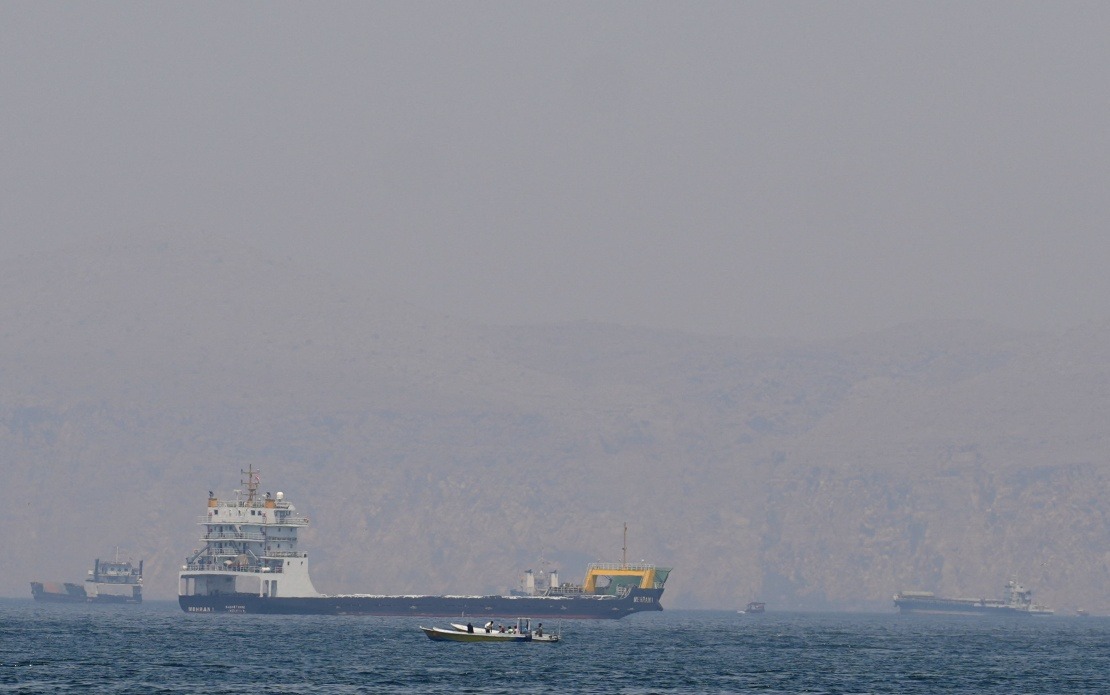
The European Union and the Gulf Cooperation Council issued a forceful joint statement on Saturday rejecting what they characterised as unlawful attempts by any state to exercise sovereignty or control over the Strait of Hormuz, one of the world's most strategically important maritime passages. The declaration came following a High-Level Forum on Regional Security and Cooperation convened in Brussels on July 13, with EU foreign policy chief Kaja Kallas and Bahraini Foreign Minister Abdullatif bin Rashid Al-Zayani, speaking in his capacity as chair of the GCC Ministerial Council, leading the discussions. The unified position represents a significant show of solidarity between the Western bloc and the Arab states, underscoring shared concern over maritime security in the volatile Middle Eastern region.
The joint communiqué explicitly stated that no bilateral arrangement, understanding, or memorandum between states may lawfully regulate or restrict the right of passage through an international strait. This language directly addresses broader geopolitical tensions and appears calibrated to counter specific actions that have disrupted shipping lanes in recent months. The blocs emphasised that under international law, particularly as codified in the UN Convention on the Law of the Sea, the right of passage is guaranteed universally and cannot be subjected to any state's control or authorisation requirements. Such multilateral backing for established maritime law sends a clear message to any actor considering unilateral restrictions on this critical waterway that would threaten global trade and energy security.
The statement reinforced that freedom of navigation, specifically through the Strait of Hormuz designated as an international strait, remains protected under established international law. The EU and GCC stressed that vessels from all nations enjoy these rights equally, and crucially, no single state possesses the authority to suspend, obstruct, or impose conditions on such passage. This reaffirmation becomes particularly significant given that approximately one-third of all seaborne traded petroleum passes through the Strait of Hormuz, making any disruption a matter of genuine global consequence. For Malaysian readers and the wider Southeast Asian business community, such assurances regarding unimpeded maritime access carry direct implications for regional trade routes and energy imports.
A substantial portion of the joint statement condemned Iranian attacks on commercial vessels transiting the waterway and strikes against sovereign territories of multiple regional nations. The blocs characterised these incidents as having endangered civilian lives and seafarers while simultaneously violating international law and UN Security Council Resolution 2817. This condemnation proved unequivocal, with the EU and GCC asserting that such actions cannot be justified under any circumstances whatsoever. The severity of language used suggests that both the Western bloc and Gulf states view the escalating incidents not as isolated provocations but as a systematic pattern requiring immediate diplomatic and potentially stronger intervention.
The statement contained a pointed call on Iran to cease all attacks and interference with maritime navigation immediately and unconditionally. Furthermore, the two blocs demanded that the Strait of Hormuz remain open without conditions, transit fees, or service charges. This demand directly addresses longstanding concerns that certain actors might attempt to levy charges on shipping passing through the waterway, an arrangement that would effectively constitute an unlawful tariff on international commerce. The rejection of such mechanisms reflects the international community's determination to preserve the strait's status as a truly international passage governed by established maritime conventions rather than individual state dictates.
The EU and GCC expressed complete solidarity with countries affected by recent incidents and seafarers of all nationalities who have faced heightened risks. This inclusive language recognises that maritime security concerns transcend national boundaries and national interests. By extending solidarity to all seafarers regardless of their nationality or flag state, the joint statement reframes the issue not as a regional dispute but as a matter affecting the global maritime community. For Malaysian vessel operators and those employed in Singapore, Dubai, or other regional shipping hubs, this international backing provides some reassurance that their safety and operational security matter to the broader international order.
Both blocs committed to maintaining close coordination aimed at safeguarding freedom of navigation and protecting international shipping and seafarers from harm. This pledge suggests that beyond diplomatic statements, concrete mechanisms and possibly military coordination may be activated to ensure that maritime routes remain secure and accessible. The EU and GCC indicated their intention to sustain cooperative efforts in monitoring, reporting, and responding to incidents that threaten shipping security. Such coordination could include information sharing, joint patrols, or support for commercial vessels transiting particularly vulnerable sections of the waterway.
Despite their firm condemnation and clear demands, the EU and GCC simultaneously appealed for restraint from all parties involved in the escalating tensions. Both blocs reaffirmed their commitment to dialogue and diplomacy as the primary mechanisms through which the underlying crisis should be resolved and stable freedom of navigation restored. This dual approach—combining strong criticism and demands with calls for negotiated settlement—reflects a recognition that military escalation could catastrophically disrupt global energy markets and shipping networks. The emphasis on dialogue suggests that Western and Gulf state actors view ongoing diplomatic channels as viable, even amid heightened military tensions.
The broader context reveals that Middle Eastern tensions have intensified significantly, with the United States and Iran engaged in a pattern of tit-for-tat military actions and counteractions. These escalations have persisted despite a Pakistan-brokered memorandum of understanding concluded in June that ostensibly aimed at ending conflict and establishing lasting peace arrangements. The failure of that diplomatic agreement to moderate tensions underscores how deeply entrenched the underlying disputes have become and how difficult achieving sustainable de-escalation proves in practice. For Malaysian policymakers and business leaders monitoring regional developments, this pattern suggests that volatility in the Strait of Hormuz may persist regardless of announced diplomatic breakthroughs, warranting contingency planning for supply chain disruptions and energy price fluctuations.
The implications for Malaysia and other Southeast Asian nations extend beyond immediate concerns about shipping safety, though that dimension remains significant. As an energy-importing region heavily dependent on Middle Eastern oil and liquefied natural gas, Southeast Asia faces potential economic consequences should serious disruptions materialise in the Strait of Hormuz. The joint EU-GCC statement represents an attempt to prevent such disruptions through unified international pressure on all actors to respect established maritime law. However, the persistence of attacks despite previous warnings suggests that diplomatic and legal frameworks alone may prove insufficient without stronger enforcement mechanisms or fundamental shifts in the calculations of actors currently challenging the status quo. The international community's ability to maintain freedom of navigation through this critical waterway will substantially influence regional economic stability and energy security across the broader Asian region.

