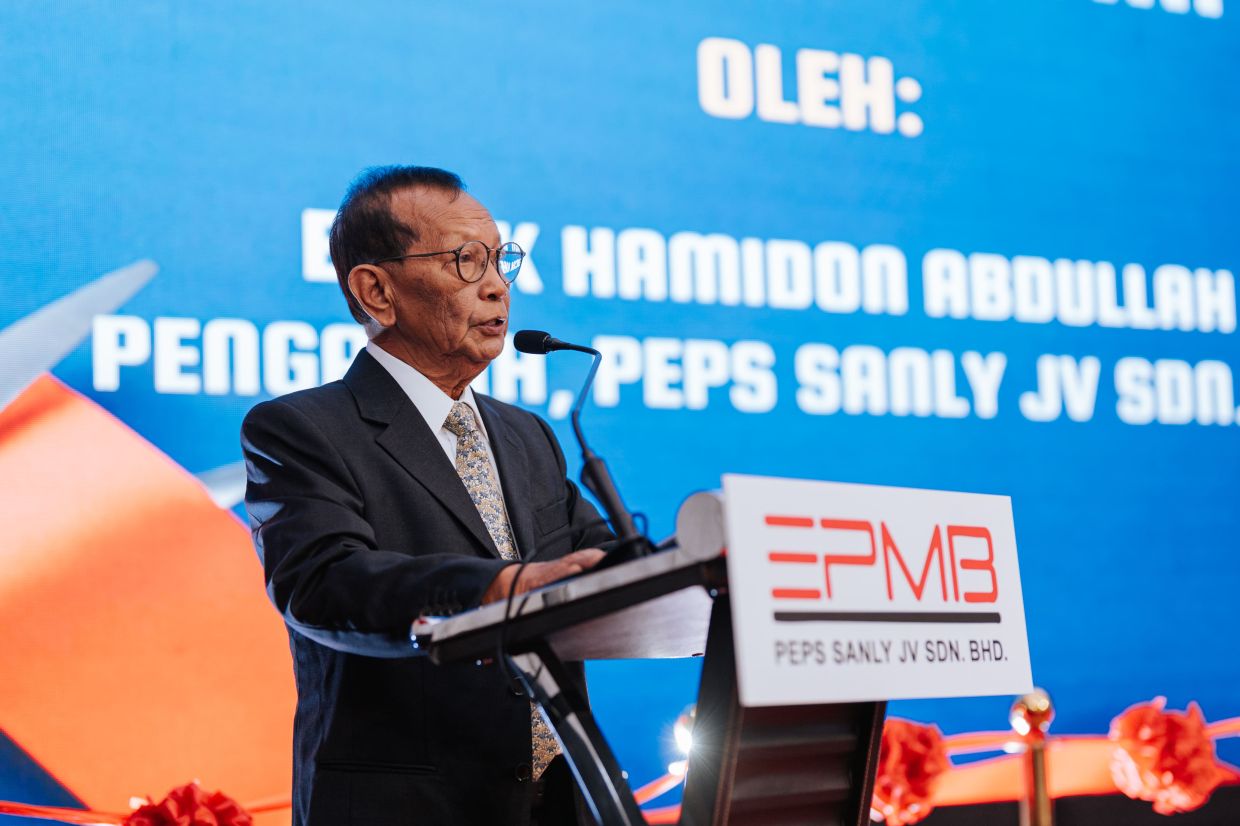
A significant expansion of Malaysia's automotive supply chain has taken shape with the opening of EPMB's latest manufacturing facility in Tanjong Malim. The new plant, operated through Peps Sanly JV Sdn Bhd—a joint venture between EPMB and China-based Sanly Auto Parts Co Ltd—commenced production in October 2025 and represents a strategic move to deepen localisation of component manufacturing for Proton vehicles. The facility's establishment in the Automotive High Technology Valley (AHTV) underscores the ongoing development of Malaysia's dedicated automotive ecosystem and the country's continued positioning as a regional manufacturing hub.
The operation spans 9,909 square metres and has been engineered to handle substantial production volumes. With a monthly output capacity of 40,000 car sets, the facility can theoretically deliver up to 480,000 complete sets annually, providing EPMB with significant production firepower to meet Proton's demand for critical chassis components. This capacity level signals confidence in both the partnership and Proton's market expansion plans, suggesting the national carmaker anticipates sustained growth across its model range over coming years.
The plant will manufacture three essential chassis components: front corner modules, subframe modules, and rear axle module assemblies. These parts will supply Proton's current lineup including the AMA01 platform—which underpins the Saga, Persona, and Iriz models—as well as the forthcoming AMA02 and AMA05 platforms. This diversification across multiple models and generations demonstrates that the facility is designed not merely as a stop-gap solution but as a cornerstone supplier capable of supporting Proton's product roadmap well into the medium term.
The partnership itself traces back to February 2025, when EPMB formally established its joint venture with Sanly China with the explicit goal of localising the manufacturing of chassis components. Initially targeting the Proton Saga AMA01, the collaboration has rapidly expanded in scope, reflecting the mutual confidence both parties hold in the partnership's potential. This relatively swift scaling from announcement to full operations—less than a year—indicates efficient project execution and strong alignment between the Malaysian supplier and its Chinese partner.
According to Hamidon Abdullah, EPMB's executive chairman, the venture with Sanly represents more than a simple manufacturing agreement. He characterised it as a conduit for EPMB to access Sanly's extensive expertise in metalworking, assembly processes, and automotive chassis systems design. The collaboration also grants EPMB indirect exposure to the broader Chinese automotive manufacturing ecosystem, an environment known for rapid innovation cycles, competitive pricing structures, and high-volume production capabilities that have made Chinese automotive suppliers globally competitive.
The significance of Sanly's existing relationships within the Chinese automotive sector cannot be understated. With strong ties to Geely—the parent company of Volvo and Polestar—and partnerships with other major Chinese original equipment manufacturers, Sanly brings institutional knowledge and established supply chain relationships that would take a standalone Malaysian manufacturer years to develop independently. This access to networks and expertise represents intangible value that extends well beyond the physical transfer of technology or capital investment.
Hamidon emphasised that the partnership directly addresses Proton's dual imperative to improve cost competitiveness while maintaining quality assurance standards. In an increasingly challenging global automotive market where cost pressures from electrification and technological advancement continue to mount, the ability to source complex chassis components at competitive prices without sacrificing durability or precision becomes a competitive advantage. By leveraging Sanly's manufacturing ecosystem and cost structures, EPMB can help Proton navigate this challenging transition period.
The new facility also serves as validation of EPMB's enduring relationship with Proton, a partnership spanning nearly four decades. This longevity reflects consistent trust and reliable performance, but the venture also signals a deepening of that relationship at a critical juncture. As Proton pursues its regional expansion strategy—particularly in Southeast Asian markets where the company has been intensifying its presence—and simultaneously transitions toward electric vehicle manufacturing, the need for efficient, high-quality, locally-produced components becomes increasingly important. The Tanjong Malim facility positions EPMB as a key enabler of these strategic ambitions.
Proton's electric vehicle roadmap represents a watershed moment for the national automotive industry, and the availability of locally-manufactured chassis components will be crucial for the economic viability of EV production in Malaysia. Chassis modules are among the most labour and capital-intensive components in vehicle assembly, and having these produced domestically rather than imported reduces logistics costs, improves supply chain resilience, and strengthens the case for EV production economics. The Tanjong Malim facility therefore represents more than incremental capacity—it is foundational infrastructure for Malaysia's automotive future.
The location in AHTV itself carries significance for automotive policy and industrial planning. The valley has been developed as a high-technology automotive zone specifically designed to attract and consolidate world-class suppliers and manufacturers. By situating the new facility within this designated corridor, EPMB contributes to the clustering effect that makes AHTV increasingly attractive for other suppliers and manufacturers considering Malaysian investment. This agglomeration effect—where multiple suppliers, logistics providers, and service providers concentrate in one location—creates efficiencies that benefit all participants and strengthens Malaysia's competitive positioning in regional automotive manufacturing.
Looking forward, this facility should be monitored as a barometer of Proton's confidence in its own growth trajectory and the health of Malaysia's automotive sector more broadly. Capital investments of this scale are typically made only when companies expect sustained demand. The fact that both EPMB and Sanly have committed resources to this operation suggests they anticipate continued demand for Proton vehicles across the region, supporting the narrative that Southeast Asian automotive markets remain attractive for investment and growth, even amid global industry transition pressures.

