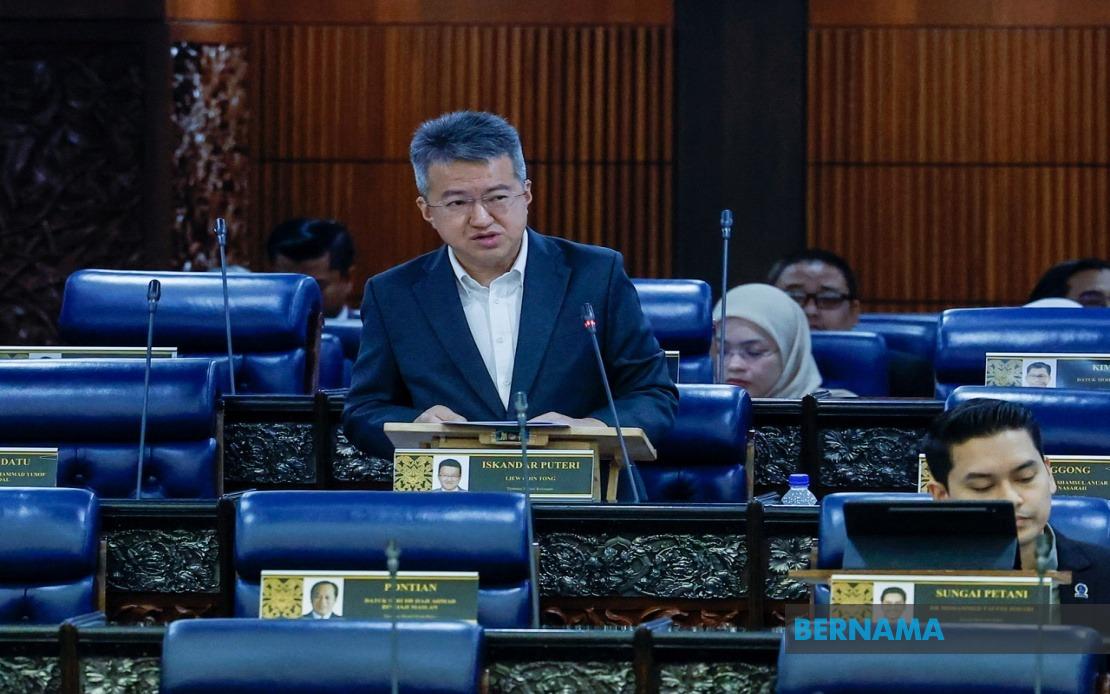
Malaysia's Employees Provident Fund has registered meaningful traction with its relatively new i-Legasi initiative, which has processed 63 approved applications since its February 2024 introduction, channelling RM46.3 million in retirement funds to 86 designated beneficiaries. Deputy Finance Minister Liew Chin Tong unveiled these figures during parliamentary proceedings, providing an early assessment of the scheme's effectiveness in addressing the nation's mounting retirement adequacy concerns.
The i-Legasi framework represents a strategic pivot in how Malaysia approaches intergenerational wealth transfer within families. Under its terms, EPF members who have reached age 55 and accumulated retirement savings above the Adequate Savings benchmark of RM650,000 may allocate a portion of their funds to the EPF accounts of eligible immediate family members. This mechanism acknowledges a demographic reality: many Malaysian workers struggle to accumulate sufficient retirement reserves, while others enjoy surpluses that could meaningfully support their relatives' financial futures.
The programme's introduction reflects the government's acknowledgement that traditional retirement mechanisms alone may prove insufficient as Malaysia transitions toward an aged society by 2030. With the cost of living escalating and pension systems under strain, creating mechanisms for voluntary intergenerational financial support offers a complementary strategy to conventional social safety nets. The i-Legasi scheme essentially permits those in stronger financial positions to directly strengthen their family members' retirement foundations without surrendering their own security.
Liew's parliamentary statement also highlighted progress on a broader metric of retirement adequacy. As of the end of May, approximately 3.04 million active EPF members aged between 18 and 60—representing 38.3 per cent of the 7.94 million members in that cohort—had achieved the Basic Savings target appropriate to their age, which stands at RM390,000 by age 60. This figure represents genuine progress, climbing from 35 per cent, or 2.71 million members, recorded in the same period the previous year.
The three percentage-point increase, though appearing modest, translates to an additional 330,000 members reaching age-appropriate savings milestones within a twelve-month window. For a nation confronting demographic shifts and economic pressures, this trajectory suggests that targeted policy interventions can yield measurable improvements in retirement preparedness. The data underscores why policymakers view mechanisms like i-Legasi as valuable components of a comprehensive retirement security strategy.
Yet the figures also reveal a persistent challenge: nearly 62 per cent of working-age EPF members still fall short of their Basic Savings targets. This shortfall points to systemic obstacles many Malaysian workers face—wage stagnation relative to living costs, irregular employment patterns, and competing financial demands that limit savings capacity. For policymakers, the gap between current achievement and the aspiration of universal adequacy remains formidable, necessitating multifaceted approaches beyond voluntary fund transfers.
The government and EPF have committed to strengthening their collaborative framework, with Liew indicating that enhanced contribution incentives and social protection mechanisms remain under active development. These policy discussions encompass both demand-side measures—encouraging workers to save more—and supply-side reforms that might expand employers' roles in facilitating adequate accumulation. Such initiatives gain urgency as Malaysia's workforce ages and fewer young workers enter the pension system to support current retirees.
For Malaysian workers and their families, the i-Legasi scheme represents a tangible new option for managing retirement finances strategically. The programme's early uptake, while modest in absolute terms, suggests genuine demand for mechanisms permitting flexible fund allocation aligned with family circumstances. As awareness spreads and more members recognise the scheme's potential, application volumes may increase, further distributing retirement security benefits across a broader demographic base.
The regional context matters too: Malaysia's approach to retirement adequacy occurs alongside comparable challenges across Southeast Asia, where many nations grapple with underfunded pension systems and rapid aging. The i-Legasi model—permitting intergenerational wealth transfers within formal retirement frameworks—potentially offers lessons for policymakers elsewhere in the region seeking to blend family-centred financial strategies with institutional pension structures.
Looking forward, the government's emphasis on holistic policy collaboration suggests recognition that retirement security cannot rest on any single mechanism. The i-Legasi scheme, contribution enhancement initiatives, and Basic Savings targets together form an interconnected strategy designed to elevate the proportion of Malaysians entering retirement with genuinely adequate reserves. The transition toward an aged society by 2030 will test whether these measures prove sufficient to prevent widespread elderly poverty and maintain intergenerational social stability.
For workers currently navigating their earning years, the expanding toolkit of retirement-related provisions—including i-Legasi—offers both opportunity and a subtle warning: individual initiative in saving, combined with family support and government incentives, will determine retirement outcomes. As Malaysian demographics shift irrevocably toward older populations with declining worker-to-retiree ratios, the success of schemes like i-Legasi in broadening retirement security may prove crucial to the nation's long-term social and economic stability.

