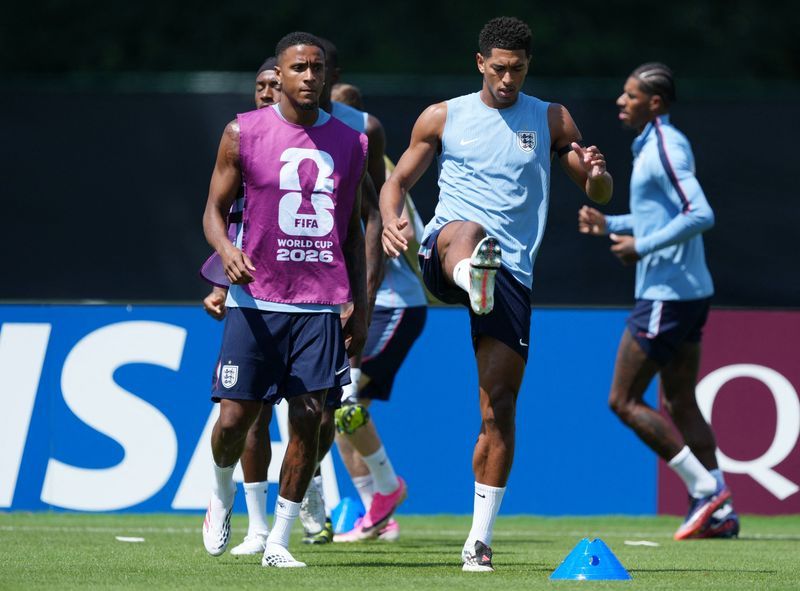
England's players are presenting a united front as they prepare for Wednesday's World Cup semi-final showdown against Argentina in Atlanta, brushing aside the media noise that has swirled around the squad following their dramatic quarter-final victory. The display of togetherness reflects manager Thomas Tuchel's success in fostering a cohesive environment within the camp, a crucial ingredient as the team targets a place in the final against either Spain or France.
Defender Ezri Konsa acknowledged that external scrutiny inevitably accompanies high-profile football matches, but insisted the squad possesses the maturity and experience to compartmentalise distractions and concentrate on the task ahead. Speaking to reporters on Tuesday at their Atlanta base, Konsa emphasised that the group has moved past any divisions and operates with collective purpose. The comments reflect a deliberate strategy by the England camp to project stability and focus, particularly after the quarter-final against Norway generated unwanted headlines regarding potential friction within the coaching staff.
That fixture, won 2-1 after extra time with midfielder Jude Bellingham scoring both goals, became the subject of considerable media attention when Tuchel publicly expressed disappointment with the overall performance. Bellingham, in turn, questioned whether the German coach fully appreciated the physical and tactical demands of playing in such demanding circumstances against elite opposition. Rather than allowing this disagreement to fester, however, the squad appears to have used it as a catalyst for strengthening internal bonds.
Fellow defender Marc Guehi provided extensive praise for Tuchel's impact on the squad's mentality and cohesion. Guehi highlighted how the manager has cultivated an environment characterised by strong belief in the team's capabilities and unwavering support for his tactical direction. The defender pointed to the quarter-final result itself as a turning point, suggesting that overcoming Norway's challenge in such circumstances paradoxically unified the group rather than driving wedges between players and management. Guehi's remarks underscore how professional squads can transform potentially divisive moments into opportunities for strengthening camaraderie.
Tuchel, speaking at his own press conference at Atlanta Stadium shortly after his players had addressed the media, framed the squad's outlook in terms of fundamental football philosophy. Rather than focusing on individual brilliance or star quality, the German manager emphasised that his approach centres on collective commitment to the team concept and the broader national cause. He drew broader observations from the World Cup itself, noting that the tournament has demonstrated how even the world's greatest players have subordinated individual achievement to team objectives and the honour of representing their nations.
The manager characterised the squad's mentality as outstanding and highlighted what he views as the most critical attribute of his team: resilience and refusal to accept defeat even in the most challenging circumstances. Tuchel suggested that much of this mental strength is cultivated away from public view, through the daily work and interactions that occur behind closed doors. These comments revealed his belief that visible unity translates from the foundation of trust and understanding built through consistent private engagement.
England's path to the final would involve navigating past holders Argentina before potentially facing either Spain or France. Spain and France contested the semi-final that took place on Tuesday, with the Spanish securing a commanding 2-0 victory to advance. The tournament structure means England could face a rematch against Spain, who defeated England in the Euro 2024 final, adding another layer of intrigue to any potential final matchup. As England travelled from their Kansas base to Atlanta, the squad remained focused on the immediate challenge rather than contemplating future opponents.
The contrast between the intensity of preparation and the relative calm within the squad environment has become notable. Players like Guehi demonstrated the mental compartmentalisation required at the highest level when asked about Spain's semi-final result—he had elected to sleep during the flight rather than study potential future opponents, reflecting confidence in the team's ability to address challenges as they arise. This pragmatic approach, prioritising recovery and present focus over premature strategic analysis, aligns with Tuchel's broader philosophy of concentration and immediate task orientation.
The semi-final against Argentina represents one of world football's most compelling matchups, pitting England's emerging momentum and psychological unity against the defending champions' experience and technical prowess. Argentina's path through the tournament has been marked by the continued influence of key players and demonstrated ability to perform under pressure. However, England's recent displays, coupled with the evident psychological strength and collective commitment within Tuchel's squad, suggest the English side enters the encounter with genuine confidence derived from both recent performances and internal cohesion.
For Malaysian and Southeast Asian observers of international football, England's current trajectory offers insights into how modern tournament football requires more than individual talent—squad unity, management effectiveness, and psychological resilience prove equally decisive. Tuchel's ability to transform a potentially fractious moment after the Norway match into an opportunity for strengthening group bonds demonstrates the sophisticated management required at the elite level. The England squad's demonstrated maturity in handling external pressure while maintaining focus on collective objectives reflects professional football's increasingly demanding psychological dimensions.

