Young Malaysians gathered at the Kuala Lumpur Convention Centre to grapple with one of the nation's most pressing policy questions: whether Malaysia should aggressively pursue renewable energy exports to regional neighbours while safeguarding its own electricity needs. The inaugural Minister's Cup Debate, held alongside the 7th International Sustainable Energy Summit (ISES) 2026, brought together twenty university students to examine this complex motion, marking a significant effort to inject youth voices into the country's energy transition conversation.
The timing of this competition reflects growing recognition that Malaysia's energy future cannot be decided by policymakers and industry experts alone. As the nation increasingly commits to renewable energy development, public understanding of the tradeoffs involved remains limited. The debate motion itself—asking whether Malaysia should expand exports of renewable energy-based electricity to neighbouring countries while meeting domestic demand—encapsulates a genuine strategic dilemma facing Southeast Asia's third-largest economy. Regional neighbours including Thailand, Singapore, and Indonesia are all pursuing renewable energy targets, creating potential export opportunities that could boost Malaysian renewable capacity while generating revenue. Yet domestic electricity demand continues to grow with economic development, raising legitimate questions about resource allocation and energy security.
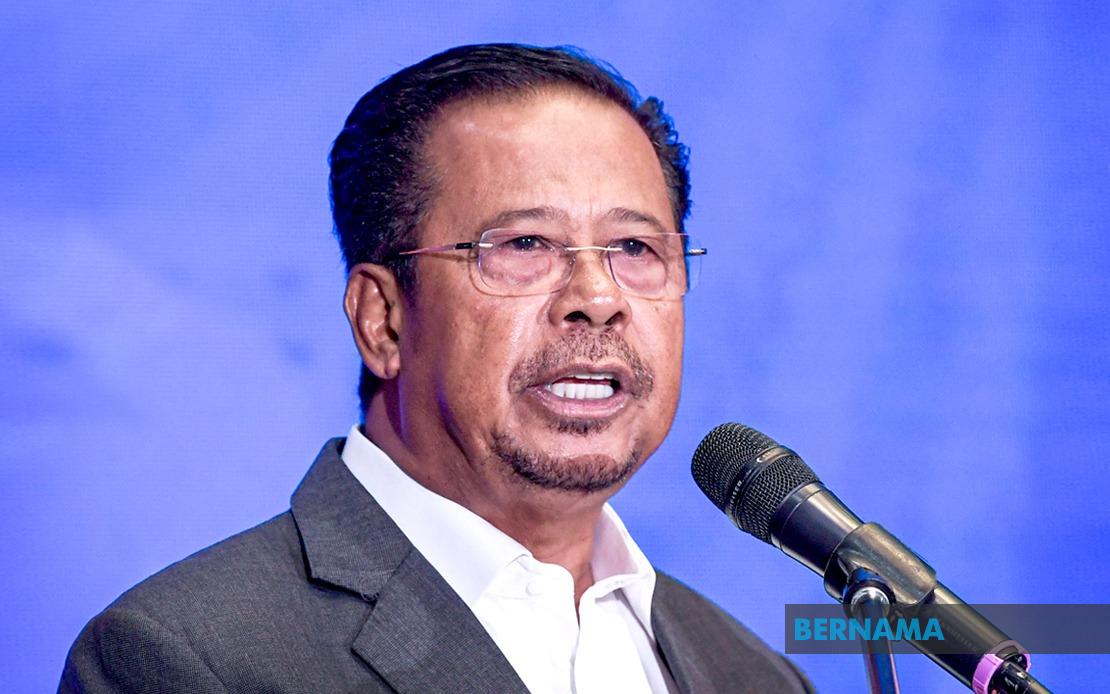
Deputy Minister of Energy Transition and Water Transformation Datuk Seri Abdul Rahman Mohamad, who also chairs the Malaysia Energy Literacy Programme (MELP) steering committee, presented the competition's awards including the championship and Best Debater prizes. His presence underscored the government's commitment to embedding energy literacy into national discourse. Tan Sri Dr Wan Ahmad Dahlan Abdul Aziz, the Chief Secretary to the Government and chairman of the Sustainable Energy Development Authority Malaysia (SEDA), also attended, signalling high-level institutional support for the initiative.
According to Izzad Zalman Abdul Kader, SEDA's Strategic Communications director, the competition serves a critical educational function beyond the spectacle of competitive debate. Involving young people in such platforms strengthens energy literacy while cultivating a nuanced, evidence-based understanding of government policies. The traditional top-down approach to policy communication—where officials explain decisions to the public—risks breeding passivity and cynicism, particularly among educated youth who crave intellectual engagement with complex issues. By contrast, debate forums invite participants to interrogate policy assumptions, test arguments, and develop ownership over the conclusions they reach.
Muhammad Uwais Mohd Hazril Munir @ Umar, a 20-year-old law student at Universiti Malaya who won the Best Debater award, articulated an important insight about debate's pedagogical value. Complex technical subjects like renewable energy generation, grid integration, and export logistics can seem opaque to ordinary citizens. Debate makes these issues more comprehensible by translating them into accessible language and human-centred arguments. The format itself—requiring debaters to present competing perspectives—ensures audiences encounter the genuine tensions inherent in energy policy rather than sanitised messaging. This exposure to multiple viewpoints prepares citizens to evaluate future policy announcements critically and participate constructively in democratic deliberation.
The Minister's Cup Debate functions as the flagship programme within MELP 2026, SEDA's broader initiative to strengthen energy literacy across Malaysian society. MELP itself represents a relatively sophisticated approach to public engagement, moving beyond one-off awareness campaigns to establish sustained, credible information systems. The programme's stated mission—to provide accurate, verified, and trustworthy information on how energy is produced, used, and managed—acknowledges a real deficit. Media coverage of energy issues often reduces nuanced trade-offs to simplistic narratives, while misinformation and conspiracy theories flourish online. By positioning itself as a reliable reference point, MELP aims to create space for informed public deliberation.
Afiq Athmar Mohamed, a 21-year-old economics student from Universiti Malaya's Faculty of Business and Economics, highlighted the competitive advantage of interagency collaboration. When ministries, government agencies, and local media coordinate around shared educational goals, they amplify their reach and credibility compared to isolated institutional messaging. This competition demonstrated that principle in action, drawing students, media attention, and high-level government participation into a single event. The resulting publicity—and the opportunity for young participants to see themselves reflected in serious discussions of national policy—can shift perceptions of what constitutes legitimate public participation.
Beyond the immediate audience in the auditorium, the competition's broader significance lies in its contribution to Malaysia's energy transition narrative. As the country pivots away from fossil fuels toward renewable sources, that transition will impose costs on some constituencies and create opportunities for others. Workers in coal mining and natural gas extraction may face employment challenges. Consumers may experience price volatility during infrastructure upgrades. Energy-intensive manufacturers will face new compliance requirements. Regional neighbours may compete for renewable energy exports, potentially affecting Malaysia's competitive position. These distributional consequences make energy policy inherently political, not merely technical. By engaging students in structured debate about these issues, MELP helps develop a generation of citizens equipped to navigate that political terrain thoughtfully rather than reactively.
The specific motion chosen for this inaugural competition also reflects strategic priorities. Malaysia's abundance of solar resources and potential for hydroelectric expansion make it a plausible renewable energy exporter within ASEAN. Thailand, Cambodia, and Laos possess significant hydroelectric capacity but face seasonal variability. Singapore and Brunei possess neither solar nor hydro resources at scale, making them prospective importers. A well-functioning regional renewable energy trade could theoretically lower costs across Southeast Asia while enabling participating nations to retire fossil fuel capacity faster. Yet that optimal outcome requires overcoming technical obstacles like grid interconnection standards, regulatory harmonisation, and power purchase agreement frameworks that remain underdeveloped across the region. It also requires political will to invest public resources in export-oriented renewable capacity when domestic needs remain partially unmet. The debate motion captures these tensions without prescribing answers—exactly as a pedagogically valuable prompt should function.
For Malaysian readers observing this development, the initiative signals several encouraging directions. First, the government appears genuinely interested in building public understanding of energy policy rather than simply announcing decisions. That openness to dialogue creates space for civil society, academic institutions, and media to contribute substantively to the national conversation. Second, by engaging university students specifically, MELP recognises that today's debaters will become tomorrow's voters, entrepreneurs, policymakers, and opinion leaders. Investing in their understanding now may yield decades of more sophisticated energy discourse. Third, the emphasis on verified information and evidence-based argument suggests a commitment to raising the quality of public debate generally—a valuable objective that extends well beyond energy policy alone.
As Malaysia progresses through its energy transition, competitions like the Minister's Cup Debate represent necessary infrastructure for democratic deliberation. Technical expertise and policy analysis remain essential, but they prove insufficient without informed public engagement. By creating platforms where young Malaysians can wrestle seriously with the nation's energy future, SEDA and its partners are building the social foundation upon which sustainable energy transitions ultimately rest.

