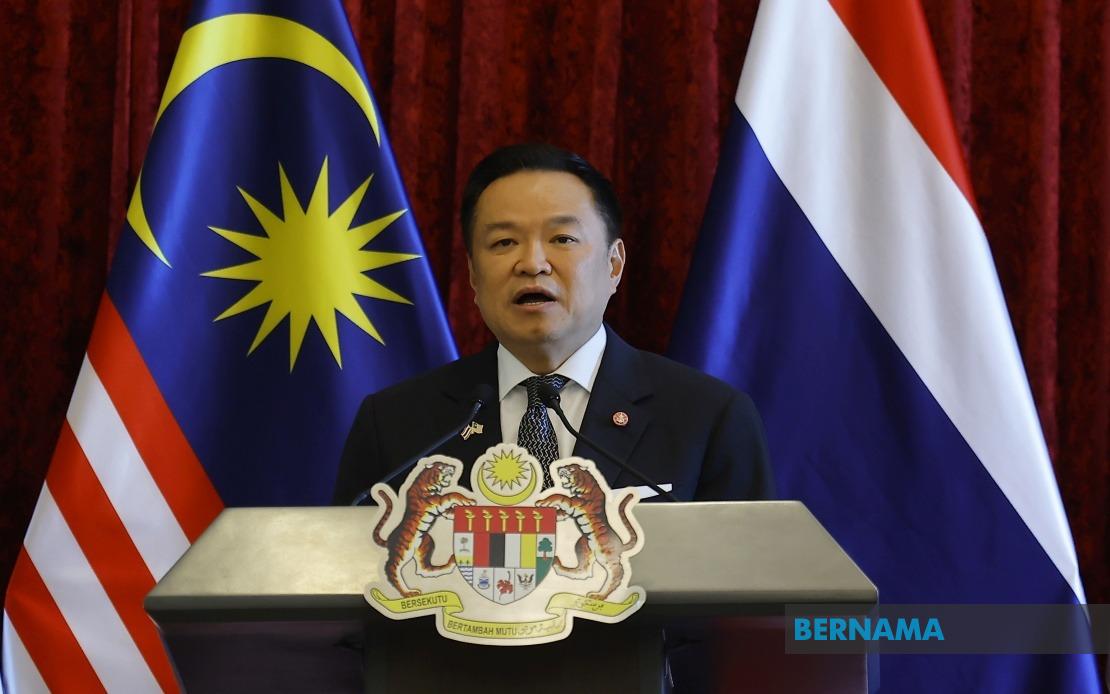
Thai Prime Minister Anutin Charnvirakul reaffirmed his government's unwavering focus on bringing an end to the longstanding violence afflicting Thailand's southern border provinces during high-level talks with Malaysian Prime Minister Datuk Seri Anwar Ibrahim in Putrajaya on Thursday. The declaration underscores the intensifying regional diplomatic effort to address one of Southeast Asia's most persistent security challenges, which has claimed thousands of lives over two decades and displaced numerous communities across the border region.
Speaking at a joint press conference, Anutin emphasized that resolving the conflict in Thailand's southernmost provinces represents a cornerstone objective for his administration, acknowledging the profound human toll and economic costs of sustained instability. He portrayed the interconnection between security and prosperity as fundamental to Bangkok's strategic vision, arguing that durable peace must precede meaningful development while economic growth simultaneously strengthens the foundations for lasting tranquility. This framing reflects Thailand's recognition that military approaches alone have proven insufficient to address the root causes of insurgency in Yala, Pattani, and Narathiwat provinces.
A critical dimension of the bilateral engagement involves Malaysia's pivotal role as mediator in the Southern Thailand Peace Dialogue process. Anwar's government has positioned itself as a neutral facilitator capable of building trust among multiple stakeholders, a responsibility that reflects Malaysia's geographic proximity, demographic ties to the Muslim-majority southern Thai population, and diplomatic standing in the region. The Malaysian Prime Minister provided assurances that Kuala Lumpur categorically rejects violence as a means of political expression and remains committed to supporting Thailand's efforts to apprehend those culpable for attacks and destabilization activities.
The formal negotiation framework now includes substantive representation from both governments. Malaysia's delegation is spearheaded by Datuk Mohd Rabin Basir, a veteran security official who previously served as director-general of the National Security Council before assuming his appointment on July 1, 2024. Basir brings extensive experience in national security matters and cross-border coordination, positioning him to navigate the complex diplomatic terrain. Thailand's lead negotiator is Thanat Suwannanont, who directs the National Intelligence Agency and carries the institutional weight of Bangkok's intelligence establishment into peace discussions.
The dialogue process encompasses engagement with the Barisan Revolusi Nasional, the primary insurgent organization that has orchestrated much of the armed activity in Thailand's deep south. Bringing the BRN into structured negotiations represents a significant diplomatic achievement, as it acknowledges the group's role as a consequential political actor while creating mechanisms for dialogue rather than purely military confrontation. This approach mirrors international best practices in conflict resolution, where inclusion of armed groups in peace processes often proves essential for achieving durable settlements.
The southern Thailand conflict, rooted in historical grievances related to the 1909 Siamese-British treaty that divided the Malay peninsula and broader concerns over cultural and religious minority status within Thailand's nation-state framework, has generated profound regional security implications. The violence extends beyond Thailand's borders, affecting Malaysian communities and regional stability more broadly. Malaysia's direct experience with insurgency and its subsequent counterinsurgency efforts over decades provide valuable institutional knowledge that informs current mediation approaches.
Anutin's emphasis on the peace-development nexus reflects emerging consensus among regional security analysts that traditional security-focused interventions require complementary efforts in economic opportunity creation, governance reform, and cultural accommodation. Development initiatives in border provinces can address marginalization that fuels recruitment into armed groups, while sustainable peace enables the infrastructure and investment necessary for economic transformation. This integrated approach represents a departure from earlier emphasis on purely kinetic operations and security force-centric strategies.
The timing of these discussions carries particular significance given regional geopolitical dynamics and Myanmar's internal instability, which has already generated spillover effects affecting Thailand's border security. Enhanced Malaysia-Thailand coordination provides a stabilizing mechanism during a period of regional turbulence, with both nations sharing interests in preventing wider conflict escalation and maintaining subregional equilibrium. Malaysia's role as ASEAN chair and broader regional diplomatic voice amplifies the significance of its mediation efforts.
The mechanism of Malaysia-facilitated dialogue also establishes a precedent for regional conflict resolution that other ASEAN members might reference in addressing comparable challenges. As Southeast Asia confronts multiple overlapping security threats ranging from maritime disputes to transnational crime networks, the Thailand-Malaysia experience offers practical lessons in bilateral cooperation and third-party mediation. Successful resolution of the southern Thailand conflict could demonstrate that patient dialogue combined with development initiatives offers pathways beyond perpetual military confrontation.
Both governments have signaled that the negotiation process will require sustained commitment and realistic timelines, with leaders acknowledging that decades-old conflicts do not yield to quick fixes. The appointment of high-level negotiators from both sides and Malaysia's formal facilitation role suggest a substantive escalation beyond previous diplomatic efforts. Success will depend partly on whether the dialogue process can generate sufficient momentum to shift incentive structures among the BRN's leadership and broader insurgent networks toward exploring negotiated settlements.
The broader regional context underscores why Malaysian participation proves essential to any viable peace framework. Malaysia's historical experience navigating communal tensions, its security establishment's expertise in counterinsurgency and law enforcement, and its cultural and religious connections to southern Thailand's majority Muslim population create unique capabilities for bridge-building. These factors position Malaysia not merely as a neutral observer but as an active architect of regional stability with tangible stakes in achieving peaceful resolution.

