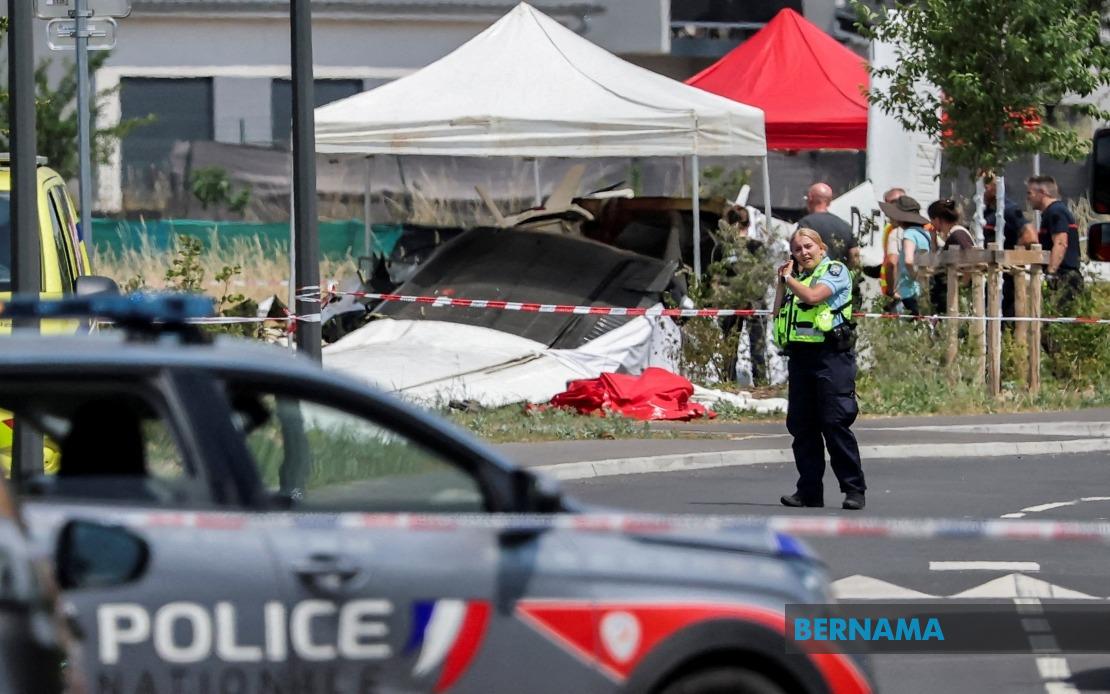
A civilian aircraft carrying skydiving participants and instructors crashed near the eastern French city of Nancy on Sunday, resulting in the deaths of all 11 people on board. The aircraft went down in Tomblaine, located in the Meurthe-et-Moselle department, moments after departing from Nancy-Essey Airport, according to local prefecture statements and French broadcasting reports.
The tragedy claimed the lives of two distinct groups aboard the plane: one pilot and ten other passengers composed of skydiving instructors and independent nurses who were taking part in what organisers had described as an initiation event. This combination of recreational and professional participants suggests the flight had been organised as part of a group activity or team-building exercise that incorporated both the thrill of skydiving and the participation of healthcare workers from the local medical community.
Thierry Pechey, who serves as head of the Meurthe-et-Moselle branch of the Order of Independent Nurses, provided additional detail about those lost in the crash. He indicated to French broadcaster BFM TV that the victims included independent nurses who were participating in the initiation event alongside professional skydiving instructors. This account suggests the flight was perhaps intended to commemorate or celebrate new entrants to the nursing profession, combining it with an adventurous skydiving experience.
The crash occurred shortly after the aircraft became airborne from Nancy-Essey Airport, leaving investigators with a narrow window of circumstances to examine. The proximity of the incident to the point of departure suggests potential issues during the critical takeoff phase, though no official cause has yet been determined. Such incidents during the initial stages of flight often point to mechanical failures, pilot error, or unfavourable weather conditions that develop rapidly.
French authorities responded swiftly to the disaster. Meurthe-et-Moselle Prefect Yves Seguy activated the departmental operational centre to coordinate the emergency response and oversee real-time monitoring of rescue and investigation efforts. This activation of emergency protocols ensured that multiple agencies could work in concert to address both immediate rescue needs and the subsequent investigation.
Interior Minister Laurent Nunez was expected to visit the crash site on the day of the incident, signalling the seriousness with which French authorities treated the tragedy. The ministerial visit underscored the gravity of the situation and demonstrated commitment to understanding the circumstances surrounding the disaster. Such high-level engagement often accelerates the information-gathering process and ensures adequate resources are deployed.
Local law enforcement issued directives to the public asking residents to stay away from the immediate vicinity of the crash site, particularly around Rue Salvador Allende in Tomblaine. These restrictions were necessary to permit emergency responders and investigators unfettered access to the wreckage and surrounding area. Contamination of the crash site by curious onlookers or media personnel could compromise both the rescue operation and the subsequent technical investigation.
For Malaysia and Southeast Asian nations, this incident serves as a reminder of aviation safety considerations for civilian skydiving operations. Recreational skydiving and similar adventure activities have grown popular across the region, particularly in countries like Malaysia where tourism and adventure sports are expanding rapidly. The crash highlights the critical importance of rigorous maintenance standards, pilot training protocols, and weather assessment procedures for aircraft engaged in such specialised operations.
The investigation into this crash will likely focus on several key areas including the aircraft's maintenance history, the pilot's qualifications and experience, pre-flight safety checks, weather conditions at the time of departure, and potential mechanical anomalies. French aviation authorities will work to reconstruct the final minutes of the flight through examination of wreckage, flight data recorders if available, and witness accounts from those nearby at the time of the incident.
This tragedy underscores the inherent risks associated with skydiving activities despite their recreational popularity. While skydiving itself has become relatively safer through improved equipment and training standards, the dependence on aircraft reliability remains absolute. Any failure in the mechanical systems or operational procedures of the aircraft poses a complete and total risk to everyone on board, distinguishing aviation incidents from most other recreational activities where some degree of control or escape remains possible.
The broader aviation community across Europe and beyond will monitor the findings of this investigation closely. Depending on the determined cause, regulators may issue new directives or recommendations affecting similar operations. Should the crash result from a known mechanical issue, manufacturers and operators may face pressure to implement additional checks or modifications. Alternatively, if procedural failures are identified, training and certification standards may be revised to prevent similar incidents.
For the families and colleagues of those lost in this tragedy, the coming weeks and months will be consumed by grief and the search for answers. The nursing community in Meurthe-et-Moselle faces the particularly painful reality that what was intended as a celebration of professional achievement and camaraderie has transformed into devastating loss. This dimension of the tragedy—the transformation of joyful anticipation into sudden catastrophe—adds profound emotional weight to an already devastating aviation incident.

