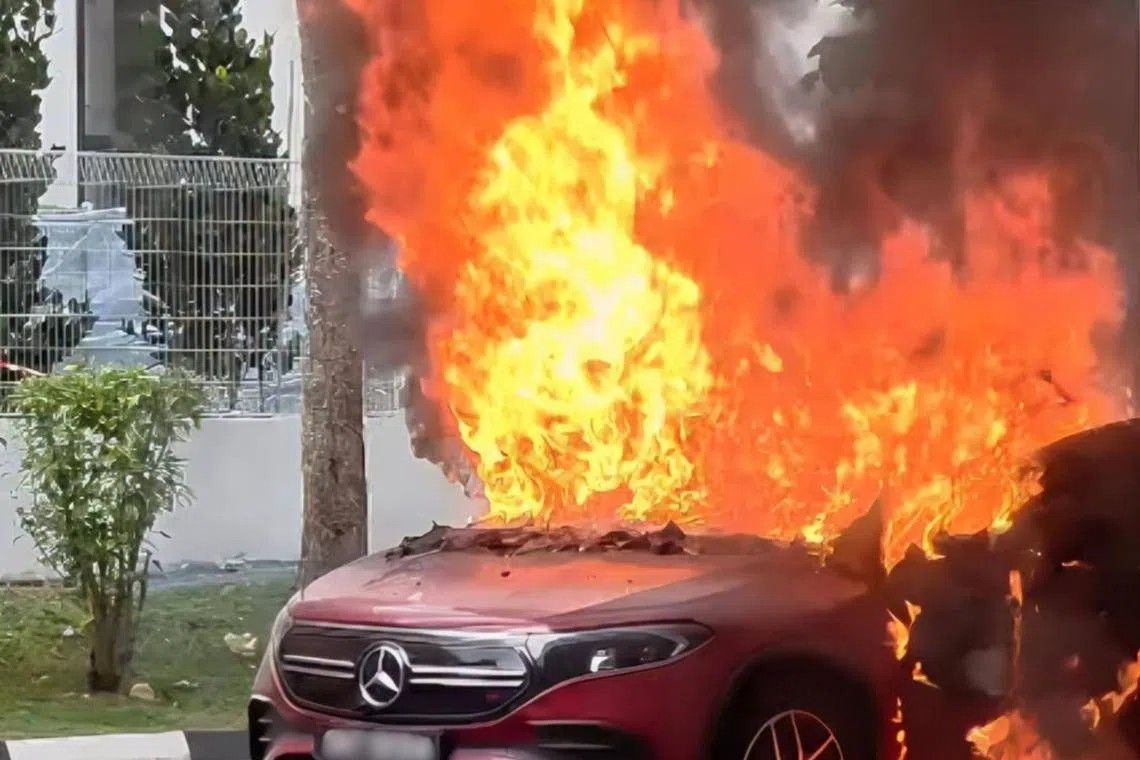
An electric vehicle burst into flames near a multi-storey carpark entrance in Singapore's Woodlands district on the morning of July 21, prompting a swift emergency response that prevented any casualties. The Singapore Civil Defence Force received the alarm at approximately 10.10am, with responders dispatched to Block 548 Woodlands Drive 44 near Vista Point. Firefighters brought the situation under control using a single water jet, extinguishing the fire before it could spread beyond the vehicle itself.
The incident underscores the evolving challenges facing authorities and residents across Southeast Asia as electric vehicle ownership accelerates throughout the region. Singapore, as a regional hub for innovation and technology adoption, frequently experiences such incidents first, but the implications reverberate across Malaysia, Indonesia, and neighbouring countries where EV adoption continues climbing steadily. The rapid proliferation of battery-powered vehicles in dense urban environments has created new dynamics for fire safety protocols, parking regulations, and emergency response procedures that authorities are still refining.
According to the vehicle's driver, who recounted details to Shin Min Daily News, she initially detected a pungent burning odour while navigating out of the carpark. Upon halting the vehicle and investigating further, she discovered smoke billowing from the interior—a telltale sign that the situation had already progressed beyond a minor electrical malfunction. The fire originated in the tight cavity between the driver and front passenger seats, a location directly above where the car's battery pack is housed. This placement proved significant, as it suggested the thermal event originated from the battery system itself, the most energetically dense component of any modern EV.
The driver's quick thinking potentially prevented a more catastrophic outcome. After realising the severity of the situation, she immediately sought assistance from nearby security personnel stationed at the carpark. However, the security team's attempts to suppress the flames using standard fire extinguishers proved futile—a limitation that highlights how conventional fire-suppression tools designed for conventional vehicles often prove inadequate against lithium-ion battery fires, which burn at considerably higher temperatures and can reignite even after appearing extinguished.
Concerned that the spreading flames might lead to a battery explosion, both the driver and security personnel prudently evacuated the immediate vicinity and contacted emergency services. This decision proved judicious, as lithium-ion battery fires present unique hazards compared to petrol-powered vehicles, including the potential for thermal runaway—a chain reaction where rising internal temperature causes the battery to release increasingly volatile gases and heat. The photographs captured immediately following the incident revealed the extent of the destruction: the car's interior lay completely charred, the dashboard had warped beyond recognition, and the metal frames supporting the seat structures jutted exposed through the carbonised remnants of upholstery and trim.
The vehicle was eventually towed from the scene at approximately 12.15pm, marking the formal conclusion of the immediate emergency phase. However, the incident's investigative phase was only beginning. The Singapore Civil Defence Force indicated that determining the precise cause of the fire remained an ongoing priority, as understanding whether the ignition stemmed from a manufacturing defect, physical impact damage, electrical system failure, or some other factor carries significant implications for both vehicle safety standards and consumer confidence across the EV market.
For Malaysian readers and policymakers, this incident arrives at a particularly pertinent moment. Malaysia's automotive industry is undergoing substantial transformation as manufacturers pivot toward electrification, and the government has established ambitious targets for EV adoption. However, the infrastructure for managing battery-related incidents—from emergency response protocols to specialised repair facilities—remains nascent in many areas. Fire departments across Malaysia are increasingly encountering electric vehicles but may lack the specific training and equipment required to safely manage lithium-ion battery fires, which demand approaches fundamentally different from conventional vehicle fires.
The incident also raises questions about housing density and safety in Southeast Asian cities where high-rise residential complexes with extensive underground or covered carparks predominate. Unlike detached parking areas, enclosed and multi-storey facilities concentrate risk, as fire, smoke, and potential toxic fumes can affect numerous residents. Evacuation procedures, ventilation systems, and early warning mechanisms in these environments may require reassessment as EV populations expand within them.
Manufacturers and regulators throughout the region will be monitoring the investigation's findings closely. The Singapore incident serves as a reminder that while electric vehicles represent a crucial component of regional decarbonisation efforts, the transition must be managed carefully with robust safety frameworks, adequate emergency preparedness, and transparent communication about any emerging risks. As Malaysia accelerates its own EV adoption through various government incentives and international partnerships with manufacturers, ensuring that safety systems, enforcement standards, and emergency response capabilities keep pace with vehicle proliferation will prove essential.

