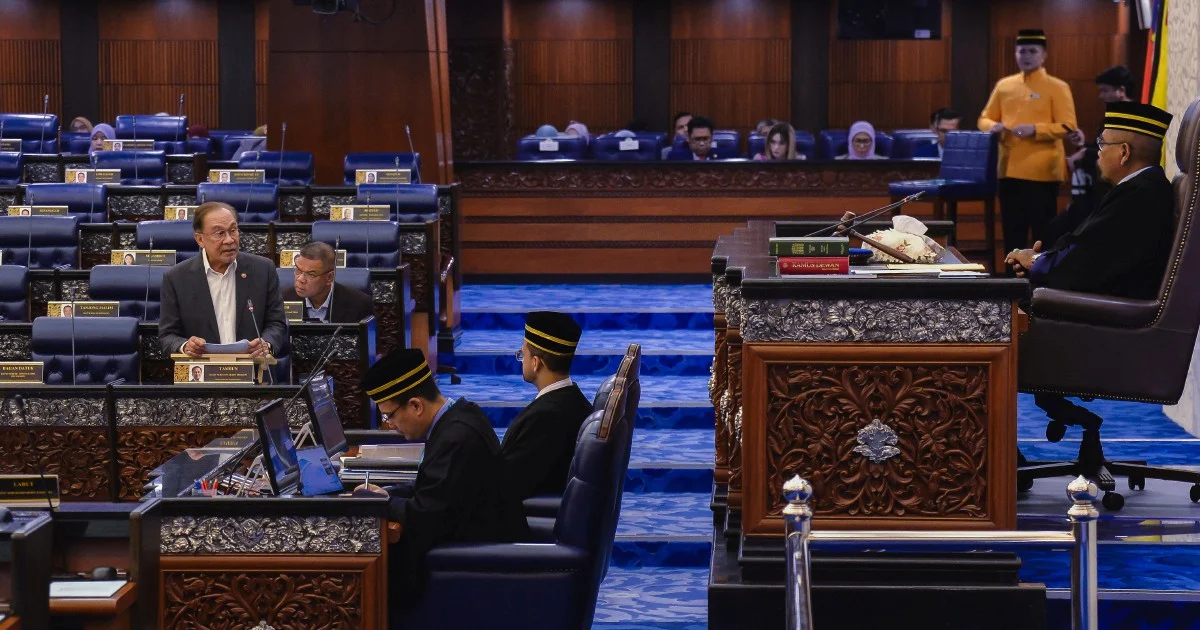
The Election Commission will intervene if a caretaker government violates election guidelines by making policy announcements or decisions that carry financial consequences, Prime Minister Datuk Seri Anwar Ibrahim has stated. The clarification addresses concerns about how sitting administrations might use their interim status to press through spending commitments or policy changes that could advantage their party before a fresh election.
Caretaker governments occupy a unique constitutional position in Malaysia's electoral cycle. Between the dissolution of Parliament and the formation of a new administration, the outgoing cabinet technically remains in office to handle essential governance functions. However, election guidelines strictly limit what caretaker administrations may do, precisely to ensure that the transitional period does not become an opportunity for political advantage-taking. The restriction applies most pointedly to decisions involving public money, where an outgoing government could theoretically commit resources in ways that bind or constrain its successor.
The Prime Minister's statement reflects heightened awareness among Malaysian institutions of the risks posed by caretaker-period governance. In neighbouring jurisdictions and in Malaysia's own recent electoral history, caretaker governments have occasionally tested the boundaries of permissible conduct. Some have announced development projects, approved tenders, or made spending commitments timed to generate political goodwill before the election. The Election Commission's willingness to act serves as a deterrent against such practices and a reassurance to voters that the electoral process will not be compromised by financial manoeuvres executed during the campaign period.
The mechanism by which the Election Commission enforces this rule remains a matter of practical importance. The EC possesses investigative authority and can recommend sanctions or corrective action when it detects violations. Its power to publicise breaches carries significant reputational weight in Malaysia's political environment. A caretaker government found to have violated guidelines risks damaging both its electoral prospects and the credibility of the outgoing administration. This dynamic creates an incentive for caretaker cabinets to respect the spirit as well as the letter of electoral conduct rules.
For the private sector and stakeholders awaiting government decisions, the announcement introduces a measure of clarity about the timeline during which certain approvals or commitments can be expected. Projects or policy changes that require cabinet endorsement may face delays if they fall within the caretaker period. Conversely, decisions deemed essential to public welfare or national security operations can proceed as long as they do not carry implications of partisan advantage. The Election Commission's presence as an arbiter helps define where that line lies in contested cases.
Malaysia's regulatory framework for caretaker governments has evolved through practice rather than detailed written statute. Unlike some democracies with comprehensive caretaker-period legislation, Malaysia has relied on convention, Election Commission guidance, and the good faith of outgoing administrations. Anwar Ibrahim's statement represents an effort to solidify expectations and give the Election Commission explicit political backing for enforcement action. This approach respects the conventions of Westminster-influenced parliamentary democracy whilst adapting them to Malaysia's specific electoral and institutional context.
The ruling applies equally regardless of which party controls the caretaker government. Election guidelines and enforcement must be politically neutral to maintain public confidence in electoral integrity. A caretaker cabinet led by the governing coalition faces the same restrictions as one that might emerge under alternative political arrangements. This principled stance underscores that the rules exist to protect the democratic process itself rather than to advantage any particular faction.
The practical effect of this policy extends beyond headline-grabbing spending decisions. Many routine administrative matters—routine contract renewals, standard operational decisions, or matters delegated to career civil servants—can proceed without restriction during the caretaker period. The scrutiny focuses on discretionary political decisions, new policy initiatives, and commitments of substantial public resources. This distinction allows government to function without paralysis whilst protecting the election from manipulation through fiscal or administrative means.
For international observers and regional peers, Malaysia's approach to caretaker governance reflects institutional maturity and a commitment to democratic norms. Neighbouring countries and regional organisations increasingly examine how nations manage transitional periods, as these moments of governmental flux can expose weaknesses in institutional safeguards. The Election Commission's clear authority to act against violations sends a signal that Malaysia takes electoral integrity seriously and will not tolerate circumvention of the rules during sensitive periods.
The statement also carries implications for future caretaker periods. As Malaysia approaches subsequent general elections, administrations will now operate under explicit notice that the Election Commission stands ready to enforce these guidelines with concrete action. The deterrent effect may strengthen compliance with electoral principles, reducing the likelihood of disputes or controversies that could undermine public confidence in the election outcome. This clarity benefits all stakeholders—political parties can plan their campaigns knowing the rules, voters can trust that the interim government will not manipulate public resources, and civil servants understand what decisions they can implement without controversy.

