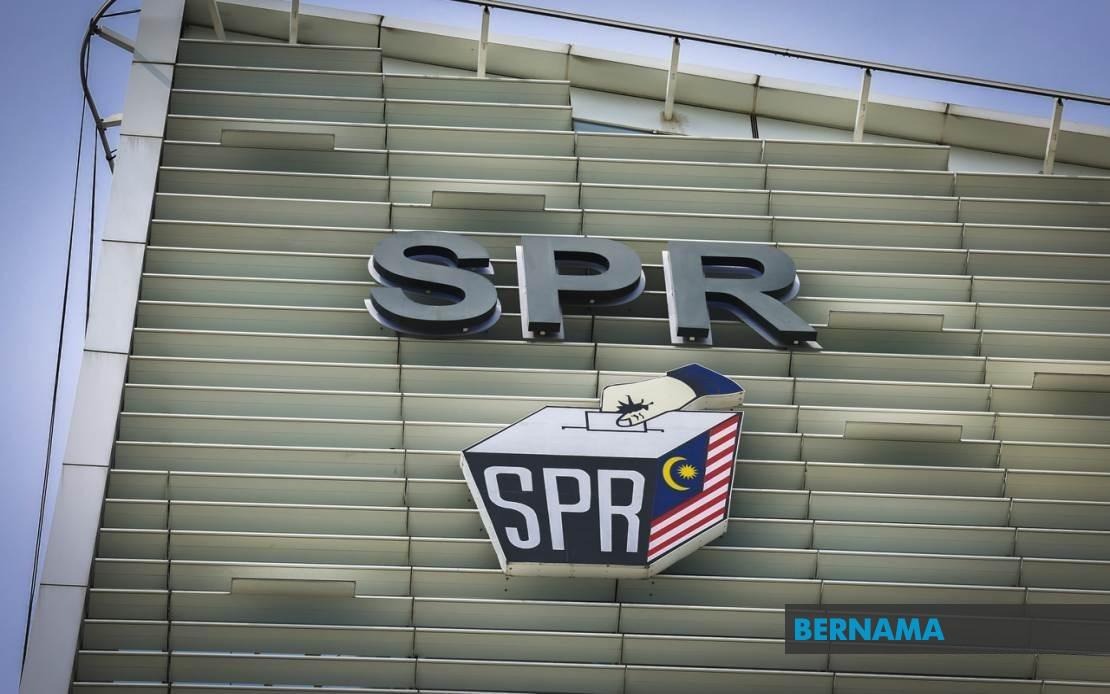
Malaysia's Election Commission has agreed to examine a proposal that could extend postal voting privileges to auxiliary police officers guarding the nation's strategic facilities and essential infrastructure. Deputy Minister M. Kulasegaran made the announcement in response to a motion presented by Senator Datuk Salehuddin Saidin during today's Dewan Negara sitting, signalling official receptiveness to a reform that could affect tens of thousands of security workers across the country.
The underlying issue centres on a practical voting rights dilemma facing auxiliary police personnel. Unlike their counterparts in the regular police force and armed services—who currently qualify for early or postal voting arrangements—auxiliary officers deployed at critical installations cannot easily leave their posts during polling day without compromising security at sensitive locations. This structural gap has effectively disenfranchised a significant workforce spread across government ministries, statutory agencies, government-linked companies, transport operators, airports, ports, energy utilities, financial institutions, oil and gas facilities, and other nationally important infrastructure.
Salehuddin's motion highlighted that some 27,000 auxiliary police officers work throughout Malaysia's security apparatus. Many of these individuals are stationed at locations where simultaneous leave-taking during elections could create genuine security vulnerabilities. The senator's proposal sought a comprehensive government study involving the Election Commission, Home Ministry, and relevant agencies to devise a framework allowing auxiliary police on election duty to vote either early or by post, potentially requiring amendments to the Election (Registration of Electors) Regulations 1981.
Kulasegaran's response indicated that any expansion of postal voting would need to navigate several intersecting considerations. The Election Commission must weigh operational requirements—ensuring adequate security staffing at critical facilities during elections—against legal provisions governing voter eligibility categories. The current regulatory framework already recognises three distinct postal voting categories: Category 1A covers Election Commission members, workers, armed forces, police, and media on election duty; Category 1B encompasses overseas Malaysian citizens; and Category 1C includes personnel from selected government departments required to work on polling day.
The fact that auxiliary police fall outside these existing categories reflects a regulatory gap rather than explicit exclusion. Extending postal voting to this group would represent a targeted adjustment rather than a wholesale reform of election procedures. However, the Commission's undertaking to study the matter suggests officials recognise the democratic legitimacy of Salehuddin's concerns. A comprehensive review could establish criteria distinguishing auxiliary police whose duties genuinely necessitate their presence from those whose absence would pose minimal operational risk.
For Malaysian voters and civil society observers, this development carries broader implications about balancing electoral participation with governmental functioning. As the nation strengthens its security architecture and expands reliance on auxiliary forces to protect critical infrastructure, the electoral system must adapt to accommodate these workers. Denying postal voting to employees whose job requirements prevent them from voting in person creates a class of effectively disenfranchised citizens, even if unintentionally.
Kulasegaran also encouraged auxiliary police and all voters to transfer their electoral constituency to their current residence, offering an alternative convenience measure. This suggestion acknowledges that not every voting challenge requires institutional change—some can be addressed through individual initiative and administrative flexibility. Yet for officers stationed away from their home constituencies during extended election periods, constituency transfer alone may prove insufficient without supplementary postal voting arrangements.
The Dewan Negara timing of this debate marks a procedural milestone. This represented the first debate on a government administrative matter during the Adjournment Speech session since the procedure was formally introduced in 2022 under the Senate's Standing Order 16. The Senate's willingness to address such practical governance questions through this mechanism demonstrates institutional evolution toward scrutinising implementation details of government services and policies.
The consultation process ahead will require coordination across multiple agencies with sometimes competing priorities. The Home Ministry oversees auxiliary police deployment and operational requirements; the Election Commission manages voting procedures and regulations; and relevant sectoral ministries and private operators control access to critical infrastructure. Finding consensus among these stakeholders about which auxiliary police positions genuinely require election-day presence and which could accommodate leave will demand careful negotiation.
International precedent exists for accommodating security workers' voting rights. Many democracies recognise that essential service providers require special voting arrangements, whether through early voting windows, mail-in ballots, or designated polling stations at workplaces. Malaysia's examination of this question positions the nation within global norms while accounting for its specific security environment and auxiliary policing model.
The broader context involves Malaysia's ongoing efforts to strengthen democratic institutions and electoral integrity. As the country navigates post-pandemic recovery and multi-level governance challenges, ensuring all citizens can participate in elections regardless of occupational demands reinforces the legitimacy of electoral outcomes. The auxiliary police proposal, though narrow in scope, contributes to this wider institutional resilience.
The Election Commission's willingness to study the proposal reflects confidence in finding workable solutions. Officials may explore phased implementation, starting with specific categories of auxiliary police at lower-risk facilities, or develop verification systems ensuring postal voters genuinely cannot take leave. The coming months will reveal whether the Commission's study produces concrete recommendations for regulatory amendment or maintains the status quo pending further evidence.
This development ultimately reflects a maturing approach to voting rights in the region. As Malaysia considers how electoral systems should accommodate modern workforce realities—security workers, healthcare providers, and others on essential duty—it acknowledges that voting should not require choosing between civic participation and occupational responsibility. The Commission's initiative to study auxiliary police postal voting thus stands as an important test case for how Southeast Asian democracies balance institutional rigidity with pragmatic reform.

