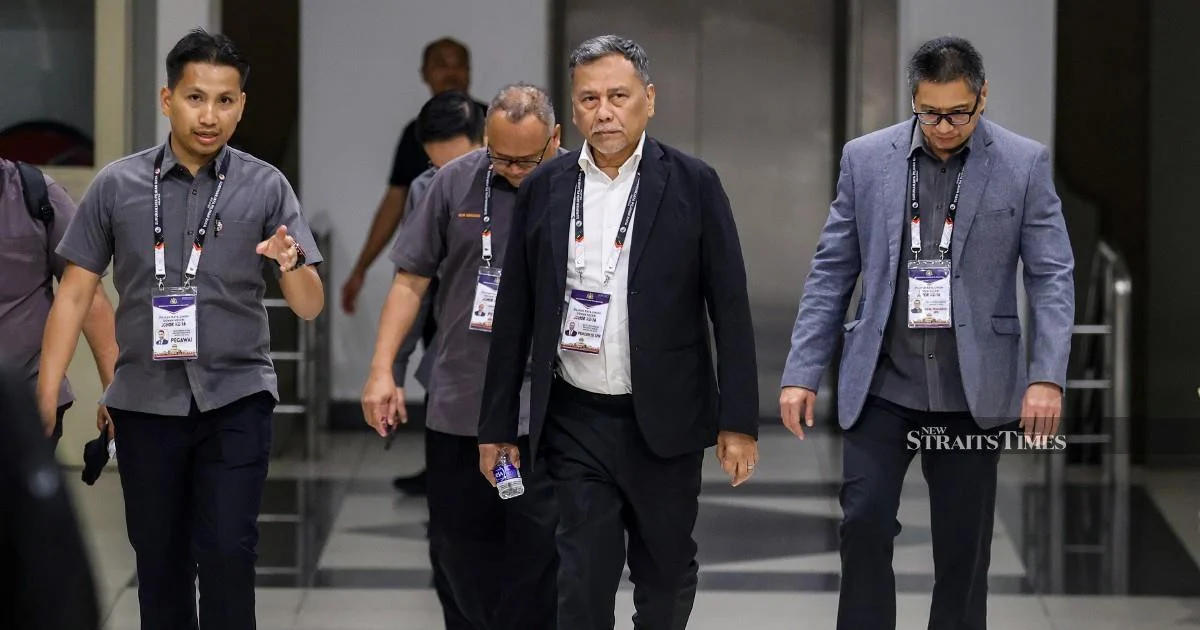
The Election Commission (EC) has signalled it will intensify its examination of voters who photograph and share images of marked ballot papers across social media platforms. This development emerged from discussions in Iskandar Puteri and reflects growing concern about the practice among election authorities, who view such actions as potentially undermining the fundamental principle of ballot secrecy that underpins democratic elections.
The trend of voters documenting their voting choices through photographs and publishing them online—often called "ballot selfies"—has become increasingly prevalent during recent electoral cycles worldwide. The practice typically involves citizens capturing images of their completed ballot papers before depositing them and then sharing these photos on platforms such as Facebook, Instagram, or WhatsApp, frequently accompanied by statements encouraging others to vote for particular candidates or parties.
From an electoral integrity perspective, this behaviour creates several complications for election administrators. While the motivations behind such posts are often civic-minded—voters seeking to demonstrate engagement in the democratic process—the practice technically circumvents the principle of voting secrecy that has been central to democratic practice for centuries. The secret ballot was designed to protect voters from coercion and undue influence, allowing people to cast their votes according to their conscience without fear of repercussion or obligation to justify their choices.
Malaysia's electoral framework has long maintained strict provisions regarding ballot secrecy. When voters mark their papers inside polling booths, they do so in private; election officials are explicitly prohibited from observing the marks. The subsequent deposit of the ballot into sealed boxes reinforces this confidentiality. However, the emergence of digital technology has created a grey area: voters can now bypass these protections entirely through voluntary disclosure of their voting patterns.
The EC's decision to review such cases more carefully represents a pragmatic response to a modern electoral challenge that did not exist in previous generations. Election officials must balance several competing considerations, including respect for free expression and the right of citizens to discuss their political preferences against the need to preserve the integrity of the voting mechanism itself. Some jurisdictions have responded by explicitly prohibiting the taking of ballot photographs, while others have sought to educate voters about the risks and ethical dimensions of the practice.
For Malaysian voters and political observers, this issue carries particular resonance given the country's recent electoral history, which has witnessed significant shifts in voting patterns and intense competition between coalitions. The ability to document and publicise one's vote carries implications beyond personal expression; critics worry it could enable forms of coercion or verification of voting behaviour in contexts where family members, employers, or community leaders exert social pressure.
The digital dimension also complicates enforcement. Unlike voting fraud or ballot stuffing—matters more clearly within the EC's direct purview—photographing and sharing ballot images involves individual voters rather than election officials or institutional actors. The EC must develop clear guidance about whether and when such activity violates election laws, and by what mechanisms it can investigate or prevent such behaviour without overreaching into citizens' privacy rights or freedom of expression.
International experience offers mixed lessons. Some democracies have found that education campaigns, emphasizing both the historical reasons for ballot secrecy and contemporary security concerns, prove more effective than criminalisation. Others have adopted legislative approaches that explicitly prohibit such conduct. The EC will likely need to consider not only what rules to enforce but also how to communicate the rationale to voters and political parties, since buy-in from political actors is essential for any electoral regulation to function effectively.
The practice also raises questions about the authenticity of some online expressions of voting behaviour. Election observers have noted that not all ballot photos circulating on social media necessarily represent genuine individual votes; some may be recycled, fabricated, or shared with false provenance. This blurs the distinction between voters voluntarily disclosing their authentic choices and the circulation of misleading information about voting patterns.
For Malaysian civil society and watchdog organisations, the EC's review presents an opportunity to engage constructively with authorities about how electoral integrity can be preserved while respecting legitimate forms of political expression. Clear, transparent guidelines from the EC would benefit all stakeholders—voters, election monitors, and political parties—by establishing what conduct is acceptable before future elections occur.
The issue extends beyond simple rule-enforcement into broader questions about how democratic institutions adapt to digital-age realities. As more citizens routinely document and share aspects of their lives online, election authorities worldwide face the challenge of maintaining principles designed for an analogue era while acknowledging the transformative impact of social media on civic participation and political communication.

