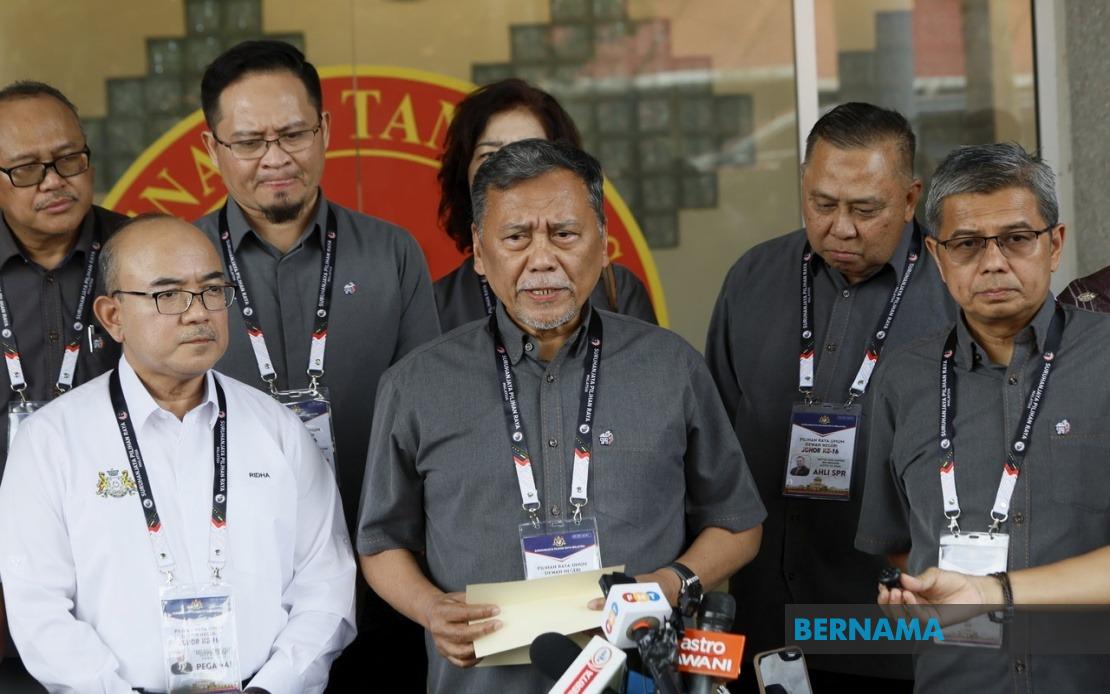
The Election Commission is banking on strong participation in the Johor state election's early voting phase, with officials projecting a 96 per cent turnout based on established patterns from previous electoral contests. EC chairman Datuk Seri Ramlan Harun made the forecast after observing voting procedures at Kem Mahkota in Kluang, noting that the Commission has consistently achieved similarly high rates during advance polling in past elections and saw no reason to expect a different outcome this time.
The early voting exercise, held across 62 locations throughout Johor, reflected the Commission's careful logistical planning to accommodate voters unable to participate during the main polling day. The facilities operated on staggered closing times, with 29 centres shutting down at noon, five additional centres at 2 pm, and the remaining 28 continuing operations until 5 pm. This arrangement acknowledged the different schedules and movements of the eligible voters participating in the advance phase.
The early voting process catered exclusively to specific categories of electors: military personnel and their spouses numbering 8,544 individuals, and police officers alongside their spouses totalling 12,063 people. In aggregate, some 20,607 early voters cast their ballots during the designated period. These institutional voters—defence and security personnel—have long been permitted to vote in advance due to the operational demands of their roles, which frequently prevent them from voting on the standard election day.
Security and ballot integrity formed critical elements of the Commission's procedural framework. Following the close of each early voting centre, ballot boxes containing completed ballots would be transported to police stations, where they would remain in secure custody until the official counting process commenced. This precautionary approach ensured that votes cast during the advance phase maintained their integrity and secrecy before being tallied alongside ballots from the general electorate.
The actual vote counting was scheduled to begin at 5 pm on the Saturday polling day, when early and general ballots would be combined and processed. Commission officials expressed confidence in their ability to complete the count and declare results well before the midnight deadline, with Ramlan projecting that comprehensive results could potentially become available as early as 10 pm. This timeline would allow media organisations and the public swift access to outcome information while maintaining rigorous counting procedures.
The broader electoral context involved approximately 2.7 million ordinary voters eligible to participate in the main Saturday polling, representing the substantially larger segment of the Johor electorate compared to the early voting cohort. The Election Commission issued a public appeal for maximum turnout, framing electoral participation as a fundamental civic responsibility and an essential expression of Malaysia's democratic values. Officials emphasised that widespread voter engagement strengthened the legitimacy and representativeness of democratic institutions.
For Malaysian electoral observers and political analysts, the Johor state election represented a significant test of voter sentiment and party performance in one of the nation's most politically consequential states. Johor's substantial population and economic importance made its electoral outcomes relevant not merely to state-level governance but also to broader calculations about national political trends and the relative strength of competing coalitions.
The Commission's projection of high early voting participation reflected institutional confidence in established procedures and voter compliance with designated voting arrangements. The historical benchmark of 96 per cent among advance voters suggested that military and police personnel, when provided dedicated voting facilities and clear scheduling, exercise their franchise at remarkably high rates. Whether ordinary Saturday voters would match this enthusiasm remained an open question, though the Commission's public messaging implied optimism about overall turnout.
Logistically, the exercise demonstrated the Commission's substantial operational capacity, coordinating polling infrastructure across numerous locations and managing distinct voter populations with different requirements. The coordination between the Election Commission and security agencies—which provided venue custody and ballot transportation—underscored the interconnected nature of electoral administration in Malaysia's institutional framework. For Southeast Asian comparators studying democratic administration in the region, Malaysia's approach to managing advance voting and ballot security offered relevant case study material.
The Saturday main polling day would ultimately determine not only the composition of Johor's state assembly but also provide insights into electoral momentum across Malaysia as whole. Results emerging from this exercise would inform political calculations for subsequent contests and potentially influence coalition strategies and policy positioning among competing parties. The early voting phase, while numerically smaller than the general vote, thus carried significance beyond its immediate participant numbers as an indicator of institutional preparedness and procedural integrity for the broader electoral exercise.

