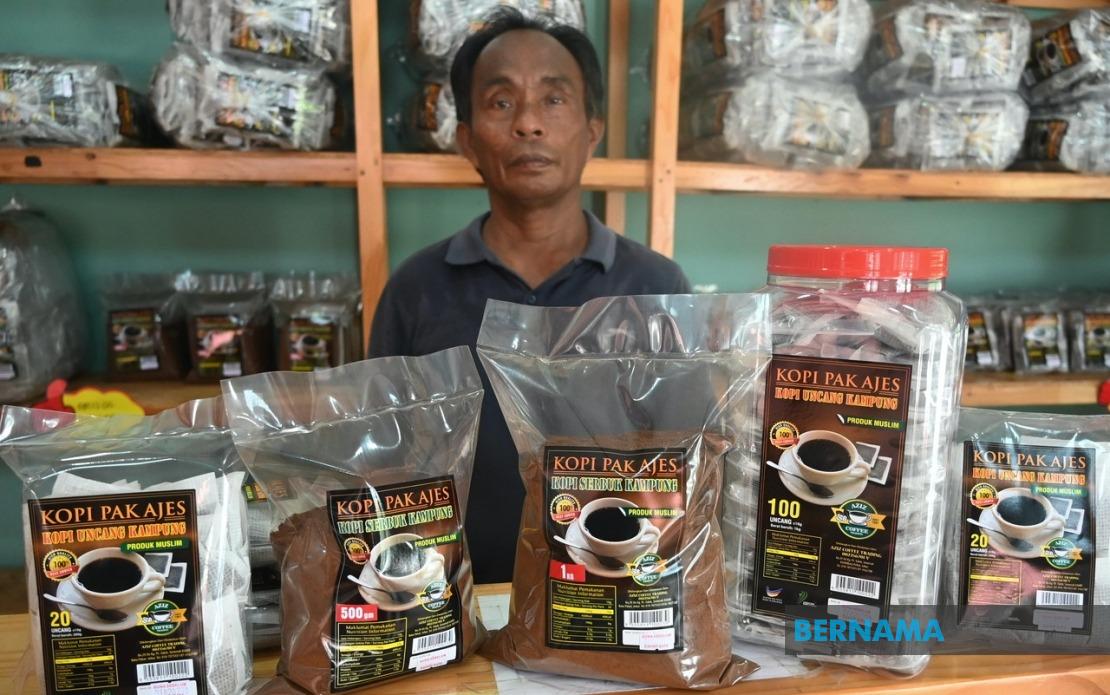
The 16th Johor state election, featuring 172 candidates competing for 56 seats, has produced an unexpected windfall for small business operators capitalizing on the heightened activity that accompanies the electoral season. In Kampung Parit Sidek, Semerah, one such beneficiary is Aziz Mohd, a 65-year-old coffee entrepreneur popularly known as Pak Ajes, whose venture into coffee manufacturing has flourished amid the campaign frenzy. As candidates and their teams traverse constituencies including Semerah, Sungai Balang, and Bukit Naning, the demand for beverages and refreshments has created an unexpected commercial opportunity for established local suppliers.
Pak Ajes chairs Aziz Coffee Trading, a business he has cultivated across more than three decades, and the election season has forced him to implement significant operational adjustments. The surge in orders necessitated doubling his production capacity to fulfill requests primarily emanating from political campaign machinery and election workers operating across the state. In advance of the polling period, representatives from various candidates' camps approached him to arrange bulk coffee supplies, prompting both Pak Ajes and his son Muhammad Fitri to prepare meticulously for the anticipated demand.
Sourcing adequate raw materials became a critical logistical challenge during this period. To satisfy the heightened orders, Pak Ajes extended his supply chain considerably, procuring coffee beans from Rengit and Kluang in addition to his regular sources. This geographic expansion of procurement networks reflects the scale of demand generated by election season activity, a phenomenon that rarely occurs within his normal commercial calendar. The entrepreneur expressed gratitude for this temporary commercial windfall, acknowledging that such opportunities emerge infrequently in his operational experience.
The foundation of Pak Ajes' enterprise traces back to 1991, when he identified an abundance of coffee beans in a neighbouring village and recognised a commercial opportunity. Rather than immediately establishing formal manufacturing infrastructure, he began by processing beans for personal consumption and assisting acquaintances who operated beverage stalls. His entrepreneurial journey prior to coffee involved quail farming for egg production and mushroom cultivation, both directed toward local suppliers and nearby markets. This diversified agricultural background provided initial capital accumulation—approximately RM200 generated through selling quail eggs and mushroom produce—which he subsequently invested into launching his coffee powder business in modest 100-gram packet sizes.
The scale of operations has expanded considerably from those humble beginnings. Contemporary production capacity reaches 1,500 packets of coffee powder daily, generating over five tonnes monthly for distribution to coffee shops throughout Muar and Batu Pahat. This growth trajectory illustrates the viable market for locally-processed coffee products within Peninsular Malaysia, particularly when marketed through established supply relationships and direct customer engagement. The business model has proven sufficiently robust to support expansion initiatives and technological investment in production infrastructure.
Manufacturing coffee powder demands considerable technical attention and procedural discipline at multiple production stages. The process commences with separation of beans from stems and husks, followed by sun-drying over approximately 15 days to achieve optimal moisture reduction. Subsequent roasting, grinding, and packaging stages each require precise control to maintain product quality and consistency. Packaging presents particular challenges, as coffee powder susceptibility to spillage and exposure to air necessitates careful handling protocols. Extended air exposure causes deterioration in product quality, with powders hardening and clumping when atmospheric moisture infiltrates the packaging, compromising marketability and consumer satisfaction.
Anticipating further market development, Pak Ajes and his son established Kupi Nang Ajes Cafe in 2022 immediately adjacent to the family residence, representing a vertical integration strategy into retail coffee service provision. The café offers various coffee preparations including Americano and latte at significantly reduced pricing compared to conventional commercial establishments, positioning the outlet as an accessible entry point for local consumers seeking quality beverages. This retail extension complements the wholesale manufacturing operations, creating diversified revenue streams and building direct consumer relationships beyond institutional purchasers.
Expansion ambitions extend considerably beyond the current operational footprint. Pak Ajes has articulated intentions to establish additional café outlets in high-traffic commercial zones, specifically identifying Batu Pahat town and Muar as priority locations for secondary operations. The longer-term strategic vision encompasses establishing branches throughout Malaysia's other states, reflecting confidence in the product's market viability and scalability potential. These growth objectives would require substantial capital investment, supply chain management sophistication, and operational infrastructure development across multiple locations.
Governmental support has facilitated business development through targeted assistance programs. The Department of Agriculture has provided both equipment contributions and technical training to enhance operational capacity and product presentation standards. Donated items have included coffee grinding machinery, automated coffee bagging systems, and instructional courses addressing packaging methodology and product labelling compliance. Such institutional support recognises the commercial viability of small-scale coffee processing within Malaysia's rural economy and acknowledges local entrepreneur contributions to agricultural value addition.
The election season windfall experienced by Pak Ajes exemplifies how electoral activities generate secondary economic opportunities for local suppliers and small business operators. Campaign mobilisation requires substantial logistical support including catering and refreshment services, creating temporary but significant demand spikes for established vendors. This phenomenon occurs nationwide during electoral periods, with restaurants, catering enterprises, and beverage suppliers reporting elevated commercial activity. For entrepreneurs like Pak Ajes who maintain production capacity and supply relationships, such seasonal surges provide opportunities for revenue acceleration and business visibility enhancement.
Beyond immediate commercial considerations, Pak Ajes' entrepreneurial journey illustrates Malaysia's grassroots business development capacity and the viability of agricultural product processing within rural economies. Beginning with minimal capital derived from agricultural activities, he has constructed a functional manufacturing enterprise supplying regional markets consistently. This trajectory demonstrates that small-scale agro-processing ventures can achieve operational sustainability and market relevance without requiring substantial initial investment or advanced technological infrastructure. The business model remains fundamentally grounded in quality product delivery and established customer relationships rather than capital-intensive expansion or sophisticated marketing apparatus.
The 16th Johor state election, set for polling on Saturday, represents not merely a political event but a catalyst generating economic activity across multiple commercial segments. While political discourse focuses appropriately on policy platforms and governance visions, the electoral season simultaneously functions as an economic stimulus mechanism benefiting peripheral business operators. For small entrepreneurs strategically positioned within constituencies experiencing intensive campaign activity, election periods create commercially valuable opportunities regardless of political outcomes. Pak Ajes' experience underscores how democratic processes generate economic ripple effects throughout regional economies, supporting diverse commercial operators beyond the political establishment itself.

