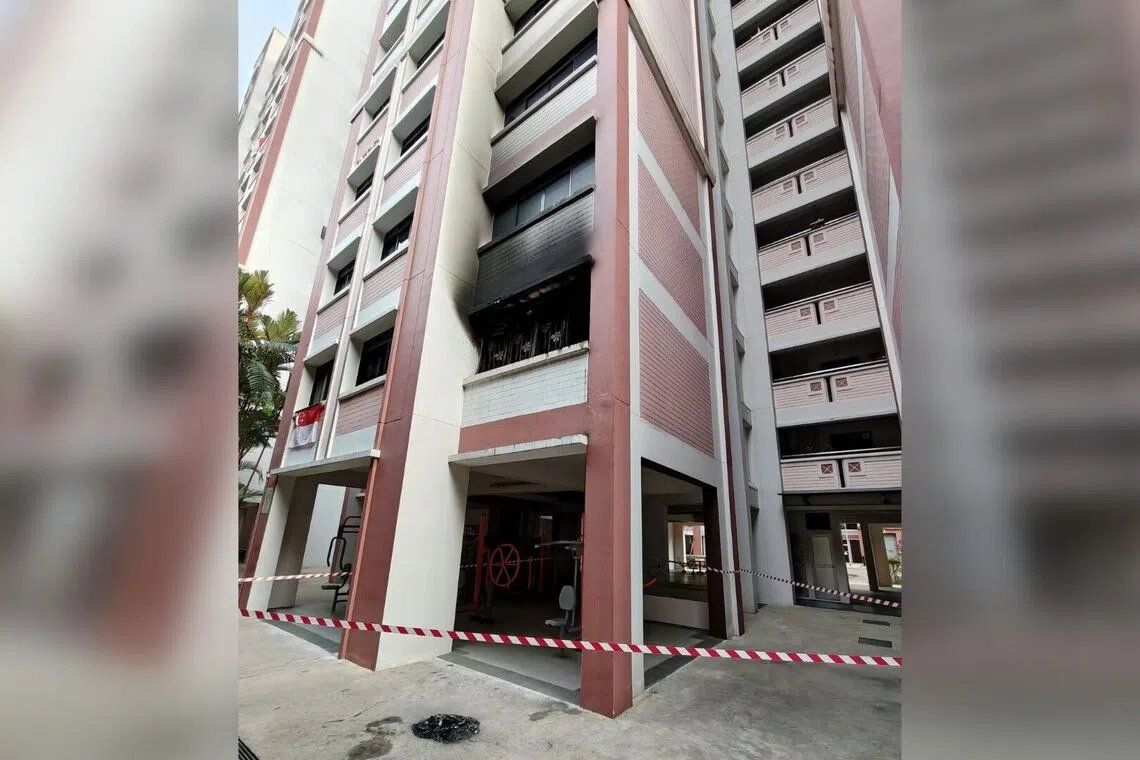
An early-morning fire at a public housing block in Singapore's Buangkok Crescent resulted in one elderly resident being hospitalised, though he was later discharged after treatment for minor injuries. The Singapore Civil Defence Force (SCDF) responded to the incident at Block 979B Buangkok Crescent at approximately 12.25am on Thursday, August 20, bringing the blaze under control using high-pressure water jets. The fire was confined to the contents of a bedroom located in a second-floor unit, preventing it from spreading to other areas of the flat or neighbouring properties.
Ang Mo Kio GRC Member of Parliament Victor Lye confirmed in a Facebook update posted around 1pm that the elderly man who was transported to Sengkang General Hospital had sustained cuts to his feet. The injuries, while requiring immediate medical attention, were not considered serious enough for extended hospitalisation, and the patient was released the same day. In his statement, Lye emphasised the swift response of emergency services and the quick thinking of residents who evacuated the premises.
A remarkable aspect of the incident was the intervention of an ITE (Institute of Technical Education) student residing in an adjacent unit who demonstrated exceptional courage and composure under pressure. The young student deployed a fire extinguisher to help contain the flames before they could spread further, then systematically guided three individuals out of the affected flat to safety. This rapid and decisive action likely prevented the fire from escalating into a more serious emergency that could have endangered lives and damaged multiple units.
Lye publicly commended the student's actions, acknowledging the critical role played by residents themselves in the initial moments of any residential emergency. Such instances highlight the importance of fire safety awareness and the willingness of neighbours to assist during crises. The MP's recognition of the student's bravery also underscores how community members, not just professional responders, form the first line of defence in residential emergencies across Singapore's densely populated housing blocks.
Following the incident, Lye visited the affected flat to provide support to the displaced family and to assess the situation firsthand. The Ang Mo Kio GRC administration made the Residents' Network centre available for temporary accommodation and assistance, offering the displaced residents a place to regroup and receive support services. However, the family opted to remain with their neighbouring benefactor rather than relocate to the community centre, suggesting the strong bonds of solidarity that often develop among HDB residents during emergencies.
The fire raises routine questions about residential fire safety in Singapore's high-density public housing environment. Although the cause remains under investigation, such incidents serve as reminders of the importance of maintaining clear exits, keeping flammable materials away from heat sources, and ensuring that fire safety equipment remains accessible and functional in every household. For Malaysian readers, Singapore's experience in managing residential fires reflects broader Southeast Asian urban safety challenges, particularly in densely populated public housing developments where rapid evacuation and community response are critical.
Singapore's SCDF has consistently emphasised prevention strategies and community education alongside emergency response capabilities. The agency regularly conducts fire safety awareness campaigns and provides training on the proper use of fire extinguishers to residents. The successful outcome in this Buangkok incident—where no lives were lost and injuries remained minor—reflects both the effectiveness of professional emergency response and the value of an informed, engaged community prepared to act during emergencies.
The incident also demonstrates the practical reality of life in Singapore's HDB flats, where thousands of families live in close proximity. The rapid mobilisation of both official resources and spontaneous neighbourly assistance prevented what could have been a tragedy. For policy makers and urban planners across the region, such events reinforce the necessity of comprehensive fire safety infrastructure, regular maintenance protocols, and community preparedness programmes in residential settings.
As investigations into the fire's origin continue, the focus on prevention and community resilience will likely dominate official responses. The quick thinking of the ITE student and the professional response of SCDF personnel combined to contain what could have become a major incident, illustrating how layered safety responses—community awareness, immediate action by residents, and professional emergency services—create an effective defence against residential fires in high-rise public housing environments.

