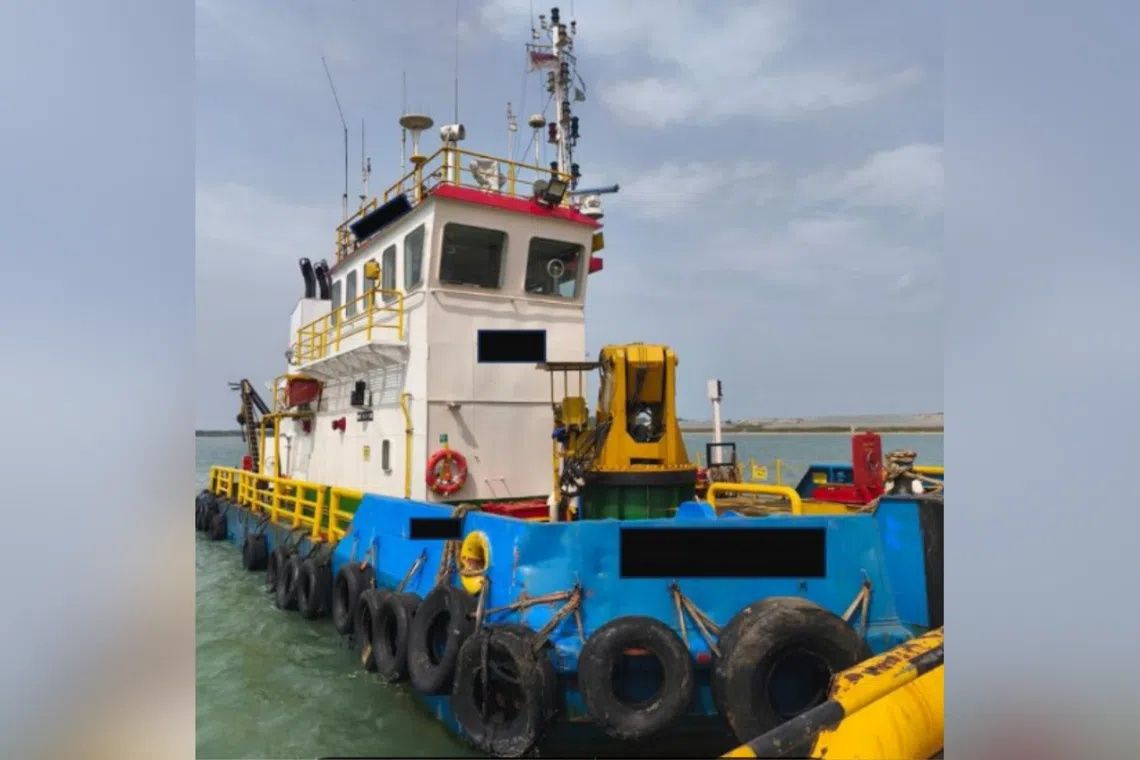
Singapore authorities have arrested eight men suspected of orchestrating an illegal fuel transaction aboard a tugboat operating in the Tuas waters, marking another enforcement action against maritime fuel theft in the region's busy shipping lanes. The suspects, ranging in age from 25 to 54 years old, were taken into custody following a dawn inspection by Police Coast Guard officers on August 13 and are scheduled to face charges in court on August 14.
The incident unfolded when Police Coast Guard personnel boarded the Singapore-registered tugboat at approximately 1.05 am during a routine security check near Tuas. Initial findings from the investigation indicated that all eight arrested individuals held crew positions aboard the vessel and had deliberately taken marine gas oil without the knowledge or consent of their employer. The fuel in question was valued at approximately S$10,570 and represented a flagrant breach of maritime protocol and company trust.
Crew involvement in fuel theft represents a particularly troubling dimension of maritime crime in Southeast Asian waters. Unlike external piracy or organized smuggling rings, internal theft by crew members exploits the access and trust inherent to their employment. These individuals would have intimate knowledge of fuel storage locations, security procedures, and operational schedules, making them uniquely positioned to execute such crimes. The fact that all eight arrested men held crew roles suggests a coordinated operation rather than isolated opportunistic theft, pointing to a possible organized scheme involving multiple complicit parties.
The stolen fuel was reportedly sold to third parties for personal profit, transforming a straightforward case of misappropriation into one involving commercial transaction and distribution of illegally obtained maritime resources. This adds complexity to the criminal enterprise, as it likely involved coordination with external buyers and possibly arranged transport or transfer mechanisms. The investigation will presumably seek to identify these external parties and the full extent of the supply chain that benefited from the diverted fuel.
Marine gas oil, also known as marine diesel oil, represents a critical operational resource for vessels throughout Southeast Asian shipping routes. The relatively high value of the stolen quantity indicates the significant financial stakes involved in maritime fuel operations. Singapore's position as one of the world's largest bunkering hubs means that fuel theft and illegal transactions in its territorial waters carry implications far beyond a single incident, potentially destabilizing fuel supply chains and pricing mechanisms that serve the broader region's maritime industry.
Under Singapore law, the arrested men face charges related to theft by a servant of property in the possession of a master—a statutory offense specifically designed to address embezzlement and misappropriation by employees. Conviction on these charges carries substantial penalties, including potential imprisonment for up to seven years alongside monetary fines. These sentences reflect Singapore's serious approach to maritime crime and the protection of commercial interests within its territorial waters. The severity of potential punishment signals that authorities view crew-involved fuel theft as a significant threat requiring strong deterrence.
The enforcement action highlights Singapore's ongoing commitment to maritime security, a cornerstone of its broader regional stability efforts. The Police Coast Guard maintains regular patrols and unannounced inspections across Singapore's territorial waters and exclusive economic zone to detect and prevent illicit maritime activities. These operations are resource-intensive, requiring specialized training, equipment, and coordinated intelligence gathering. The tugboat inspection that led to this arrest exemplifies the proactive approach authorities employ to combat maritime crime before it escalates or becomes systematized.
Illegal fuel transactions in Southeast Asian waters have emerged as an increasingly prevalent concern for regional maritime authorities. Beyond theft by crew members, authorities contend with organized smuggling networks, ship-to-ship transfers of contraband fuel, and complex schemes involving false documentation. Singapore's strict regulatory environment and aggressive enforcement stance provide a contrast to some less-regulated neighboring waters, where fuel laundering and theft operate with greater impunity. The city-state's approach serves as a regional model, though it also reflects the enormous resources required to effectively police maritime crime.
The incident occurs against a backdrop of rising fuel costs and global supply chain disruptions affecting shipping operations throughout Southeast Asia. Economic pressures on crew members and maritime operators may create incentives for illegal activities. Understanding the socioeconomic drivers behind crew participation in theft—whether desperation, inadequate wages, or deliberate criminal intent—will be crucial for developing comprehensive prevention strategies beyond enforcement alone. Malaysian maritime authorities and regional counterparts can learn from Singapore's investigative approach and outcomes as they manage similar risks in their own waters.
Looking forward, this case underscores the importance of robust internal security protocols aboard commercial vessels operating in Southeast Asian waters. Enhanced crew vetting, improved fuel monitoring systems, regular inventory audits, and secure storage mechanisms can significantly reduce vulnerability to internal theft. The investigation will likely generate findings that influence best practices across the regional maritime industry. Vessel operators are increasingly recognizing that investing in security measures yields returns through reduced losses and enhanced operational integrity.
The successful apprehension and legal proceeding against these eight individuals sends a clear message to maritime workers and potential offenders throughout the region: illegal fuel transactions carry serious consequences in Singapore waters. As the enforcement action proceeds through the courts, it will contribute to a growing body of case law and precedent that shapes maritime crime prosecution. Malaysian and other regional authorities will monitor the outcome for insights applicable to their own jurisdictions.

