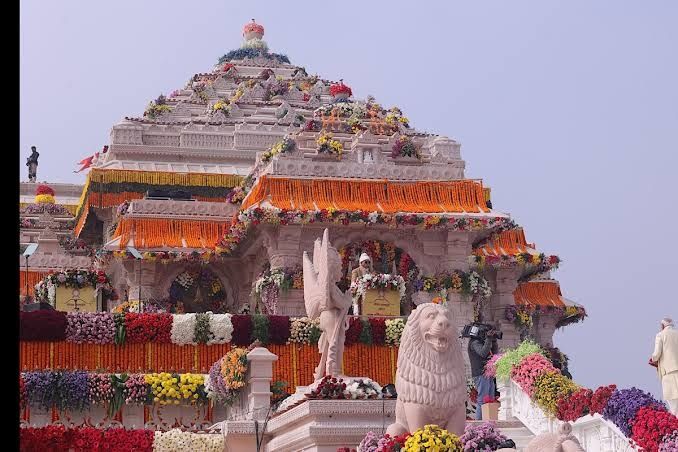
Law enforcement in Uttar Pradesh has taken eight people into custody following allegations of systematic theft and improper handling of donations at the Ram Mandir temple in Ayodhya, one of India's most symbolically significant religious sites. The arrests were made on Thursday after a criminal case was formally registered, with police and government authorities announcing the development late that evening. The temple, which opened to the public in 2024 after its construction, has become central to the political identity of Prime Minister Narendra Modi and his Hindu-nationalist agenda.
The Ram Mandir stands on land where the Babri mosque had stood for centuries until its demolition in 1992, an event that became a watershed moment in Indian politics and shaped the electoral trajectory of Modi's Bharatiya Janata Party. The temple's inauguration by Modi himself marked a symbolic triumph for Hindu-first politics in India, drawing millions of devotees and becoming a focal point of national religious sentiment. The controversy now surrounding the temple administration threatens to undermine this carefully constructed narrative of religious significance and governmental stewardship.
Among those arrested are multiple temple employees whose primary duties involved the collection, counting, and safeguarding of offerings made by pilgrims. These donations take various forms, from cash contributed by visitors to precious metals including gold and silver jewellery left at the shrine. The alleged irregularities in how these materials were processed and recorded have raised serious questions about internal financial controls at one of India's most prominent religious institutions. Officials have not yet publicly disclosed the full scope of the suspected misappropriation.
While the government statement has remained vague regarding the total amount involved, opposition politicians and media investigations suggest the theft could exceed US$20 million. This figure, if accurate, represents a substantial portion of the temple's operational revenues and raises uncomfortable questions about governance and transparency at the site. The alleged scale of the wrongdoing has transformed what might otherwise have been a routine embezzlement case into a matter of national concern with political ramifications.
The emotional toll on donors has been immediate and visible. Viti Saxena, a homemaker who had contributed to the temple's coffers, expressed profound dismay about whether her donation had actually benefited the temple or been diverted elsewhere. Her sentiment captures a widespread anxiety among Hindu devotees whose faith in the institution has been shaken by revelations of internal corruption. This erosion of trust represents a significant challenge to the temple's credibility as a repository of religious devotion and community resources.
Those taken into custody face multiple serious charges including criminal breach of trust, conventional theft, criminal conspiracy, and corruption under Indian law. The gravity of these charges suggests investigators believe the conduct involved more than isolated instances of misconduct, pointing instead to a systematic pattern of embezzlement. The nature of the allegations indicates that access to donation materials, combined with inadequate oversight mechanisms, may have created opportunities for sustained illegal activity.
Uttar Pradesh Chief Minister Yogi Adityanath, whose administration established the Special Investigation Team tasked with examining the case, publicly committed to pursuing the matter vigorously. His statement promising that no guilty person would escape accountability reflects the political sensitivity surrounding the investigation. Both the central and state governments understand that how they handle this scandal will significantly influence public perception of their commitment to institutional integrity and religious governance.
The temple itself represents one of the most expensive religious construction projects in recent Indian history, with development costs estimated at US$240 million. Notably, the entire construction budget was sourced through public donations rather than government funding, making devotees stakeholders in the facility's success and ethical operation. This reliance on voluntary contributions from ordinary Hindus makes the alleged theft particularly troubling, as it involves funds entrusted by believers for religious purposes.
The Ram Mandir's religious significance stems from Hindu theological tradition holding that the deity Ram was born in Ayodhya more than seven thousand years ago. According to this belief system, the Babri mosque had been constructed over this sacred birthplace by a sixteenth-century Muslim emperor. The mosque's eventual demolition in 1992 became a galvanizing event for Hindu nationalist movements and fundamentally altered India's political landscape by elevating the BJP from a marginal opposition force to the nation's dominant electoral power.
The controversy threatens to complicate the government's broader Hindu-nationalist political agenda at a sensitive moment in Indian public discourse. The Ram Mandir has served as a physical manifestation of the BJP's success in translating religious sentiment into political power, and the corruption allegations undermine claims about the party's commitment to institutional excellence and moral governance. Opposition parties have seized upon the scandal as evidence that religious symbolism has been prioritized over substantive governance and accountability.
For Southeast Asian observers, the scandal illustrates how even highly significant religious and political projects remain vulnerable to financial misconduct and administrative failure. The case demonstrates that substantial public investments in religious infrastructure require robust oversight mechanisms and transparent governance structures to maintain community trust. The Ram Mandir's troubles serve as a cautionary example of how institutional corruption can damage not merely financial credibility but also the spiritual and moral authority of religious sites.
The investigation's eventual outcome will establish important precedents about how Indian authorities balance respect for religious institutions with enforcement of criminal law. The charges against the arrested individuals, combined with the stated commitment to hold all culpable parties accountable regardless of position, suggest that the investigation will proceed seriously. However, given the political sensitivity of the case and the temple's significance to the ruling party's identity, questions about whether the process remains truly independent and thorough will likely persist among sceptics.

