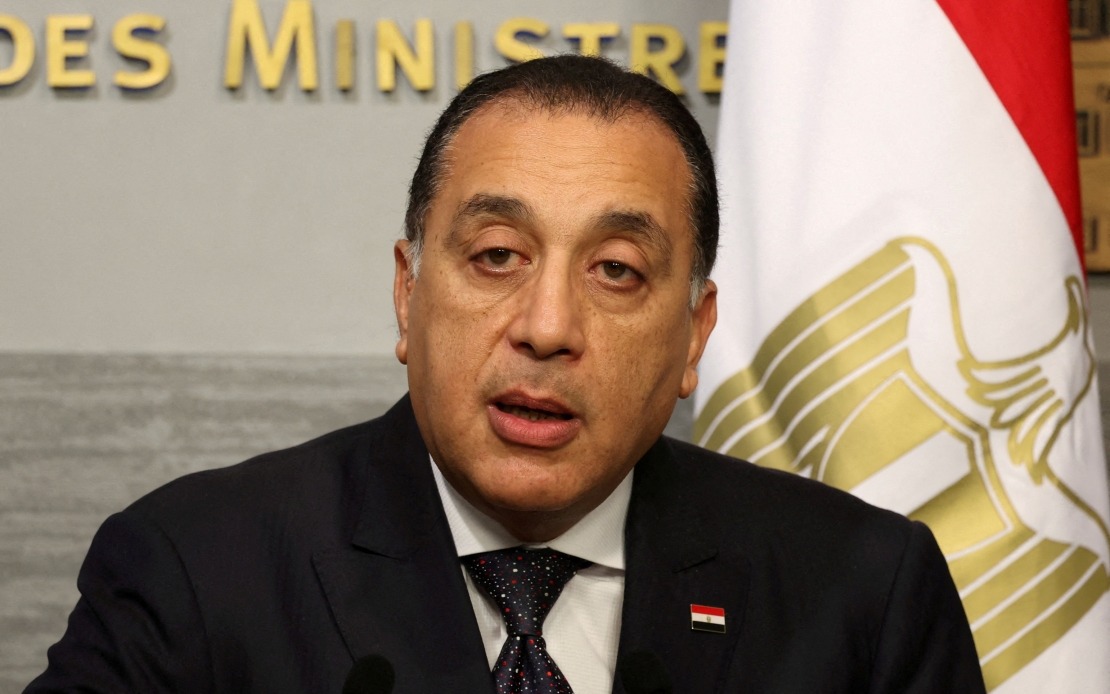
Egypt is advancing construction of its maiden nuclear power facility, with government officials confirming that the inaugural reactor should begin supplying electricity to the national grid by 2028. Prime Minister Mostafa Madbouly disclosed the timeline during discussions with Alexey Likhachev, who leads Russia's state atomic energy corporation Rosatom, as engineers completed installation of the pressure vessel for the facility's second unit. The milestone underscores steady progress on what Cairo views as a transformative infrastructure project linking the two nations.
The El Dabaa Nuclear Power Plant, situated along the Mediterranean coast in Egypt's northwestern Matrouh Province roughly 300 kilometres from Cairo, represents the culmination of years of diplomatic and technical collaboration. Initial contracts between the Egyptian and Russian governments took effect in December 2017, establishing the legal and financial framework for what officials describe as a long-overdue undertaking that could reshape the country's energy landscape. Madbouly emphasised Cairo's resolve to maintain the project schedule, suggesting confidence in current implementation despite the region's complex geopolitical environment.
The facility will ultimately consist of four reactor units, each rated at 1,200 megawatts of generating capacity, bringing total planned output to 4,800 megawatts. Following the first reactor's anticipated 2028 connection, the remaining three units are expected to enter service sequentially, with full operational capacity anticipated by 2030. This phased approach allows Egypt to gradually integrate substantial new baseload generation into its power system while managing grid stability and workforce training requirements.
For Malaysia and the broader Southeast Asian region, Egypt's nuclear venture carries implications for how developing economies approach energy security amid climate commitments. The partnership demonstrates an alternative pathway to infrastructure development, relying on Russian rather than Western consortiums—a choice that reflects both geopolitical alignments and the competitive landscape of nuclear technology export. Regional policymakers observing Egypt's experience may draw lessons regarding project financing, long-term construction timelines, and the integration of foreign expertise into domestic energy strategies.
Egypt's rationale for pursuing nuclear generation is straightforward: the nation faces mounting electricity demands as its population approaches 110 million, with conventional fossil fuel sources increasingly strained by economic constraints and climate imperatives. The government frames nuclear power as essential to meeting future consumption while reducing carbon emissions and dependence on imported petroleum. This positioning aligns with broader Middle Eastern trends toward diversifying energy portfolios, though Egypt's particular circumstances—rapid population growth, substantial groundwater and irrigation needs, and limited hydrocarbon reserves relative to neighbours—make the case for nuclear expansion particularly compelling.
Likhachev's attendance at the pressure vessel installation ceremony reflects Rosatom's substantial commercial and strategic interest in seeing the project succeed. Russian involvement extends beyond mere contract fulfilment; the corporation benefits from demonstrating nuclear infrastructure expertise in a major non-aligned nation, potentially paving the way for similar arrangements across Africa and the Middle East. The public affirmation of support from Moscow's top atomic official also signals resolve despite international sanctions pressures that have complicated Russian business operations elsewhere.
The El Dabaa project's construction phase will generate significant employment and technology transfer opportunities within Egypt's engineering and industrial sectors. Training Egyptian technicians in nuclear operations, maintenance, and safety protocols represents a substantial capability-building exercise. Domestic supply chains will partially support construction and ongoing operations, though core reactor components and expertise remain reliant on Russian suppliers and specialists—a dependency that creates both economic linkages and potential vulnerabilities should geopolitical relations deteriorate.
Financial arrangements underpinning the project remain largely opaque to public scrutiny, though industry analysts estimate total costs between $20 and $30 billion across the four-unit facility. Russia has reportedly extended financing mechanisms to Egypt, reducing immediate capital burdens while creating long-term repayment obligations. This financing model—wherein nuclear exporters provide both technology and funding—has become increasingly common as Western institutions tightened lending criteria following the 2008 financial crisis.
From a nuclear safety and regulatory perspective, Egypt faces the challenge of establishing robust oversight frameworks for an industry entirely new to the nation. The International Atomic Energy Agency has provided technical cooperation, yet critics worry about institutional capacity given Egypt's experience with other large infrastructure projects marked by schedule delays and cost overruns. The government has committed to adopting international safety standards and participating in peer review mechanisms, though implementation across a complex bureaucracy remains an ongoing concern for international nuclear governance bodies.
The timing of the 2028 target arrives amid Egypt's broader struggle with electricity supply adequacy. Recent investments in solar and wind farms have begun diversifying the generation mix, yet baseload capacity remains insufficient during peak demand periods. Nuclear generation, once fully operational, would address this structural gap by providing reliable 24-hour output independent of weather conditions. This complementarity between renewables and nuclear reflects sophisticated energy planning, though execution risks persist given Egypt's regulatory environment and the project's unprecedented scale.
Regional geopolitics colour the El Dabaa initiative in ways that extend beyond energy economics. Egypt's deepening nuclear partnership with Russia coincides with Cairo's multi-vector foreign policy, maintaining relationships with the United States and European powers while expanding ties with Moscow and China. The nuclear venture thus becomes one facet of a broader strategic balancing act, with energy security merging seamlessly into calculations about great power relationships and regional positioning.
For Southeast Asian observers, Egypt's nuclear commitment offers a cautionary tale and potential inspiration simultaneously. The cautionary element involves the long lead times and substantial capital requirements inherent to nuclear projects, demanding sustained political will and financial commitment across multiple electoral cycles. The inspirational aspect lies in recognizing that meeting climate goals while supplying rapidly growing populations may require technologies beyond renewables alone, and that international partnerships—however complex—enable nations to access capabilities otherwise unattainable domestically. As Egypt progresses toward 2028, its trajectory will inform how other developing regions evaluate nuclear energy within their energy transitions.

