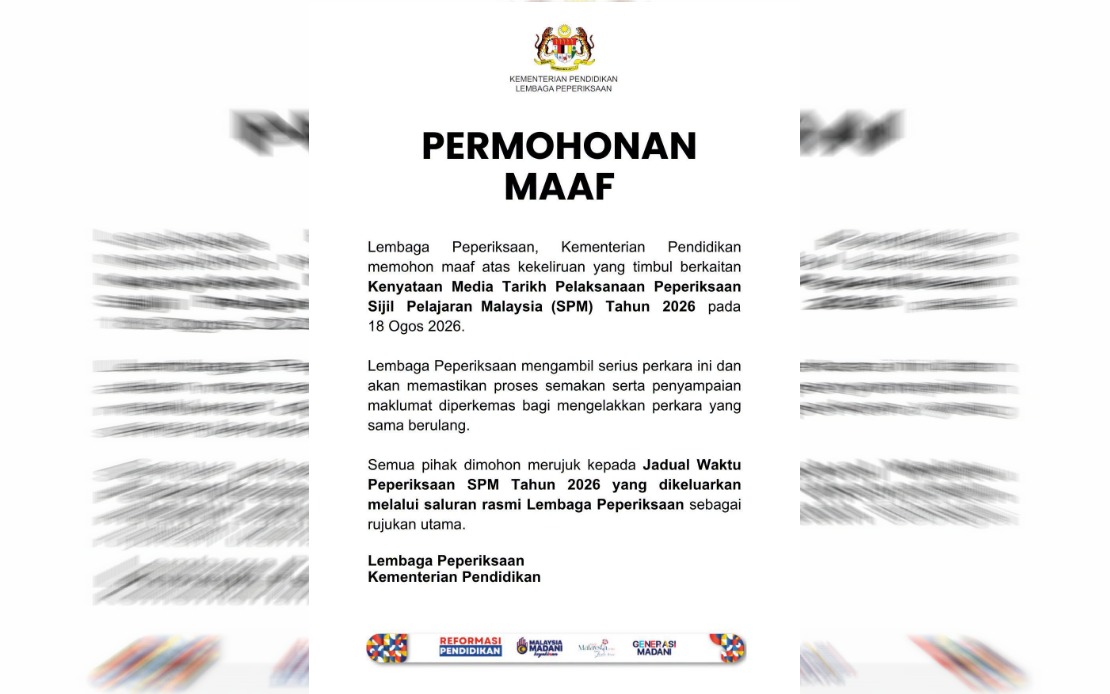
The Ministry of Education's Examination Board has issued a formal apology for the confusion created by an inconsistent press release distributed yesterday regarding the 2026 Sijil Pelajaran Malaysia examination schedule. The clarification came today as the board sought to address concerns among students, parents, and educators who had received conflicting information about when the crucial national examination would take place.
In its statement, the Examination Board acknowledged the seriousness of the communication error and pledged to strengthen its internal review and information dissemination procedures. The board indicated that such administrative missteps would be actively prevented through improved processes, signalling a commitment to more reliable institutional communications on matters affecting hundreds of thousands of Malaysian students.
To resolve the confusion, the board has directed all stakeholders to rely exclusively on the official 2026 SPM Examination Timetable distributed through the Examination Board's authorised channels as their primary reference document. This instruction underscores the importance of consulting government sources directly rather than secondary or third-party interpretations of examination schedules, particularly when discrepancies emerge.
The scale of the oversight becomes apparent when considering the number of candidates preparing for this examination cycle. Approximately 420,879 students have already registered to sit for the 2026 SPM across 3,334 examination centres spanning the entire nation. This vast cohort—representing Malaysia's next generation of school leavers—depends on clear, consistent guidance about examination timing, as any ambiguity can disrupt study schedules and preparation timelines.
The confirmed examination schedule places the 2026 SPM across nearly four weeks, commencing on November 23 and concluding on December 17. This extended testing period is standard for the SPM format, which encompasses multiple subjects tested across numerous sessions. Students preparing for the examination need absolute clarity about these dates to coordinate their revision schedules, arrange travel to examination centres, and manage personal obligations alongside their academic preparation.
The confusion likely stemmed from inconsistencies between the hastily released press announcement and the formal timetable, perhaps involving different interpretations or typographical errors in the initial communication. For an examination board operating under the purview of the Ministry of Education, such discrepancies carry particular weight given the institutional responsibility to maintain accurate information channels for one of Malaysia's most significant educational assessments.
This incident highlights broader questions about administrative communication standards within government educational agencies. With thousands of schools, hundreds of thousands of students, and numerous logistics partners relying on timely, accurate information from the Examination Board, any breakdown in messaging can cascade through the education system. Parents may become unnecessarily anxious, school administrators may struggle to schedule resources appropriately, and students may experience unwarranted stress during an already demanding period.
The board's commitment to streamlining its information delivery processes suggests an internal review is underway to identify where the breakdown occurred. This likely involves examining the approval workflows for press releases, implementing verification checkpoints before public dissemination, and potentially reassigning responsibilities to ensure greater accuracy. Such institutional reforms, if properly executed, could prevent similar episodes in future examination cycles.
For Malaysian students and their families, the priority remains accessing reliable information through official Examination Board channels. The ministry's website, official statements, and communications from schools—which typically receive validated information from the board—should serve as primary sources. With over 420,000 candidates depending on consistent scheduling information, maintaining communication integrity is not merely an administrative concern but an educational imperative.
The November 23 to December 17 window now stands as the authoritative schedule. Students should structure their final examination preparation around these confirmed dates, with schools and coaching institutions required to align their timetables accordingly. As the 2026 examination cycle progresses, any future announcements from the Examination Board should undergo rigorous verification to prevent similar confusion that could undermine public confidence in the institution's reliability.

