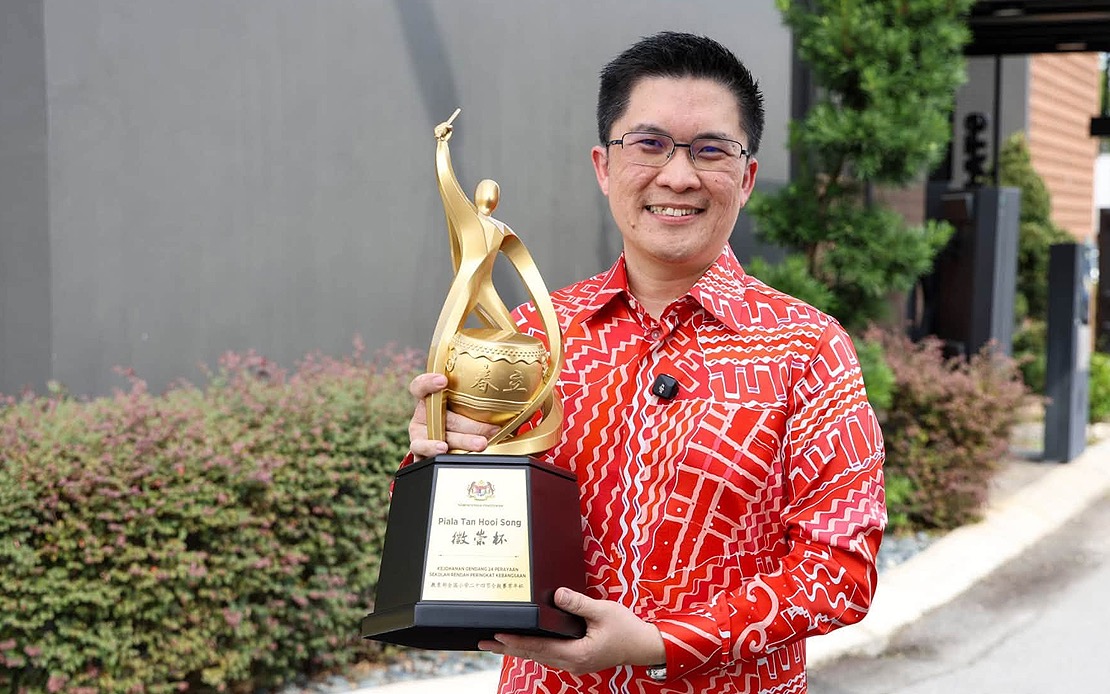
Malaysia's Education Ministry has pledged to pursue international recognition for Gendang 24 Perayaan, the distinctive traditional percussion ensemble, by submitting it for UNESCO status as a cultural heritage form. Deputy Education Minister Wong Kah Woh announced the initiative at the National Primary Schools Gendang 24 Finals Competition in Ipoh, signalling a strategic commitment to safeguarding this uniquely Malaysian art form on the world stage.
The decision reflects growing recognition within government circles that cultural preservation requires sustained institutional backing and global validation. By seeking UNESCO classification, Malaysia aims to elevate Gendang 24 Perayaan's standing both domestically and internationally, ensuring its continued relevance in an increasingly globalised cultural landscape where traditional arts compete for attention with modern entertainment forms.
Wong explained that deliberations spanning both ministerial and grassroots community levels have informed the pathway forward. These consultations have identified concrete strategies to fortify the art form's development and integration within Malaysia's educational ecosystem. The collaborative approach underscores how heritage preservation operates as a shared responsibility between government agencies, cultural associations, educational institutions, and committed practitioners.
One pivotal programme launched by the Ministry of Education involves systematic training for school educators through a Train the Trainers initiative. By equipping teachers with competency in Gendang 24 Perayaan, the ministry creates a multiplier effect that expands the art form's institutional footprint across primary schools nationwide. This pedagogical strategy transforms cultural transmission from reliance on traditional family networks into a formalised educational pathway, enabling broader access for students regardless of ethnic background or cultural heritage.
The inaugural National Primary Schools Gendang 24 Finals Competition itself demonstrated the programme's early momentum. Sixteen elite teams representing 417 primary school students from across Malaysia participated, reflecting remarkable growth in youth participation and institutional adoption. The competition format channelled competitive energy toward celebrating cultural excellence, mirroring approaches successfully used in sports and academic competitions while reinforcing cultural pride among younger generations.
Gendang 24 Perayaan's historical trajectory illustrates Malaysia's evolving approach to cultural stewardship. Established in 1988 by cultural luminaries the late Tan Hooi Song and Tan Chai Puan, the art form gained official recognition as Intangible National Heritage in 2009. Since its inception, participation has expanded exponentially from isolated school teams to hundreds of educational institutions. This growth trajectory demonstrates sustained organic appeal and institutional viability rather than artificial or top-down promotion.
The art form's expansion within Malaysian educational structures over nearly four decades positions it as a potent symbol of national cultural identity. Unlike heritage forms constrained to ceremonial or museum contexts, Gendang 24 Perayaan has integrated into living school cultures, attracting diverse student cohorts. This intergenerational transmission within dynamic educational settings contrasts sharply with cultural forms gradually retreating into nostalgic remembrance or academic study.
For Malaysia's regional and international positioning, UNESCO recognition carries strategic implications. Such designation enhances cultural soft power and international standing while providing protective status against commercialisation or distortion. In Southeast Asia, where regional nations increasingly compete to promote distinctive cultural identities, securing international heritage validation strengthens Malaysia's cultural diplomacy and tourism narratives. UNESCO classification also triggers support mechanisms, funding eligibility, and global exposure that amplify preservation efforts.
The competition's sponsorship by Yayasan Sime Darby reflects private sector engagement with cultural preservation agendas. Corporate partnerships inject resources while lending business legitimacy to heritage initiatives. Such collaborative models between government, community organisations like the Malaysia Gendang 24 Perayaan Association, and private entities demonstrate how cultural preservation transcends narrow sectoral boundaries and requires sustained multi-stakeholder investment.
Educationally, integrating Gendang 24 Perayaan into school curricula addresses broader pedagogical objectives beyond cultural studies. The art form develops rhythm, coordination, ensemble discipline, and cross-cultural appreciation among students. It provides Malaysian youth tangible connection to heritage identity while competing effectively against entertainment alternatives for attention and engagement. Educational integration ensures generational continuity even as broader social change threatens transmission of traditional practices.
The UNESCO application process itself represents a formalisation of Malaysia's commitment to cultural preservation. Such applications require substantial documentation, community consent, and strategic positioning demonstrating the art form's significance beyond national borders. Preparing comprehensive UNESCO submissions involves intensive research, stakeholder consultation, and strategic messaging—a process that deepens institutional understanding of the heritage form and reinforces commitment among practitioners and supporters.
Successful UNESCO recognition would position Gendang 24 Perayaan alongside Malaysia's other celebrated cultural treasures, validating indigenous creative traditions at global forums. It signals to Malaysian youth that their cultural heritage merits international respect and institutional investment, counteracting narratives that modernity necessarily demands cultural abandonment. For Southeast Asian nations navigating globalisation's homogenising pressures, asserting distinctive cultural identities through international mechanisms remains strategically important for maintaining social cohesion and national character.

