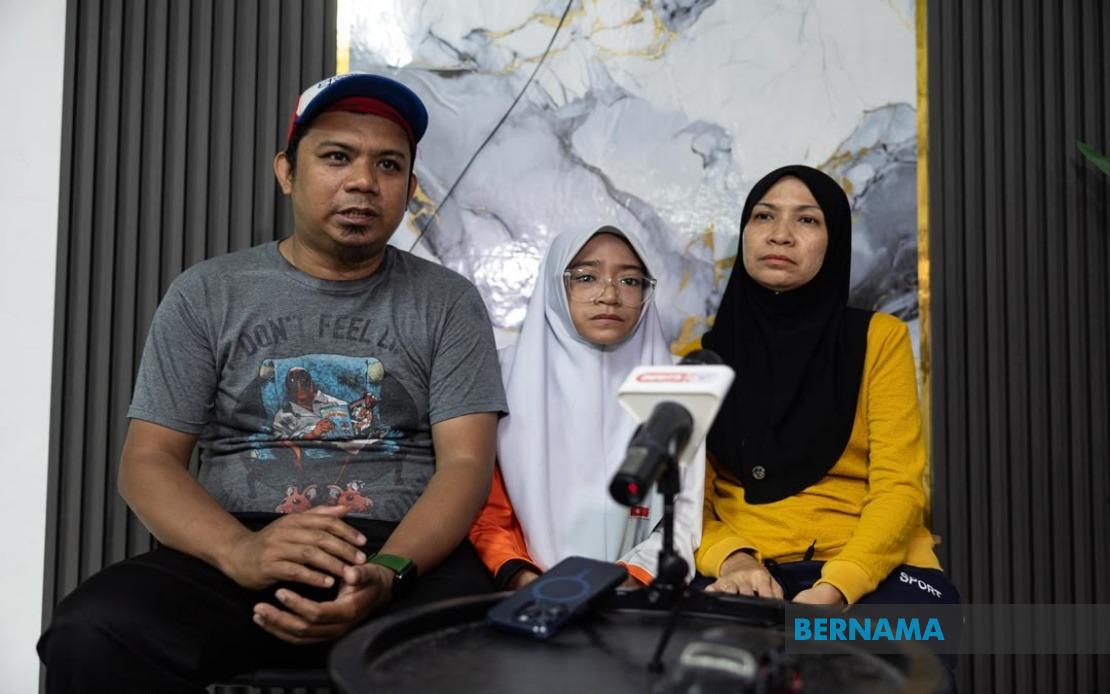
Education Minister Fadhlina Sidek and the Tun Hussein Onn Teachers' Foundation (YGTHO) have stepped in to cover the full cost of corrective spinal surgery for 13-year-old Arissa El Zahra Reduan from Ipoh, pledging RM10,000 towards the procedure scheduled for September 8 at Raja Permaisuri Bainun Hospital. The joint contribution marks a swift response to the teenager's medical need, as her father Reduan Saad had publicly appealed for financial assistance just days earlier to manage the treatment expenses.
Fadhlina announced the commitment through a Facebook post after personally reaching out to Arissa and her mother via video call to convey the news. The minister's approach combined both practical financial intervention with personal engagement, seeking to reassure the teenager at a critical juncture in her treatment journey. In the recorded conversation, Fadhlina explained that the RM10,000 would immediately ease the family's burden and allow them to focus entirely on preparing Arissa for her upcoming procedure without additional financial anxiety.
Scoliosis, a condition involving abnormal curvature of the spine, can significantly impact a young person's health, mobility, and quality of life if left untreated. For teenagers, timely surgical intervention is often essential to prevent the condition from worsening during growth years and to restore normal function. Arissa's case reflects a broader healthcare challenge in Malaysia where families with limited means struggle to access corrective surgical procedures that fall outside standard government subsidy frameworks, despite being medically necessary for a child's wellbeing.
The teenager's situation particularly resonated because her primary concern was not merely physical recovery but the ability to return to school and maintain her educational continuity. This dimension underscores how medical conditions can disrupt a child's academic progress and social development, with cascading consequences beyond the immediate health concern. Fadhlina specifically addressed this in her communication, emphasizing that Arissa's return to the classroom alongside her peers was an integral part of the recovery goal.
YGTHO's involvement in this contribution aligns with the foundation's broader mandate to support educational and welfare initiatives affecting Malaysian families. As a charitable body connected to the teaching profession, the foundation's participation demonstrates how institutional frameworks can mobilize resources to address individual hardship, particularly when cases gain public visibility. The dual contribution from ministerial and foundation sources also highlights how government officials can leverage available channels to assist constituents facing legitimate medical emergencies.
The timeline for Arissa's surgery allows approximately seven weeks for pre-operative preparation and family planning following the announcement. Fadhlina's team committed to facilitating the transfer of funds and coordinating with Raja Permaisuri Bainun Hospital to ensure seamless administrative processing. This coordination is crucial because delays in fund confirmation can complicate hospital scheduling and create additional stress for families already navigating complex medical systems.
For Malaysian parents managing similar situations, Arissa's case offers both hope and practical insight into how appeals can sometimes generate support through political engagement and media attention. However, it also underscores the fragmented nature of healthcare financing for non-emergency but medically essential procedures. While government hospitals provide subsidized treatment, gap funding for comprehensive care often falls to families or requires external assistance, making cases like Arissa's dependent partly on their ability to publicize their circumstances.
The minister's emphasis on prayer and emotional support alongside material assistance reflects Malaysia's cultural approach to healthcare challenges, where spiritual resilience and community encouragement are viewed as complementary to medical intervention. Fadhlina's messaging encouraged Arissa to maintain psychological strength throughout the process, recognizing that adolescent patients facing surgery benefit from comprehensive support extending beyond surgical technique.
From a policy perspective, Arissa's case raises questions about preventive and corrective surgery funding mechanisms for children from lower-income families. While individual ministerial interventions address immediate need, systematic solutions might involve expanded surgical assistance programs, clearer pathways for families to access gap funding, or enhanced insurance coverage for pediatric orthopedic procedures. Malaysia's healthcare system continues to grapple with ensuring that financial constraints do not become barriers to medically necessary treatments for young people.
The successful funding of Arissa's surgery demonstrates responsiveness to individual cases, yet also highlights how such interventions remain discretionary rather than guaranteed. Her recovery outcome, anticipated to unfold over coming months, will provide insight into surgical success and rehabilitation challenges facing young scoliosis patients in Malaysian medical settings. For families in similar circumstances without such ministerial attention, however, the broader challenge of accessing affordable corrective surgery remains largely unresolved, pointing toward the need for more systematic and inclusive healthcare support mechanisms.

