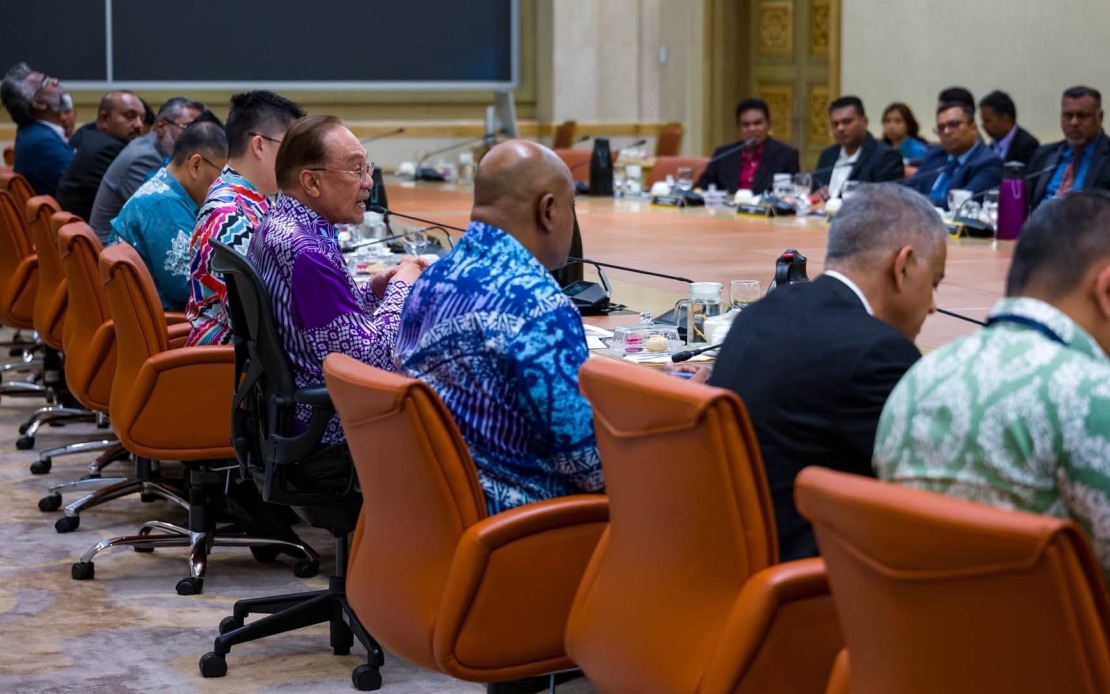
Prime Minister Datuk Seri Anwar Ibrahim has outlined a comprehensive agenda for strengthening the socioeconomic position of Malaysia's Indian community, placing particular emphasis on accessible quality education as a cornerstone of sustainable empowerment. Speaking after consultations with Indian community leaders, Anwar articulated a multi-pronged approach that extends beyond education to encompass welfare provisions, workforce development initiatives, and expanded economic opportunities—recognising that lasting community progress requires intervention across multiple sectors simultaneously.
The Prime Minister's intervention comes at a time when various segments of Malaysia's diverse population seek greater attention to their specific developmental challenges. By convening discussions with Indian community representatives, Anwar signalled the federal government's commitment to addressing grassroots concerns directly rather than through top-down policy implementation alone. This consultative methodology reflects an understanding that sustainable development strategies must incorporate feedback from those most affected by the policies being designed.
Central to Anwar's vision is the activation of the Malaysian Indian Transformation Unit (MITRA), the institutional mechanism tasked with coordinating community development initiatives. Rather than allowing MITRA to operate in isolation from the communities it serves, Anwar instructed the agency and its partner organisations to adopt substantially more proactive engagement strategies at the village and neighbourhood level. This grassroots orientation addresses a persistent challenge in Malaysian governance: the gap between policy formulation in federal ministries and actual implementation in communities where benefits should materialise.
The Prime Minister emphasised that identifying authentic community needs represents a prerequisite for effective resource allocation. Too often, development programmes fail because planners misdiagnose underlying problems or implement solutions designed for generic populations rather than specific demographic contexts. By insisting that MITRA and collaborating agencies undertake detailed needs assessment, Anwar sought to ensure that welfare initiatives, training programmes, and employment schemes address the particular obstacles faced by Indian Malaysians rather than applying standardised approaches indiscriminately.
Accountability emerged as a secondary but equally significant theme in Anwar's message. He stressed that government initiatives must demonstrably reach those genuinely requiring assistance rather than becoming distributed through patronage networks or captured by better-connected individuals. This emphasis on targeted delivery reflects contemporary governance best practices and addresses longstanding concerns about whether development assistance reaches intended beneficiaries or becomes diluted through bureaucratic channels.
Skills development received explicit mention in Anwar's framework, underscoring recognition that employment opportunities increasingly depend upon workers possessing specialised competencies aligned with labour market demands. Rather than simply creating jobs, the government strategy acknowledges that sustainable livelihoods require matching skill acquisition with economic opportunities—a particularly acute consideration given rapid technological transformation reshaping Malaysian industries. Training programmes must therefore anticipate future employment landscapes rather than perpetuating outdated occupational pathways.
The Prime Minister framed this empowerment agenda within a broader commitment to inclusive national development, contending that societies advance more robustly when no demographic segment experiences systematic marginalisation. This perspective resonates with Malaysia's constitutional framework emphasising social cohesion and equitable development across communities. Anwar's positioning of Indian community advancement as integral to national progress rather than as a categorical concession signals that inclusion benefits the entire country through enhanced social stability, economic productivity, and civic participation.
The governance principles Anwar identified—compassion, accountability, and transparent administration—represent contemporary Malaysian policy discourse reflecting both international development standards and domestic expectations. Compassion in governance connotes recognition of human vulnerability and commitment to cushioning citizens against economic shocks. Accountability demands that officials justify resource expenditures through measurable outcomes. Good governance encompasses transparent decision-making processes, merit-based appointments, and mechanisms for public scrutiny and feedback.
For Malaysian Indian communities, this policy articulation carries significance beyond immediate programme announcements. It reflects acknowledgment that community advancement requires sustained institutional attention rather than episodic political gestures. The emphasis on education particularly carries transformative potential, as access to quality schooling historically represents the most reliable pathway for intergenerational economic mobility. When governments prioritise educational equity, they invest in human capital that compounds benefits across decades.
The employment dimension warrants particular attention given structural economic changes affecting traditional occupational niches. Malaysian Indians historically concentrated in specific sectors; contemporary policy must facilitate transitions toward emerging industries offering competitive remuneration and advancement prospects. Skills development programmes targeting sectors experiencing labour shortages—technology, healthcare, skilled trades—could unlock opportunities for those underrepresented in these expanding fields.
Welfare provisions beyond education and employment also merit consideration within this empowerment framework. Comprehensive welfare encompasses health security, retirement provisions, disability support, and family services. Integration across these domains ensures that community members experiencing multiple vulnerabilities receive coordinated assistance rather than navigating fragmented programme bureaucracies. Such integration requires inter-agency coordination that Anwar's directive to MITRA implicitly endorses.
The practical success of these aspirational commitments ultimately depends upon implementation fidelity and sustained resource commitment. Government announcements frequently articulate noble objectives that subsequently languish through inadequate funding, bureaucratic inertia, or leadership transitions. Monitoring mechanisms ensuring that MITRA and partner agencies maintain momentum toward stated goals will prove essential for translating these principles into tangible community improvements.

