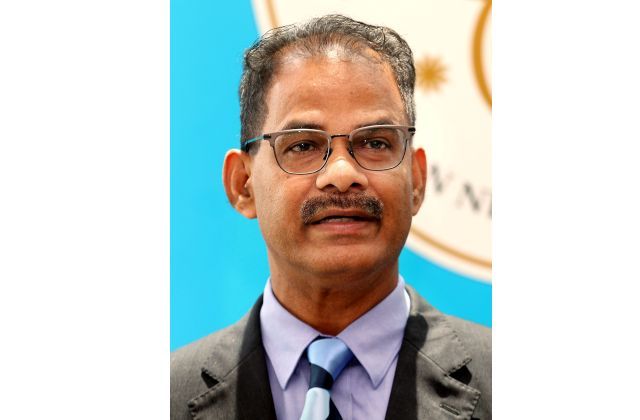
The East Coast Rail Link, Malaysia's RM50.27 billion national infrastructure undertaking, stands to inject substantial employment into Selangor's locomotive manufacturing sector, with officials estimating approximately 2,000 job openings during the project's implementation. State human resources and poverty eradication committee chairman V. Papparaidu outlined the employment potential during proceedings at Bangunan Dewan Negeri Selangor in Shah Alam on Tuesday, emphasizing that roughly four-fifths of these positions will depend on local workers rather than foreign labour. The allocation underscores both the project's ambition to build domestic capability and the state government's commitment to channelling opportunities toward its own workforce.
The scale of recruitment reflects a deliberate policy orientation favouring Malaysians across the ECRL's supply chain and operational requirements. Rather than defaulting to imported expertise, the mega-project's developers have recognized that sustainable growth and local capacity-building demand investment in training and skills development. Papparaidu articulated the underlying rationale: providing young Selangor residents with pathways into high-value industrial roles through coordinated education and vocational preparation. This philosophy extends beyond mere employment statistics—it signals confidence that Malaysian institutions can produce workers meeting international technical standards demanded by modern rail infrastructure.
The state government has already mobilized several mechanisms to bridge the gap between job-seekers and employers. Kerjaya Selangor, operated jointly with the Social Security Organisation (PERKESO) via the MyFuture Jobs platform, serves as a digital marketplace where candidates can showcase qualifications and skills for matching with vacancies. This initiative addresses a persistent challenge in Malaysia's labour market: despite visible unemployment, skills misalignment often prevents workers from connecting with suitable roles. The platform's systematic approach—assessing qualifications, technical competencies, and industry-specific requirements before placement—represents a marked improvement over haphazard recruitment practices that can waste both human potential and employer time.
Beyond digital infrastructure, Selangor has rolled out more traditional but equally valuable job fair mechanisms. JobCare Selangor exemplifies this hybrid model, combining mass recruitment events with on-site interview facilities that allow TVET graduates to secure employment in real time rather than navigating protracted application cycles. Between January and July 2024, PERKESO data revealed that Selangor's technical and vocational institutions produced 10,111 graduates—a substantial pipeline suggesting the state's capacity to continuously supply workers to emerging sectors like the ECRL locomotive industry.
The existing labour market dynamics in Selangor reveal significant untapped potential. During the same seven-month period, 78,030 vacancies requiring diploma-level qualification or above emerged across the state. Among these, 3,965 positions materialised in high-skill sectors—automotive, semiconductors, and manufacturing—representing roles such as automotive engineers, data scientists, and software developers. These positions form the upper tier of the employment ecosystem, demanding technical competency that TVET pathways are specifically designed to build. The apparent abundance of unfilled positions suggests that bottlenecks stem not from insufficient jobs but from insufficient workers possessing the requisite credentials or skills matching employer expectations.
The ECRL's locomotive sector opportunities must be contextualized within this broader demand landscape. Manufacturing excellence in rail technology requires workers versed in precision engineering, quality control, systems integration, and maintenance protocols. TVET curricula in Malaysia have increasingly aligned with such technical requirements, yet awareness gaps and geographic barriers sometimes prevent qualified graduates from reaching relevant employers. The state's multi-pronged approach—platform-based matching, physical job fairs, and educational partnerships—attempts to systematically address these frictions.
However, Papparaidu acknowledged a critical gap that remains unresolved: geographic and sectoral granularity in skills mapping. Selangor encompasses vastly different economic zones. Shah Alam, with its traditional manufacturing base, industrial parks, and automotive supply chains, requires different worker profiles than Pelabuhan Klang, with its port operations, logistics, and maritime-adjacent industries. Other districts again possess distinct economic footprints. Without precise mapping of graduate output by field and geography, the state risks either saturating certain labour markets with redundant skills or creating acute shortages elsewhere. Papparaidu indicated recognition of this problem and suggested that comprehensive data collection from universities and technical institutions could enable more sophisticated workforce planning.
The proposed mapping exercise represents a logical evolution in labour market policy. By collecting granular data on graduate output by discipline, qualification level, and geography, planners could identify emerging mismatches before they crystallize into employment crises. Such intelligence could inform curriculum adjustments at TVET institutions, justify targeted incentives for graduates willing to relocate to skill-shortage areas, and help policymakers anticipate bottlenecks as major projects like the ECRL accelerate hiring. For the ECRL specifically, early mapping could reveal whether Selangor's current graduate production aligns with the project's anticipated locomotive sector demands, or whether accelerated training programmes must be mobilized.
The implications for Malaysia extend beyond Selangor. The ECRL, connecting the east coast to the central region, depends on labour pools across multiple states. If Selangor successfully demonstrates integrated skills-building and job-matching infrastructure, its model could prove replicable elsewhere. Conversely, if coordination failures emerge—for instance, if railway positions remain unfilled despite unemployment—it would reflect systemic weaknesses in labour market efficiency that constrain broader economic productivity. The railway project thus becomes a testing ground for whether Malaysia can mobilize its human capital effectively or whether structural labour market challenges will persist despite infrastructure investment.
For Malaysian youth, particularly TVET graduates, the ECRL opportunity carries both promise and urgency. The 2,000 projected positions represent real careers with advancement potential, technical skill-building, and stable remuneration—precisely the employment quality that vocational pathways are meant to deliver. Yet capturing these positions requires proactive engagement with the state's job-placement initiatives, willingness to acquire qualifications, and flexibility regarding location. The state government, for its part, must follow through on promises to equip workers with requisite skills and ensure that training outcomes genuinely match industry specifications rather than serving as mere credential-padding exercises.
Looking forward, the success of ECRL employment outcomes will hinge on execution. Job creation statistics are meaningless if positions remain vacant or workers lack skills for available roles. The state's commitment to TVET-based workforce development is philosophically sound, but implementation will determine whether the RM50.27 billion megaproject becomes an engine of genuine upskilling and sustainable employment or merely another infrastructure project that generates activity without meaningfully transforming workforce capability. For Selangor and Malaysia, getting this balance right matters profoundly.

