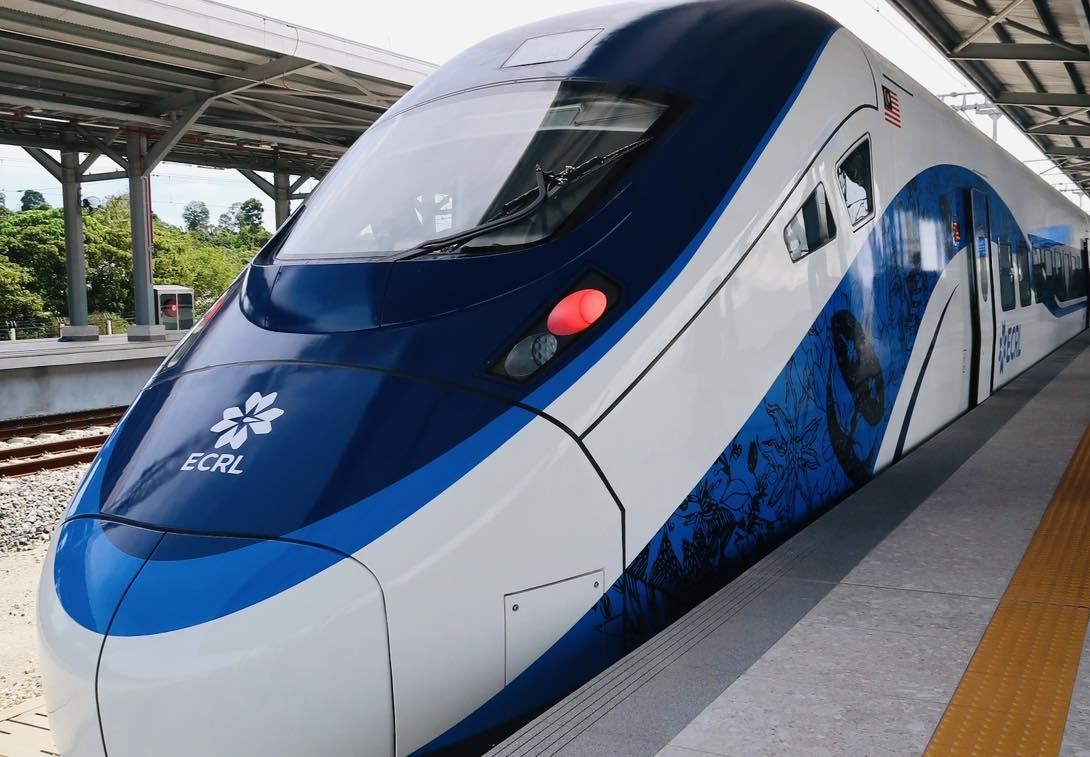
Malaysia's RM50.27 billion East Coast Rail Link project is expected to reshape the country's economic landscape, with government projections showing the 665-kilometre infrastructure will contribute between RM80 and RM90 billion to the nation's gross domestic product over the next two decades. The ambitious timeline sees the project completing construction in December 2026 and commencing operations the following month, setting the stage for substantial returns on investment that will ripple through multiple economic sectors along the corridor.
Deputy Economy Minister Datuk Mohd Shahar Abdullah outlined the strategic vision behind the ECRL during recent remarks to Bernama, emphasizing that the rail link transcends its fundamental role as a transportation vessel. Rather, the minister framed the project as a comprehensive economic catalyst intended to stimulate sustainable industrial development and attract fresh investment flows into historically underperforming regions. This positioning aligns with broader government objectives under the MADANI Economy framework, which prioritizes inclusive growth and regional balance.
The economic multiplier effects underpinning the RM80 to RM90 billion projection stem from 21 Economic Accelerator Projects strategically positioned along the ECRL corridor. These initiatives have been carefully selected to maximize local economic spillovers and generate employment across multiple sectors. The government has identified several stations as pivotal logistics transformation zones, recognizing that the rail link's true value extends beyond moving passengers and freight to establishing competitive hubs that can serve as distribution and manufacturing centers.
Three specific logistics hubs have been earmarked for development, each with distinct land allocations reflecting their strategic importance. Pasir Puteh in Kelantan will comprise 213 acres, positioning the state to capture expanded logistics opportunities in the northern East Coast region. Kemaman in Terengganu receives 68 acres, while Temerloh in Pahang receives 50 acres, creating a distributed network of logistical capacity. These sites represent targeted intervention points where infrastructure investment combines with land assembly to create competitive advantages for businesses seeking east coast locations.
Peking at specific implementation milestones reveals the government's methodical approach to realizing ECRL benefits. The first phase of the Perodua logistics hub in Paya Besar, Kuantan is scheduled for completion by 2029, establishing an early operational model that can inform subsequent phases. As the automotive sector navigates increasingly complex supply chain pressures, positioning a major manufacturer's logistics operation along the ECRL reflects confidence in the project's commercial viability and signals broader corporate sector buy-in.
Mohd Shahar, who represents Paya Besar as Member of Parliament, articulated a nuanced position regarding the ECRL's role within Malaysia's broader logistics ecosystem. Rather than positioning the rail link as a rival to existing international shipping routes and ports, officials view it as complementary infrastructure that enhances overall system efficiency. This framing proves important for regional stakeholders, as it suggests the ECRL will strengthen rather than cannibalize existing maritime and air freight operations, potentially creating synergies across transport modes.
The economic development ambitions extend beyond simple freight movement to addressing persistent regional inequalities. Officials explicitly identify gap reduction between the East Coast and West Coast as a key objective, acknowledging that Malaysia's development has historically concentrated wealth and investment in the western corridor. By catalyzing logistics network improvements, the ECRL becomes an instrument for spatial redistribution of economic opportunity, creating pathways for Kelantan, Terengganu, and Pahang to participate more fully in national value chains.
Government planning frameworks structure the implementation process to maximize efficacy. The 13th Malaysia Plan establishes guidelines for channeling allocations and projects through the Malaysia Development Composite Index and MyRMK system, ensuring resources flow to areas of greatest need rather than defaulting to historical patterns. This systematic approach suggests policymakers intend the ECRL to serve as a testing ground for more sophisticated regional development methodologies.
The operational specifications of the ECRL infrastructure underscore its dual focus on passenger services and cargo operations. The project allocates 11 six-car electric multiple unit train sets for passenger transport, indicating plans for meaningful commuter and intercity connectivity. Simultaneously, 12 electric locomotives dedicated to cargo purposes signal serious commitment to freight operations, suggesting the vision extends well beyond tourism or commuter functionality to encompassing genuine industrial logistics transformation.
For Malaysian investors and businesses, particularly those in logistics, manufacturing, and supply chain sectors, the ECRL presents a fundamental reconfiguration of competitive geography. Companies traditionally centered on western corridor locations now face incentives to evaluate east coast expansion. The combination of new rail connectivity, purpose-built logistics hubs, and government commitment through the Economic Accelerator Projects framework creates conditions where east coast operations become more financially attractive relative to historical alternatives.
The timeline extending through 2047 reflects realistic assessment of how infrastructure transformation converts into measurable economic returns. The lag between project completion and peak contribution accounting acknowledges that establishment of new logistics networks, attraction of industrial investment, and development of supply chain relationships require years of cultivation. This extended horizon suggests policymakers are thinking in genuine development terms rather than seeking short-term political vindication.
Regional implications ripple across Southeast Asia as Malaysia establishes enhanced transport connectivity across its eastern peninsula. For neighboring Thailand and regional trade dynamics, improved Malaysian east coast logistics capacity could alter traditional transit patterns and competition for regional freight flows. The ECRL thus becomes not merely a national infrastructure project but a regional positioning move that could reshape comparative advantages across Southeast Asian supply networks in the coming decades.

