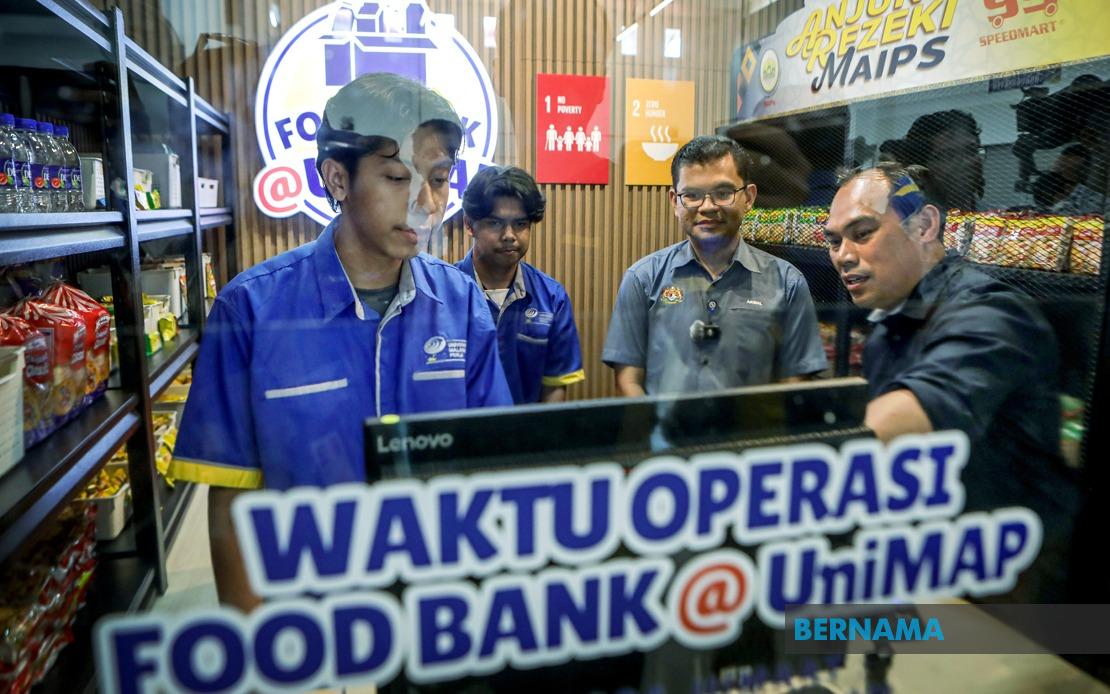
The Economy Ministry is moving to secure continued funding for the People's Income Initiative – Food Entrepreneur Initiative (IPR-INSAN), a programme designed to unlock income-generating opportunities for Malaysia's bottom 40 per cent earning households through innovative food retail platforms. Economy Minister Akmal Nasrullah Mohd Nasir announced the ministry's intention to petition the Ministry of Finance for programme extension following a detailed assessment showing substantial positive outcomes both for participating entrepreneurs and student consumers at Universiti Malaysia Perlis.
The decision reflects the ministry's confidence in the initiative's effectiveness after fieldwork observations revealed consistent improvements in income levels among participating B40 entrepreneurs. The programme directly addresses a dual social objective: creating sustainable livelihood opportunities for lower-income business owners while simultaneously ensuring university students have access to nutritious, affordably priced meals. This dual-benefit structure has become increasingly relevant as cost-of-living pressures intensify across Malaysia, particularly affecting student populations who rely on institutional support mechanisms.
During his working visit to UniMAP in Arau, the minister examined first-hand the operational mechanics of the initiative, which centres on deploying vending machines at strategic campus locations staffed by B40 entrepreneurs. The physical infrastructure represents a departure from traditional street-vending or market-stall models, offering participating business owners a more structured, secure environment to operate with minimal overhead costs. By connecting small-scale food producers directly to a concentrated consumer base, the vending machine approach eliminates intermediaries and reduces transactional barriers that typically disadvantage informal economy participants.
The real-world financial performance data from UniMAP operations demonstrates the scheme's tangible impact. Norleyana Nordin, operating a homemade food business through a vending machine at the Tuanku Abdul Rahman Residential College, generated average monthly sales of RM2,178.80 with a peak of RM4,905 in January. Her peer, Noor Hasfalela Mohd Noor, achieved substantially higher performance metrics at the Tuanku Tengku Fauziah Residential College, averaging RM4,595 monthly with the strongest month reaching RM10,012 in January. These figures, while modest in absolute terms, represent substantial income for individuals typically earning below the B40 threshold and demonstrate the earning potential when appropriate market access mechanisms are provided.
The programme extends beyond commercial transactions to encompass broader institutional welfare initiatives. UniMAP's Food Bank and MADANI Dapur Siswa (student kitchen) complement the vending machine component, creating an integrated ecosystem addressing student nutrition security. These ancillary programmes acknowledge that food insecurity remains a persistent challenge within Malaysia's higher education sector, with some student populations unable to consistently afford adequate nutrition whilst managing tuition and living expenses. The minister's formal acknowledgement of contributions from university leadership, student volunteers, and private sector partners signals political recognition of multi-stakeholder approaches to social support.
The strategic choice to pilot and demonstrate the initiative at university campuses reflects considered programme design. Educational institutions provide controlled environments with predictable foot traffic, established infrastructure, and administration capable of managing operational logistics. The campus setting simultaneously maximises visibility to policymakers and media, facilitating the generation of compelling outcome narratives that justify continued public investment. By positioning university students as primary beneficiaries, the programme frames poverty alleviation as an investment in human capital development rather than mere welfare expenditure, a narrative framing that carries political weight in contemporary Malaysian policymaking.
From a wider economic perspective, IPR-INSAN exemplifies an emerging emphasis within the Malaysian development framework on inclusive growth mechanisms that integrate lower-income populations into formal economic systems. Rather than purely redistributive approaches, the scheme harnesses market mechanisms and technology to generate income-earning opportunities whilst simultaneously serving consumer demand. This aligns with international development thinking favouring enterprise-based poverty reduction over unconditional assistance, though both remain relevant policy tools. The vending machine model's technological component—automating transactions, extending operating hours, reducing transaction friction—appeals to modernisation-oriented policymakers whilst maintaining simplicity for participating entrepreneurs with varying digital literacy levels.
The request for Ministry of Finance extension funding signals potential resource constraints limiting the programme's current scope. Sustained expansion would require either government budgetary allocation or alternative financing mechanisms such as public-private partnerships or philanthropic investment. The ministry's proactive approach in documenting performance outcomes and securing ministerial endorsement suggests institutional confidence that extension approval represents a realistic prospect. However, any expansion faces competing budgetary pressures across Malaysia's social spending priorities, particularly given the substantial fiscal demands of broader income support, education, and healthcare initiatives.
For Malaysian entrepreneurs and B40 households, the initiative's continuation or expansion could catalyse meaningful economic participation. The vending machine model potentially extends beyond university campuses to corporate offices, shopping complexes, public facilities, and transport hubs, creating replicable platforms for informal economy formalisation. Success at UniMAP could establish proof-of-concept justifying expansion to other higher education institutions across Malaysia, simultaneously benefiting entrepreneurs nationwide and institutionalising student welfare provisions. The initiative exemplifies how targeted programme design addressing specific market failures—access constraints for B40 entrepreneurs, affordability challenges for students—can generate multiplier effects benefiting both supply and demand sides of food retail markets.

