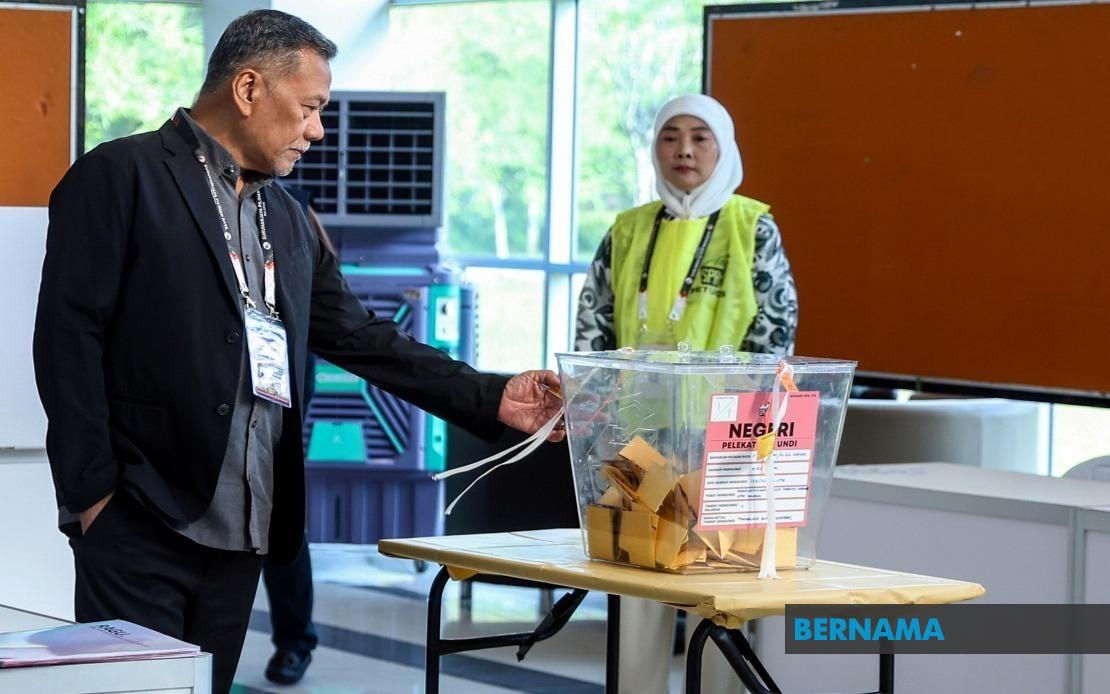
The Election Commission's top official made an unannounced tour of polling centres across Johor Bahru on July 11 to assess the conduct of the 16th Johor state election. Datuk Seri Ramlan Harun, the EC chairman, personally visited four separate polling stations to evaluate whether voting procedures were functioning correctly and maintained appropriate standards throughout the day.
Ramlan's inspection itinerary began early in the morning at approximately 8.50 am at the Dewan Raya Taman Ungku Tun Aminah, which served voters in the Skudai constituency. This facility operated seven distinct polling streams simultaneously, reflecting the concentrated voter population in this urban area. The choice to start with Skudai, one of Johor's most populous constituencies, signalled the EC's priority in monitoring high-traffic polling locations where operational challenges are most likely to emerge.
The chairman's second stop took him to the Raja Zarith Sofiah Library at Universiti Teknologi Malaysia in Senai. This polling centre, which operated two polling streams, represented a contrasting scenario given the student population and institutional setting. University polling stations often present distinct logistical considerations, including managing younger voters and accommodating campus infrastructure. The inclusion of this location in Ramlan's inspection route demonstrated the EC's commitment to assessing voting procedures across diverse voter demographics and geographical contexts within the state.
Continuing his tour, Ramlan proceeded to Sekolah Agama Taman Bukit Mewah in the Kempas constituency, another facility operating multiple polling streams with six separate stations. This school-based polling centre reflected a common pattern in Malaysia, where educational institutions frequently serve as neutral ground for electoral activities. Schools offer established administrative structures, adequate space, and familiarity to local communities, making them practical choices for electoral officials.
The EC chairman concluded his inspection visit at Sekolah Menengah Kebangsaan Bandar Uda Utama in the Perling constituency, which represented the largest operation among the four visited locations with nine polling streams in operation. This final stop, with its significantly higher capacity and voter throughput, allowed Ramlan to assess how the election machinery functioned under maximum operational pressure during a state-level contest.
During each visit, election officials briefed the chairman on voting procedures and protocols being implemented at the respective centres. These briefings served multiple purposes: they allowed senior EC leadership to understand real-time challenges, verify that standard operating procedures were being followed consistently across locations, and identify any emerging issues that might require mid-election adjustments. The direct engagement between the EC chairman and polling officials also reinforced compliance expectations and demonstrated leadership commitment to electoral integrity.
Beyond procedural matters, Ramlan examined the physical facilities and amenities provided to both voters and election personnel. This assessment encompassed factors such as queue management, accessibility for persons with disabilities, provision of resting areas for poll workers, security arrangements, and general comfort standards. The chairman's evaluation of these logistical elements reflected the EC's broader mandate to ensure elections were conducted with dignity and efficiency, not merely procedurally correct but also respectful of participants' needs.
The timing of this inspection tour on actual polling day held particular significance. Rather than conducting pre-election assessments alone, Ramlan's presence at active polling stations allowed direct observation of real-world implementation challenges that theoretical planning cannot fully anticipate. This approach enabled the EC to identify bottlenecks, assess staff readiness, and evaluate whether information dissemination to voters was effective in actual voting conditions.
For Malaysian observers, the EC chairman's personal involvement in on-ground monitoring underscored institutional commitment to transparency and proactive oversight during state elections. Such high-level scrutiny typically signals that electoral authorities are taking their stewardship responsibilities seriously and remain vigilant against procedural lapses that might undermine public confidence in results.
The inspection also reflected broader trends within Malaysia's electoral architecture, where the EC has increasingly emphasized real-time monitoring and adaptive management during polling operations. Rather than waiting for post-election audits or complaints to surface problems, modern election management prioritizes early detection and rapid response to emerging issues. The chairman's morning tour represented this proactive approach in practice.
The Johor state election, being a significant ballot in Malaysia's political calendar, warranted such senior-level attention. As one of the country's largest and most developed states, Johor's elections often set precedents and attract scrutiny from political observers across Southeast Asia. Ensuring smooth operations and public confidence in the process therefore carried implications beyond the state itself, affecting perceptions of Malaysian electoral integrity regionally.
Ramlan's inspection concluded with a scheduled press conference, providing the opportunity to communicate officially with media and the public regarding his observations and any relevant updates from the field. This public accountability mechanism ensured that the EC's assessment of polling day operations became part of the documented electoral record and addressed public interest in understanding how the voting process had unfolded across multiple constituencies throughout Johor.

