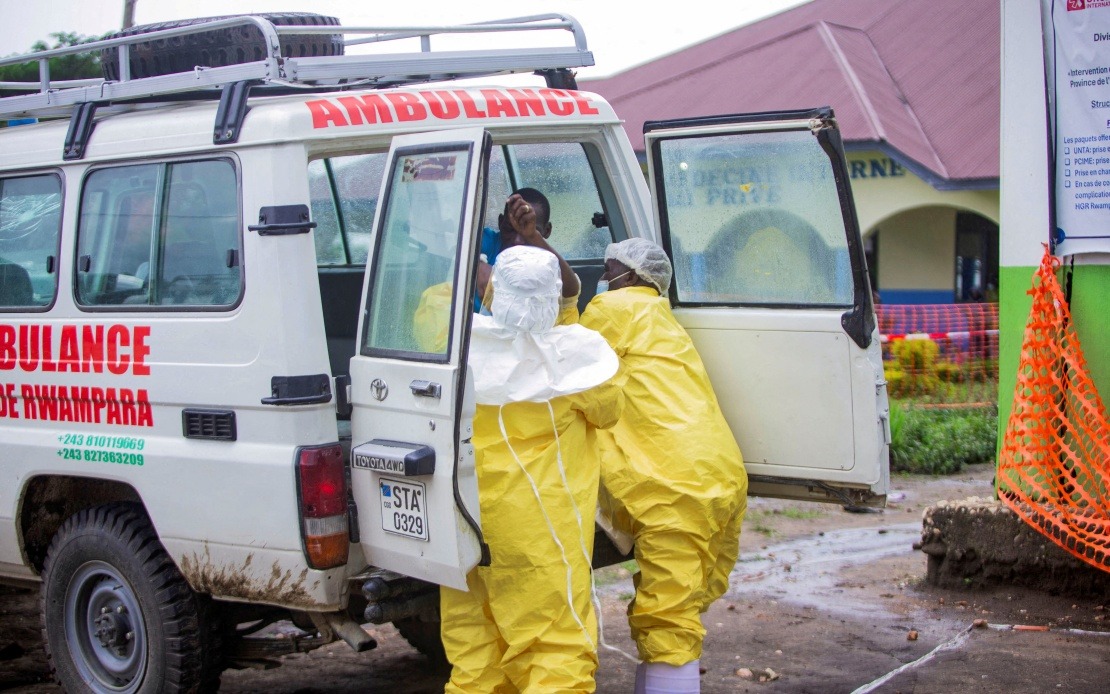
A second wave of geographical expansion marks the evolving Ebola crisis in the Democratic Republic of the Congo, as authorities disclosed that the virus has now established itself across five provinces rather than the initially affected areas. Government health officials released updated figures on Sunday showing 1,873 confirmed cases and 672 fatalities nationwide, signalling an acceleration in transmission that extends well beyond the outbreak's original epicentre. The epidemic's reach into previously unaffected regions underscores mounting challenges in containing one of Africa's deadliest viral diseases within a vast territory marked by limited infrastructure and ongoing security complications.
The five provinces now reporting cases comprise Ituri, North Kivu, South Kivu, Haut-Uele and Tshopo, with the latter two representing newly documented affected areas in the official national health report. This geographic diversification reflects the virus's ability to exploit human movement patterns and population flows across provincial boundaries, a persistent challenge in disease containment efforts throughout Central Africa. Public health investigators have determined that cases emerging in Haut-Uele and Tshopo maintain epidemiological links to the original outbreak cluster in Ituri province, indicating secondary transmission rather than independent viral introductions.
The outbreak, identified as stemming from the Bundibugyo ebolavirus strain, was formally declared on May 15, marking the beginning of what has become one of the most complex public health emergencies facing the Congo in recent years. This particular ebolavirus variant presents distinct challenges compared to other Ebola species, requiring tailored diagnostic and therapeutic approaches that strain already-limited medical resources. The extended timeline since declaration suggests persistent difficulties in outbreak control despite international assistance and local response measures.
Healthcare system capacity has reached critical thresholds across treatment facilities, with occupancy rates standing at 95.1 percent according to the most recent assessment. This saturation creates cascading problems for disease management, as medical personnel contend with overcrowding that compromises infection control protocols and complicates patient monitoring. At the time of the report, 763 individuals were either isolated or hospitalised, representing the active caseload requiring intensive management and care.
Amidst these alarming figures, some patients have achieved recovery, with 306 individuals having overcome the infection and returned to their communities. This recovery rate, while modest in absolute terms, provides critical data for understanding disease progression and informing treatment protocols. Recovered patients represent both medical successes and potential challenges for communication campaigns, as their experiences shape community perceptions of the disease.
Investigators continue documenting suspected cases that have not yet been laboratory-confirmed, with 299 such instances recorded alongside 91 suspected deaths. These figures highlight the testing bottleneck constraining official confirmation of cases and creating uncertainty in epidemiological understanding. The gap between suspected and confirmed cases reflects resource limitations in laboratory capacity, a persistent weakness in many Central African health systems that affects outbreak response across multiple pathogens.
For Southeast Asian observers, this outbreak carries significance beyond humanitarian concern. The spread of Ebola across provincial boundaries in the Congo mirrors epidemiological dynamics that could occur in the region should similar pathogens emerge. Malaysia and its neighbours have invested substantially in surveillance and rapid response mechanisms, yet the Congo experience demonstrates how quickly geographic containment can collapse in settings with limited transportation controls and high population mobility. The lesson is particularly relevant for countries managing terrestrial borders and substantial internal migration patterns.
The international dimension of this crisis also merits attention from the Malaysian perspective. The movement of goods and people between Africa and Southeast Asia, though not directly facilitated by commercial air routes in most cases, creates potential pathways for emerging infectious diseases. Regional cooperation mechanisms and information-sharing protocols developed in response to previous epidemics remain vital infrastructure for managing transnational disease threats, and the Congo outbreak serves as a timely reminder of their continued necessity.
Healthcare workforce deployment and resource allocation decisions made by Congolese authorities will determine whether the outbreak trajectory stabilises or accelerates further. The concentration of cases across five provinces places extraordinary demands on a health system already burdened by multiple concurrent challenges, including endemic diseases and limited funding. International partners, including organisations with regional influence, face difficult choices regarding resource prioritisation and technical assistance, balancing immediate humanitarian needs against long-term capacity development.

