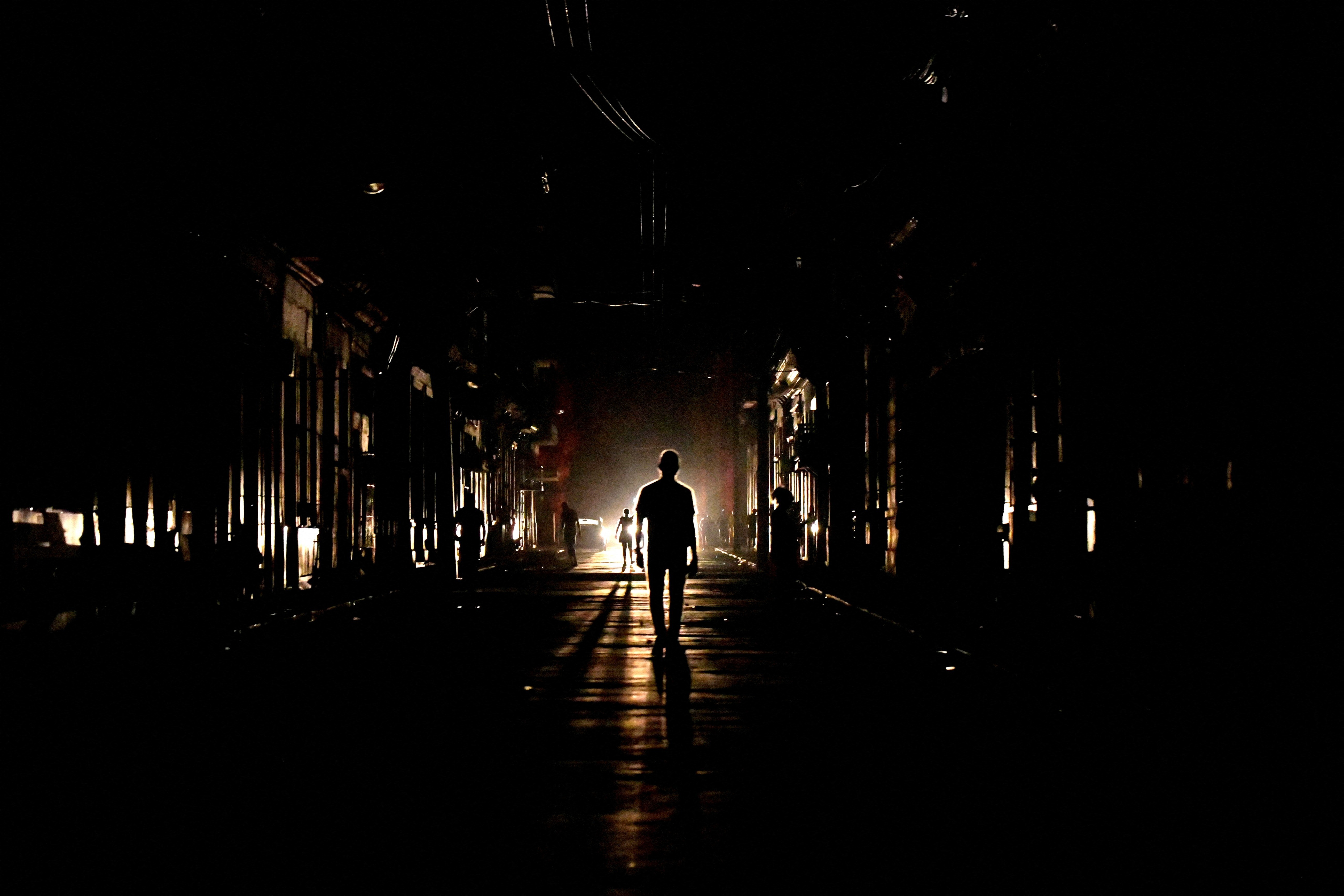
Eastern Libya descended into darkness on Thursday evening as a widespread power outage crippled much of the region, knocking out electricity supplies to major population centres including Benghazi and surrounding towns. Footage from affected areas documented entire neighbourhoods plunged into blackness, with the outage spreading across substantial portions of the country's eastern territories. The scale of the disruption underscored the fragility of Libya's infrastructure, already weakened by years of conflict and administrative division.
Benghazi, Libya's second-largest city and a key hub in the eastern region, bore the brunt of the blackout. Local reports confirmed that extensive sections of the city lost power, while documentation from Marj and other localities painted a picture of widespread darkness across streets and residential areas. The electricity ministry, operating under the eastern-based government appointed by the House of Representatives, moved quickly to assess the situation and mobilise recovery efforts. Within hours of the outage, authorities reported that several generation units had been brought back online, allowing electricity supplies to begin the slow process of restoration across the affected region.
The ministry prioritised critical infrastructure in its recovery efforts, with power being restored first to Benghazi's 1,200-bed hospital alongside several neighbourhoods in the southern portions of the city. This measured approach reflected the technical challenges of restoring stability to a power network that serves millions of residents. Technical teams deployed across generation facilities, transmission lines, and distribution networks throughout the region to address damage and identify failure points. The ministry emphasised that loads were being reintroduced gradually to protect the fragile equilibrium of the power grid, preventing further cascading failures that could extend the blackout.
Investigations into the root cause of the blackout proceeded simultaneously with restoration work, as ministry officials sought to determine what triggered the system-wide failure. The precise cause remained unclear in the immediate aftermath, though Libya's deteriorating infrastructure and inadequate maintenance have made such incidents increasingly common. The blackout arrived amid a broader humanitarian and security crisis gripping the country, with recent weeks witnessing intensified conflicts in western cities including Zawiya and Sorman. Drone attacks targeting oil facilities in Zawiya have compounded supply disruptions, while the electricity crisis represents one of several collapsing public services affecting ordinary Libyans.
The power blackout exposed the consequences of Libya's prolonged political division, which has fragmented authority and prevented comprehensive investment in national infrastructure. Since 2014, the country has been caught between two rival administrations competing for legitimacy and control. Prime Minister Abdul Hamid Dbeibah leads the internationally recognised Government of National Unity, which operates from Tripoli and administers western Libya. This government faces constant pressure from a competing administration based in Benghazi and appointed by the House of Representatives, currently headed by Osama Hammad. This split authority means that neither administration commands sufficient resources or consensus to implement nationwide infrastructure rehabilitation programmes.
The two-government system has proved catastrophic for electricity provision and other essential services. Competing claims on revenue, fragmented decision-making authority, and military tensions between eastern and western factions have left the power sector chronically underfunded and operationally dysfunctional. Maintenance backlogs accumulate, generation capacity deteriorates, and transmission networks receive insufficient investment. Each government prioritises its own territory, creating regional disparities in service quality and reliability. For residents of eastern Libya, this structural dysfunction translates directly into blackouts, medical emergencies in hospitals without backup power, and daily hardship.
The United Nations Support Mission in Libya (UNSMIL) has repeatedly warned that political instability directly drives deterioration in public services and quality of life. The international community has sought for years to broker agreements that would resolve fundamental disputes delaying nationwide elections, which Libyan citizens hope might finally end the cycle of division and armed conflict. Elections are viewed as a potential pathway to establishing unified governance structures capable of managing national resources transparently and investing strategically in infrastructure. However, political disagreements over election rules, constitutional frameworks, and power distribution have repeatedly derailed electoral timelines, leaving Libyans trapped in a governance vacuum.
The timing and scale of the blackout may intensify international pressure on rival Libyan factions to prioritise unified governance and infrastructure investment. The incident demonstrates concretely how political division translates into humanitarian consequences, affecting hospital operations, water supply systems, communications networks, and economic productivity. For ordinary Libyans, extended blackouts create cascading problems that extend far beyond darkness—spoiled food, disrupted medical treatment, compromised water sanitation, and educational interruptions. The blackout served as a stark reminder that resolving Libya's political crisis is not merely an abstract governance matter but a fundamental condition for human security and dignity.
The gradual restoration of power represented a temporary reprieve rather than a solution to deeper structural problems. Unless the competing administrations find pathways to cooperation or the international community succeeds in facilitating elections that create a unified government, similar blackouts will recur with increasing frequency. Infrastructure deterioration accelerates in the absence of proper maintenance and investment, creating a downward spiral where ageing generation facilities fail more frequently, transmission losses increase, and customer satisfaction erodes further. For Libya's eastern region and the country as a whole, addressing the electricity crisis requires resolving the political crisis that has fractured state capacity and prevented coherent long-term planning.
Libya's trajectory since the 2011 overthrow of Muammar Gaddafi has been characterised by state fragmentation rather than institution-building. The blackout exemplifies how this failure has concrete, daily consequences for millions of people. Without rapid progress toward elections and political reunification, Libyans face a future of episodic infrastructure failure, constrained economic development, and humanitarian deterioration. For regional observers and international partners invested in Libyan stability, the incident underscores the urgency of resolving political stalemate before state capacity erodes beyond recovery.

