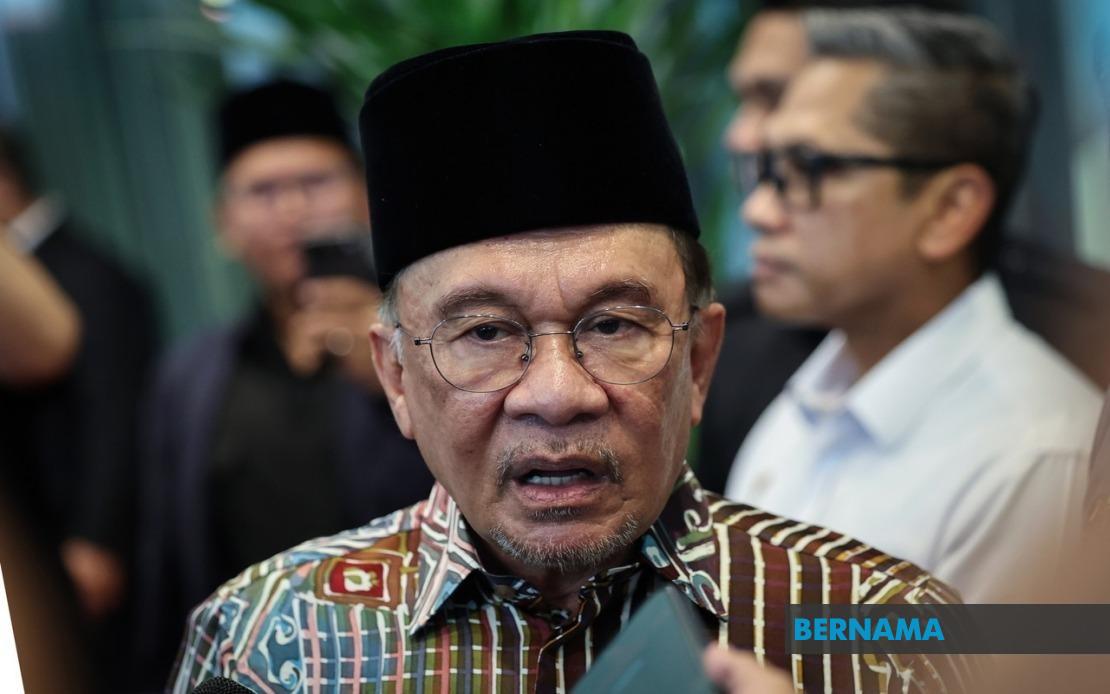
Prime Minister Datuk Seri Anwar Ibrahim has delivered a sharp rebuke to Israel's announcement of construction tenders for the E1 settlement area situated east of Jerusalem, characterising the move as fundamentally incompatible with the establishment of a viable Palestinian state. Speaking through a Facebook post, Anwar articulated Malaysia's position that this territory plays a strategically essential role in maintaining the territorial coherence necessary for Palestinian self-determination.
The E1 zone represents far more than a single construction project to international observers and Palestinian leadership. Geographical analyses conducted by UN agencies and Palestinian planners have consistently demonstrated that development in this particular area would effectively sever transportation and administrative linkages between the northern and southern portions of the occupied West Bank. This fragmentation would render the territory fundamentally unviable as a contiguous nation-state, essentially creating isolated enclaves incapable of functioning as an integrated political entity. The implications extend beyond symbolic concerns about Palestinian sovereignty to encompass practical constraints on movement of goods, people, and services across Palestinian-controlled areas.
Anwar's condemnation specifically emphasised the illegality of Israeli settlements under international law, a position supported by consistent rulings from the International Court of Justice and numerous resolutions from the United Nations General Assembly. Despite this established legal consensus, he noted, Israel continues to pursue settlement expansion with what he termed impunity, proceeding without meaningful international consequences. This observation reflects growing frustration among many nations in the Global South regarding the perceived selectivity of international accountability mechanisms.
The timing of Malaysia's statement carries particular weight given the broader regional context. The announcement of E1 construction tenders arrives amidst escalating violence involving Israeli settlers targeting Palestinian civilians throughout the occupied West Bank, alongside the ongoing military operations in Gaza that have drawn international scrutiny and humanitarian concerns. Anwar positioned these developments as evidence that Israeli governance has moved beyond merely disregarding international opinion to actively abandoning the rhetorical commitment to peace negotiations that previously characterised official discourse.
Malaysia's foreign policy stance on Palestinian issues has remained consistent and unambiguous, distinguishing it among Southeast Asian nations in the vocal intensity of its advocacy. Anwar reaffirmed this commitment by emphasising Malaysian support for Palestinian rights to establish an independent, sovereign state possessing the territorial and administrative capacity to function effectively. This positioning aligns Malaysia with broader Non-Aligned Movement principles and reflects the country's historical diplomatic posture since the formation of the Organisation of Islamic Cooperation.
Significantly, Anwar indicated that Malaysia intends to maintain a register of international corporations that opt to participate in E1 settlement tenders, with an implicit warning of diplomatic and potentially economic consequences for such involvement. This approach mirrors divestment and sanctions strategies employed by other nations and civil society organisations seeking to impose costs on commercial participation in contested settlement enterprises. The statement signals that Malaysian governmental entities and potentially sovereign wealth funds might reconsider commercial relationships with companies choosing to engage in these projects.
The Malaysian position echoes concerns raised contemporaneously by UN Secretary-General António Guterres, whose spokesperson Stephane Dujarric characterised the E1 settlement as presenting an existential threat to the two-state solution framework. UN assessments have consistently emphasised that E1 development would destroy the geographic viability of a Palestinian state, reducing it to disconnected territorial fragments lacking the spatial continuity essential for effective governance. This analysis represents the institutional perspective of the global organisation entrusted with maintaining international peace and security.
For Malaysia and other nations within the Southeast Asian region, the E1 situation encapsulates broader concerns about selective application of international law and the erosion of norms governing territorial acquisition through force. The establishment of precedent whereby a nation can systematically colonise occupied territory through civilian settlements, despite overwhelming international legal prohibition, carries implications extending beyond the immediate Israeli-Palestinian context. Many developing nations worry that acquiescence to such settlement expansion undermines the international legal framework designed to constrain more powerful states from territorial aggression.
The controversy also illuminates the structural challenges confronting advocates for Palestinian statehood. Even as international consensus formally supports Palestinian self-determination, the mechanisms for translating this rhetorical support into concrete political outcomes remain weak. Malaysia's approach of naming and potentially sanctioning corporate participants represents one avenue through which non-Western powers attempt to exercise influence despite lacking the military or economic preponderance of traditional powers in shaping Middle Eastern geopolitics.
Looking forward, Anwar's statement reflects Malaysia's intention to maintain high-profile diplomatic pressure on this issue through multilateral forums and bilateral channels. The specific reference to monitoring international corporate participation suggests Malaysia may coordinate with other nations on potential economic countermeasures. This approach represents a middle position between purely rhetorical condemnation and direct military or political intervention, leveraging Malaysia's soft power and commercial relationships as instruments of diplomatic influence.

