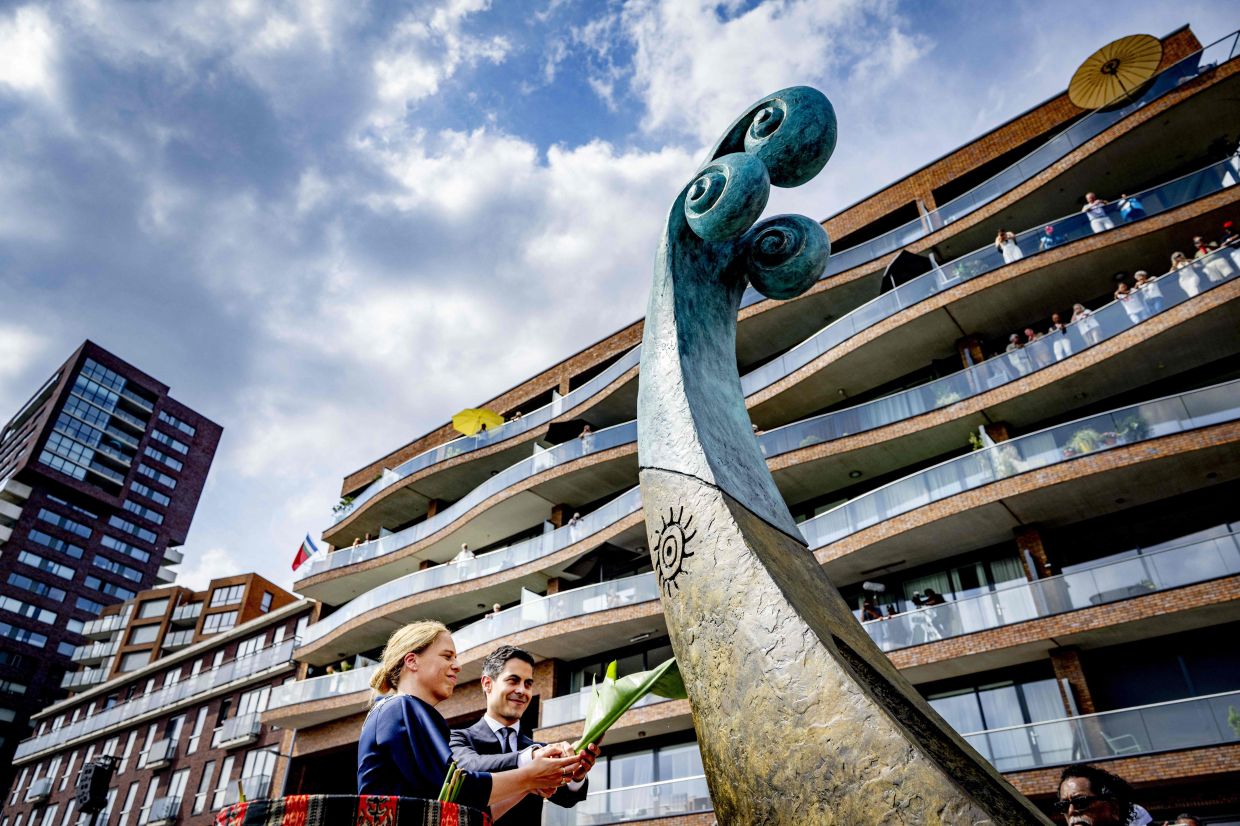
Dutch Prime Minister Rob Jetten delivered a formal state apology on Sunday to members of the Moluccan community, acknowledging more than seven decades of systemic mistreatment and broken commitments by the Netherlands. The ceremony, held in Rotterdam, marked a significant moment of reckoning for a European nation grappling with the consequences of its colonial legacy in Southeast Asia. Jetten's words represented an official recognition of injustices inflicted on a community whose story remains largely unknown outside the Netherlands, yet carries profound lessons about the obligations of former colonial powers toward displaced populations.
The Moluccans originate from the eastern Indonesian spice islands, a region that held strategic and economic importance throughout centuries of European colonisation. When Indonesia launched its independence struggle following World War II, many Moluccans found themselves serving as soldiers in the Dutch colonial military, caught between competing national identities and geopolitical realities. Their choice to fight alongside the Dutch was motivated by complex historical circumstances and the promises made by colonial administrators about their future status and security. However, this decision would ultimately isolate them from the newly independent Indonesian nation they called home, setting the stage for decades of statelessness and marginalization.
Following Indonesia's official independence in 1949, approximately 12,500 Moluccans were transferred to the Netherlands through a state-organised program intended as a temporary measure. Dutch authorities framed this relocation as protective, a means of safeguarding Moloccans who feared potential reprisals from Indonesian nationalists given their service in the colonial forces. The arrangement was negotiated between the Dutch and Indonesian governments with the explicit understanding that these individuals would eventually return to their homeland once political tensions subsided. For the Moluccan community, acceptance of this temporary relocation represented a pragmatic choice rooted in genuine security concerns, yet one that would condemn them to indefinite exile.
The Dutch government's failure to honour its repatriation commitment became the defining trauma of the Moluccan diaspora. Rather than facilitating return to Indonesia, the Netherlands consigned thousands of Moluccans to substandard housing and systematic exclusion from Dutch society. Former military personnel were immediately discharged from service and many were placed in camps originally constructed to confine Jewish populations during Nazi occupation. These arrangements reflected an institutional indifference that bordered on deliberate abandonment, as though Dutch society could neither welcome nor acknowledge the presence of these former allies. Decades passed with minimal effort to provide meaningful employment, language training, or pathways toward genuine integration, leaving the Moluccan community trapped in a liminal state of perpetual displacement.
The crisis deepened across subsequent generations as Dutch-born Moluccans grappled with their hybrid identity and the cognitive dissonance of being raised in an adopted country while harbouring deep connections to a homeland many had never visited. This generational fracture manifested dramatically during the 1970s when younger Moluccans, frustrated by their marginalization and the Netherlands' refusal to support their vision of an independent Moluccan state, launched a series of violent actions. These incidents, including train hijackings and hostage situations, represented desperate appeals for international attention to their cause. While universally condemned as terrorist acts by Dutch authorities, these actions reflected the profound psychological toll of displacement and the sense of betrayal felt by communities whose sacrifices had been entirely forgotten by the nation they had served.
The unveiling of the Ulu Kora monument on Rotterdam's Lloydkade specifically commemorates the arrival point of the first ships that transported Moluccans to Dutch shores, transforming a site of displacement into one of collective memory and dignity. Jetten's presence at this ceremony, particularly the visible emotion he displayed while addressing hundreds of Moluccans many clutching photographs of deceased relatives, signalled an institutional shift toward acknowledgement. The Prime Minister explicitly apologised for inadequate reception, poor housing conditions, the experience of being rendered invisible, and the profound longing for home that defined multiple generations of Moluccan families. His words recognised the unfulfilled promises and the specific grief embedded within family structures separated by geography and circumstance.
Yet Jetten's measured acknowledgement of apology's limitations revealed the complexity of addressing historical injustices seventy-five years after the events themselves. He explicitly stated that words could not reverse the passage of time nor undo the lived experiences of communities who had waited decades for official recognition. This honesty avoided the pitfalls of performative gestures that superficially address grievances without confronting systemic remedies. For a Malaysian audience, this moment carries particular resonance given Malaysia's own post-colonial experience and ongoing national conversations about historical reconciliation. The Moluccan case demonstrates how colonial legacies persist through displacement, institutional exclusion, and the erosion of collective identity across generations.
The apology also reflects broader European conversations about accountability for colonial actions that extend beyond the immediate post-independence period. Countries across Southeast Asia continue negotiating their historical relationships with former colonial powers, and the Netherlands' formal acknowledgement of its failures toward the Moluccan community establishes a precedent for institutional responsibility. This gesture, while symbolic, signals that sustained displacement and broken commitments toward vulnerable populations can eventually command official reckoning. The Moluccan experience, spanning from the 1940s through the present day, illustrates how colonialism's consequences transcend neat historical periodization and instead weave through multiple generations, affecting identity formation, social cohesion, and psychological wellbeing.
For the Malaysian context, the Moluccan narrative provides instructive parallels regarding how nation-states manage minority communities with transnational histories and connections to external homelands. The structural exclusion and marginalization experienced by Molaccans in Dutch society contrasts sharply with successful multicultural frameworks, yet also demonstrates the dangers of allowing displacement to harden into permanent subordination. Malaysia's approach to integrating diverse communities and managing complex historical legacies has evolved considerably, yet the Moluccan example serves as a cautionary tale about the costs of indefinite postponement in addressing historical injustices. The ceremony in Rotterdam ultimately represents not merely a conclusion to a historical chapter, but rather an opening toward more sustained conversations about accountability, recognition, and the restoration of dignity for communities whose contributions have been systemically erased.