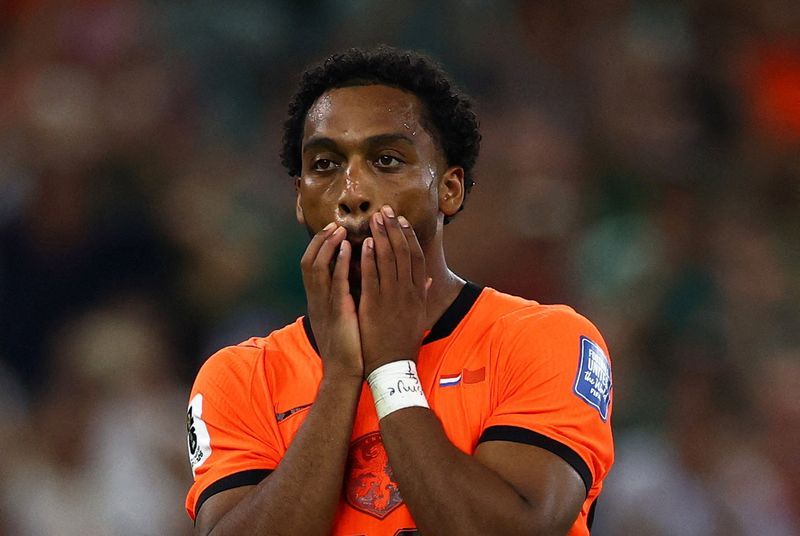
The Royal Dutch Football Association (KNVB) has vowed to pursue legal action against perpetrators of online racial abuse directed at three national team players who missed penalties during Monday's dramatic World Cup exit in Monterrey. The Netherlands fell to Morocco 3-2 in the shootout after their last-32 encounter finished locked at 1-1 following extra time, with Justin Kluivert, Quinten Timber and Crysencio Summerville unable to convert their spot kicks. The trio subsequently became targets for discriminatory and hateful commentary across social media platforms, prompting the association to respond with a formal complaint to authorities specialising in online discrimination offences.
The KNVB's commitment to addressing the abuse reflects growing institutional awareness of how digital platforms have become vectors for coordinated harassment campaigns against athletes. By filing a report with Meld Online Discriminatie—the Netherlands' dedicated online discrimination reporting mechanism—the association initiated a process whereby legal specialists evaluate whether such comments constitute criminal violations. Should the assessment identify actionable offences, prosecutors may escalate the matter to the Public Prosecution Service, potentially triggering formal criminal investigations. This procedural framework demonstrates the evolution of European football governance in confronting hate speech, moving beyond merely condemning such behaviour to pursuing substantive legal remedies.
The incident represents part of a troubling pattern within international football where missed penalty kicks have become flashpoints for racial targeting of players. The most prominent recent precedent occurred following England's Euro 2020 final defeat to Italy, when Marcus Rashford, Bukayo Saka and Jadon Sancho endured a torrent of racist messages online. The subsequent British law enforcement response resulted in multiple arrests and convictions, with two individuals receiving custodial sentences and another handed a suspended jail term. That case demonstrated that persistent investigation and prosecution could deliver accountability, though critics have noted that criminal justice systems often struggle to match the velocity and scale of social media abuse campaigns.
For Southeast Asian readers, this development carries particular significance given the region's growing engagement with international football and the prevalence of social media usage throughout Malaysia, Singapore, Indonesia and neighbouring countries. Online discourse surrounding major tournaments frequently reflects local tensions and prejudices, and the mechanisms established in Europe to combat discriminatory speech offer potential models for governance approaches across Asia. The willingness of football associations to treat online abuse as a serious matter worthy of criminal referral contrasts sharply with the often dismissive attitudes that have historically prevailed in some football communities, where such behaviour was tolerated as inevitable "banter."
The KNVB's statement emphasising football's inclusive character and its opposition to discrimination carries rhetorical weight within global football governance conversations. By framing the issue not merely as protecting individual players but as defending the sport's fundamental values, the association positions enforcement against online hate as essential to maintaining football's legitimacy as a unifying force. This argument resonates particularly in diverse societies like Malaysia, where football commands passionate followings across different communities and demographics. When players of colour—whether from the Netherlands or elsewhere—face targeted abuse, it undermines the sport's capacity to serve as a common ground for national identification and social cohesion.
The three Dutch players who missed penalties occupy different positions within their national team's hierarchy and international football landscape. The incident demonstrates that neither established reputation nor status within elite European football provides protection against online abuse targeting players' race or ethnicity. This reality has prompted several leading European football clubs and national associations to implement more aggressive content moderation and reporting protocols. Some have partnered with technology companies to develop automated detection systems, though critics argue such technological solutions remain imperfect and risk both false positives and strategic evasion by bad-faith actors.
Morocco's unexpected progression to the World Cup knockout rounds represented a significant achievement for African football and the nation's sporting reputation. However, the racist abuse directed at Dutch players demonstrates how sporting triumph can become entangled with online toxicity, where victory celebrations morph into harassment campaigns. This dynamic has been observed across numerous international tournaments and club competitions, suggesting the problem extends beyond any particular match outcome or national context. Instead, it reflects deeper structural issues within online environments where anonymity and algorithmic amplification enable disinhibited expression of prejudice.
The broader implications for digital governance extend beyond football's boundaries. Meld Online Discriminatie's involvement signals that Dutch authorities recognise discrimination within sports contexts as part of wider patterns of online hate speech requiring systematic institutional response. As Southeast Asian governments and civil society organisations increasingly grapple with online hate speech targeting religious, ethnic and political minorities, the Dutch model of combining public reporting mechanisms with criminal prosecution offers both promising elements and cautionary lessons about implementation challenges.
Looking forward, the KNVB's legal proceedings will likely influence how other national football associations respond to similar incidents. Should prosecutions succeed in securing convictions, they may strengthen deterrent effects and establish precedents that social media companies cannot ignore. Conversely, if the legal process proves slow or results prove modest, it may underscore persistent gaps between the scale of online abuse and the enforcement capacity of existing institutional mechanisms. For Malaysian observers, these developments warrant close attention as they signal emerging standards for how sports organisations ought to protect their players and reinforce the fundamental principle that athletic performance should never become justification for racially motivated harassment.

