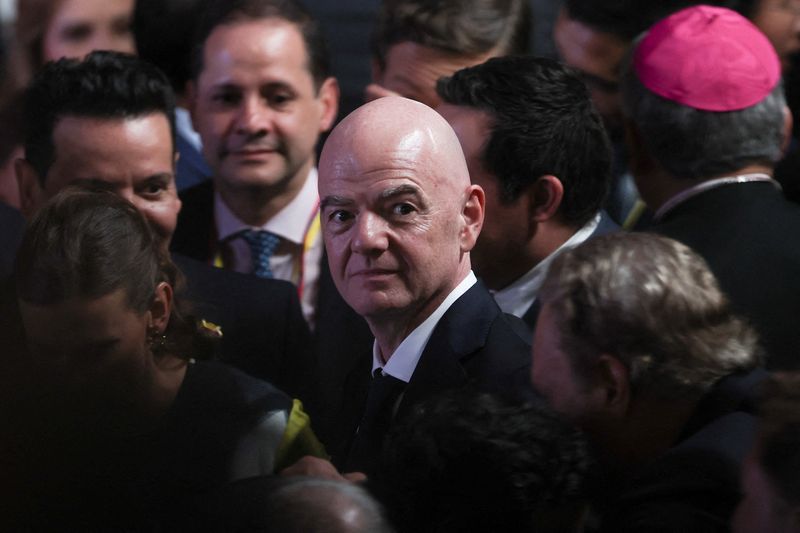
The Royal Netherlands Football Association (KNVB) has escalated pressure on FIFA's leadership, announcing plans to host an international summit in Amsterdam designed to fundamentally reshape world soccer's governing structure. In a statement issued on Sunday, the Dutch federation—one of FIFA's original members dating back to 1904—declared it no longer has confidence in President Gianni Infantino and is pushing for his replacement no later than 2027. This move signals a significant rupture between a traditional European powerhouse and the FIFA administration, marking a rare moment when a founding member openly challenges the incumbent leadership.
The KNVB's intervention comes amid growing turbulence within FIFA's corridors of power, triggered specifically by Infantino's recently withdrawn proposal to sell minority stakes in flagship tournaments, including the World Cup, to private equity investors. This attempted commercialisation sparked outrage among football's regional confederations, with several major football bodies now privately considering whether to table a formal vote of no confidence before Infantino faces re-election scheduled for March 2025. The controversy has exposed fractures within the global football establishment that extend far beyond simple personality conflicts between administrators.
Crucially, the KNVB's statement emphasises that replacing Infantino alone would be insufficient to address systemic problems at FIFA. Instead, the Dutch federation argues that the entire governance architecture requires dismantling and reconstruction. The association specifically criticises how excessive power has concentrated around the presidency, while oversight mechanisms and separation between executive authority and administrative function remain dangerously weak. This critique reflects broader frustrations among established football nations about FIFA's decision-making processes, which many perceive as opaque and unaccountable to member associations.
The proposed Amsterdam summit would convene representatives from FIFA's 211 member associations and regional confederations worldwide to determine collectively what FIFA should become before identifying appropriate leadership. This consultative framework represents a deliberate counterpoint to what the KNVB characterises as top-down governance that has historically marginalised voices from developing football nations. The Dutch federation emphasises that reform cannot be a purely European initiative imposed on the rest of the world, signalling awareness that successful reform requires genuine buy-in from Africa, Asia, South America, and other regions with substantial but historically underfunded football programmes.
The KNVB has identified three specific reform pillars. First, FIFA requires robust governance structures incorporating effective checks and balances to prevent any individual executive from accumulating disproportionate authority. Second, the organisation must meaningfully embed human rights protections and environmental sustainability into all major decisions, particularly regarding host nation selections for tournaments. Third, FIFA should strengthen cooperative mechanisms among its member associations and regional confederations rather than operating as a centralised authority issuing directives from above. These principles reflect lessons drawn from previous FIFA corruption scandals and governance failures that damaged football's reputation internationally.
Financial redistribution constitutes another crucial reform dimension in the KNVB's programme. The Dutch association advocates that FIFA should reinvest up to 90 percent of its distributable revenue directly into grassroots soccer development rather than accumulating vast reserves or directing funds towards pet projects favoured by the administration. This proposal directly challenges FIFA's current financial model, which generates enormous surpluses from World Cup broadcasting and sponsorship rights while smaller football nations struggle with inadequate development funding. For Southeast Asian football associations, revenue redistribution reforms hold particular significance, as nations in this region often lack the financial resources available to European or South American counterparts.
Interestingly, the KNVB previously supported Infantino during his most recent presidential campaign, making the current withdrawal of confidence particularly symbolic. The federation's statement explicitly notes that this historical support was never unconditional, suggesting that Infantino's recent actions—particularly the private equity proposal—violated implicit understandings about acceptable governance boundaries. This shifting position indicates that even FIFA's traditional allies within established football nations have reached a threshold of dissatisfaction with the current administration's direction and decision-making methodology.
The timing of this intervention carries additional significance given that Infantino himself recently asserted FIFA's responsibility to narrow financial disparities between wealthy member associations and those with limited resources. However, the KNVB interprets this rhetoric as window-dressing masking policies that perpetuate rather than reduce global football inequality. The Dutch federation's insistence on genuine structural transformation rather than cosmetic adjustments suggests that rhetorical commitment to reform increasingly rings hollow among sophisticated football administrators who understand FIFA's actual power dynamics and financial flows.
The KNVB operates within the Union of European Football Associations (UEFA), which has separately initiated legal proceedings in the United States federal court system seeking access to FIFA-related testimony and documents held in Florida for use in prospective criminal investigations being prepared through Swiss authorities. These parallel legal and political pressure campaigns suggest a coordinated, multi-layered strategy to force fundamental changes at FIFA rather than simply replacing the incumbent president. The convergence of governance criticism, financial reform demands, and criminal investigations indicates that Infantino faces unprecedented institutional pressure from multiple angles simultaneously.
For Malaysian and Southeast Asian football stakeholders, these developments carry profound implications. Regional associations have historically exercised minimal influence over FIFA's strategic direction, with major decisions effectively determined by European and South American confederations. Genuine FIFA reform incorporating expanded participation from smaller football nations could alter this balance substantially. Additionally, revenue redistribution mechanisms that channel a higher percentage of FIFA's enormous resources toward development in emerging football markets could accelerate capacity-building and competitive improvement across Southeast Asia, potentially elevating the region's standing in international football hierarchies.
The KNVB's proposal for an inclusive international summit represents a potential inflection point in FIFA governance history. Successfully executing such reform requires navigating complex political dynamics among confederations with divergent interests and priorities. European associations might prioritize governance and transparency improvements, African and Asian confederations might emphasise revenue redistribution, and South American federations might focus on different concerns entirely. Building consensus across these competing interests while actually constraining presidential power presents formidable challenges that have eluded reformers during previous FIFA crises.

