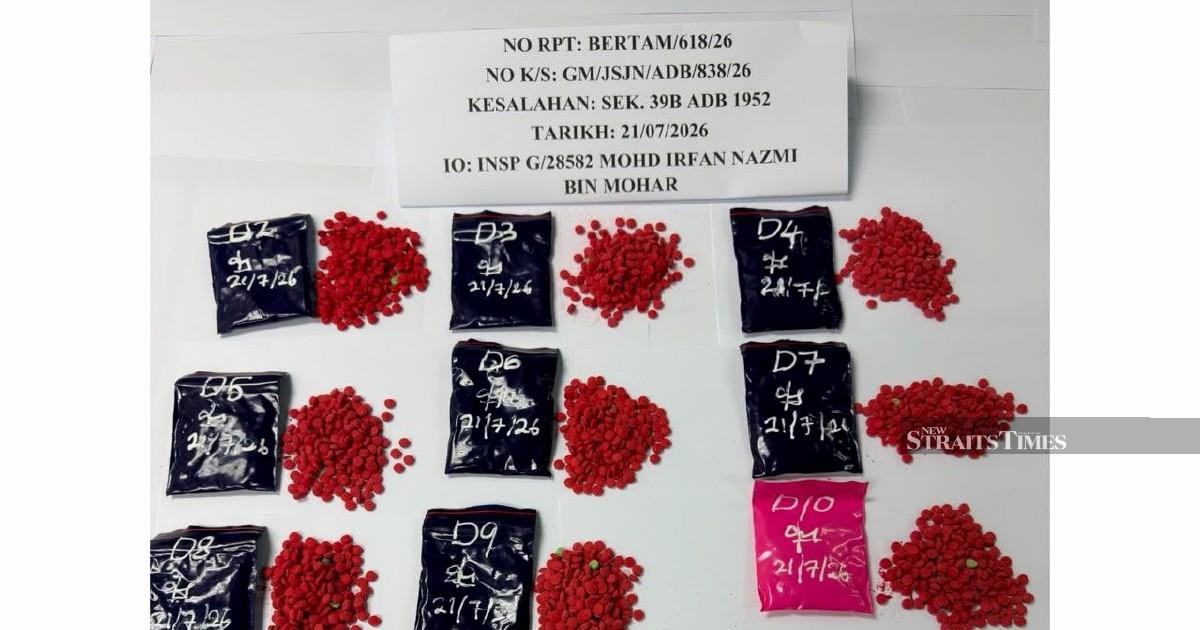
Two Myanmar nationals are now in custody following a dramatic police operation in Gua Musang that resulted in the seizure of a substantial methamphetamine shipment. Officers apprehended the suspects after a brief chase, recovering 6,000 yaba pills estimated to be worth approximately RM60,000. The operation underscores ongoing enforcement efforts against the region's persistent drug trafficking problem and reflects coordination between local authorities determined to intercept narcotics before they reach street-level distributors.
The incident occurred in Gua Musang, a town in Kelantan that sits along critical drug trafficking corridors linking the Malaysian-Thai border with distribution networks across the country. The location's significance extends beyond geography; it represents a transit point where international drug syndicates have historically attempted to move contraband southward. Police presence in such areas remains essential given the constant flow of illicit substances attempting to penetrate Malaysian territory through cross-border routes. The interception demonstrates that targeted patrols and intelligence-led operations continue to yield results despite the scale and sophistication of trafficking operations.
Yaba, a combination of methamphetamine and caffeine, has emerged as a particularly problematic drug across Southeast Asia. The pills are typically produced in Myanmar and Thailand before entering Malaysia through established supply chains. Dealers favour yaba for its relatively low cost compared to other stimulants, making it accessible to younger users and contributing to its alarming prevalence in secondary schools and among urban youth. The 6,000-pill seizure represents not merely a statistical success for law enforcement but potentially prevents hundreds or thousands of individual transactions at street level, each of which would have exposed users to addiction and associated harms.
The estimated value of RM60,000 provides insight into the profit margins driving this illicit trade. Wholesale yaba typically commands prices ranging from RM8 to RM15 per pill depending on quantity and purity, suggesting this particular haul represented a significant commercial consignment rather than personal-use quantities. For the trafficking organisations involved, such losses are calculated as operational costs, yet their frequency and scale burden enforcement agencies and create upstream pressure on supply networks. The financial dimension helps explain the persistence of trafficking despite escalating law enforcement activity.
Myanmar's role as a primary source country for yaba and other synthetic drugs reflects institutional weaknesses, porous border controls, and the dominance of armed groups operating with limited state capacity to regulate their territories. The Golden Triangle region straddling Myanmar, Thailand, and Laos has long served as the epicentre of methamphetamine production in Asia. Even as Myanmar's government has periodically announced drug control initiatives, production capacity has remained relatively stable, with supply responding to demand fluctuations across consuming markets including Malaysia. Understanding this upstream context is essential for appreciating why Malaysian authorities must maintain vigilant border enforcement as a critical public health and security measure.
The apprehension of two Myanmar nationals aligns with broader patterns observed in Malaysian drug enforcement. Foreign nationals, particularly those from neighbouring countries, feature prominently in trafficking cases, either as couriers, small-scale distributors, or middlemen connecting international suppliers with local networks. These individuals often operate under extreme economic pressure or debt bondage, making them expendable within hierarchical trafficking structures. While their arrests contribute to enforcement statistics, the trafficking syndicates behind them typically remain distant from operational consequences, continuing to recruit replacements and maintain supply flows.
Kelantan's geography makes it particularly vulnerable to drug trafficking. The state's extensive border with Thailand and its position on traditional smuggling routes create natural vulnerabilities that require sustained law enforcement presence. The Gua Musang incident represents one among numerous interceptions that police achieve regularly, yet the sheer volume of trafficking attempts suggests that many consignments successfully transit the state undetected. This reality underscores the asymmetrical challenge facing law enforcement: interdiction efforts, however successful tactically, must contend with the fundamental economic incentives driving supply from production zones to consumption markets.
Beyond the immediate arrests, the seizure has implications for drug availability across Malaysia. Yaba supplies typically flow through wholesale networks supplying secondary and tertiary distributors in major urban centres. A 6,000-pill interception may create temporary localized shortages in certain markets, potentially raising street prices and limiting accessibility for a limited period. However, trafficking organisations possess sufficient redundancy in their supply chains to absorb such losses through alternative shipments and routes, meaning the disruption remains temporary unless followed by sustained pressure across multiple corridors.
The operation reflects resource allocation within the Royal Malaysian Police's drug enforcement division. Maintaining patrols in border areas like Gua Musang requires personnel commitment and operational budgeting that stretches already constrained law enforcement resources. This reality contributes to periodic variation in enforcement intensity depending on intelligence priorities, personnel availability, and political emphasis. For maximum effectiveness, border interdiction must operate in concert with demand reduction strategies addressing drug use prevalence within Malaysia itself, creating complementary rather than competing enforcement approaches.
Looking forward, the arrest and seizure will proceed through Malaysia's criminal justice system, with the Myanmar nationals facing methamphetamine trafficking charges carrying mandatory minimum sentences under the Dangerous Drugs Act. Conviction carries penalties of up to 40 years imprisonment and substantial fines, reflecting the severity with which Malaysian law treats large-quantity drug trafficking. However, the broader trafficking ecosystem continues operating unchanged by this single enforcement action. Sustained progress against yaba availability requires complementary strategies including stronger Myanmar and Thai cooperation on production-site enforcement, improved cross-border intelligence sharing, and continued investment in Malaysian demand reduction and rehabilitation initiatives.
The seizure serves as a reminder that yaba availability within Malaysia remains a persistent public health challenge requiring multi-faceted responses. While law enforcement operations like this one provide essential supply-side pressure, the underlying attractiveness of yaba to Malaysian users—driven by its affordability, stimulant properties, and addictive potential—ensures that demand continues creating economic opportunities for trafficking syndicates. Comprehensive drug control requires simultaneous attention to enforcement, community education, treatment availability, and addressing the socioeconomic factors that make certain populations vulnerable to drug use.

