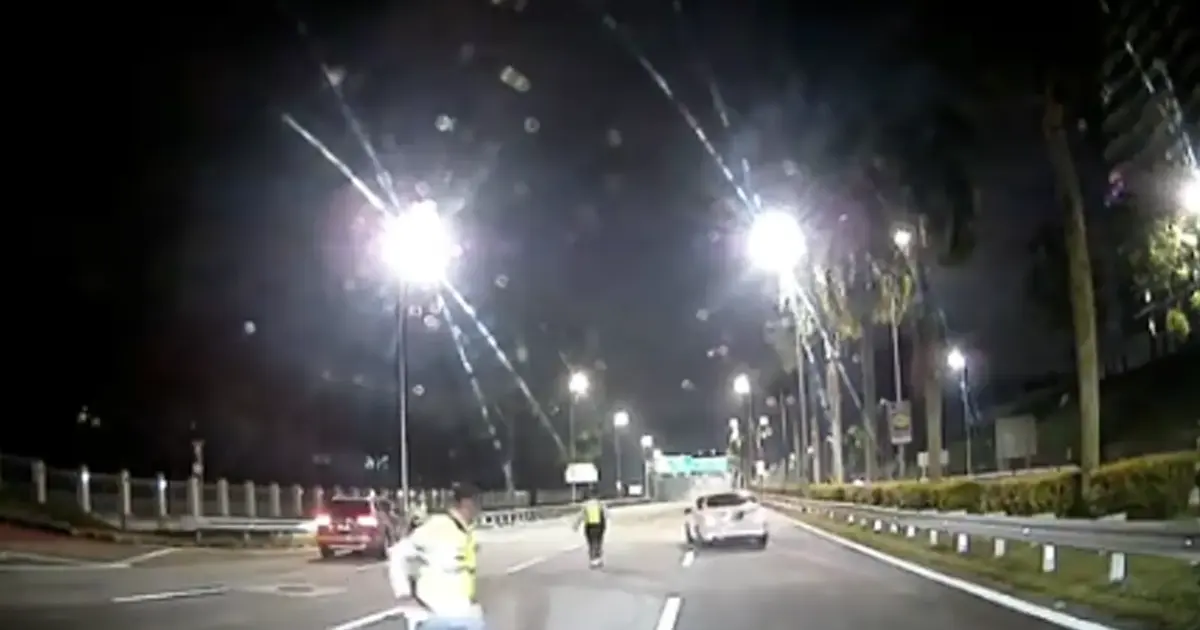
A 20-year-old driver has been taken into custody following an incident in which he drove through a police roadblock and disregarded officers' lawful orders, law enforcement confirmed today. The apprehension underscores ongoing challenges authorities face in maintaining road safety and ensuring compliance at checkpoint operations across the country.
The motorist, operating a Mercedes-Benz, approached the roadblock when personnel signalled him to stop. Rather than complying with standard procedures, the driver accelerated and pushed through the checkpoint, forcing officers to take evasive action. Authorities observed the driver exhibiting visible signs of nervousness, which prompted additional scrutiny during the subsequent investigation.
Offences of this nature—deliberately circumventing police roadblocks and disregarding direct orders from law enforcement—constitute serious violations under Malaysian traffic and criminal statutes. Such conduct endangers not only the driver and officers involved but also the general public, creating unpredictable hazards for other road users in the vicinity. Police have emphasised that roadblocks serve critical functions in maintaining traffic discipline, detecting stolen vehicles, and identifying wanted individuals.
The incident reflects a broader pattern of motorists occasionally attempting to evade police checkpoints, a behaviour that authorities view with particular concern. Whether motivated by panic, criminal intent, or simple non-compliance, such actions trigger police responses that could escalate situations unnecessarily. Officers are trained to manage these encounters professionally, though drivers who force their way through roadblocks significantly increase risk factors for all parties involved.
Roadblocks remain a routine tool in Malaysia's traffic management and law enforcement arsenal. They are conducted at various locations to deter reckless driving, verify vehicle documentation, and intercept vehicles connected to criminal investigations. Legitimate motorists are typically processed quickly, while those with documentation or licensing irregularities face administrative procedures. The deliberate evasion witnessed in this case, however, signals potential underlying concerns that prompted the driver's apparent panic.
The nervousness displayed by the motorist during apprehension raises questions about his motivations. Police may investigate whether the vehicle was stolen, uninsured, or operating without valid registration. The driver might also have faced outstanding traffic violations or warrants. Alternatively, individuals unfamiliar with checkpoint procedures or those experiencing anxiety in high-stress situations occasionally react poorly to police interaction, though this does not excuse non-compliance with lawful orders.
From a public safety perspective, drivers who force through roadblocks pose immediate dangers. Officers positioned at checkpoints are vulnerable to sudden acceleration, and other vehicles or pedestrians in the vicinity face unanticipated collision risks. The incident reinforces why law enforcement treats deliberate checkpoint evasion as a serious matter requiring decisive response and subsequent prosecution.
Malaysian traffic law provides clear frameworks for roadblock operations and establishes penalties for non-compliance. Drivers who refuse to stop at lawful checkpoints, obstruct police duties, or endanger officers face charges that can result in substantial fines, vehicle impoundment, and potential imprisonment. The severity of penalties reflects the seriousness with which authorities and the legal system regard such violations.
This apprehension serves as a reminder to all motorists of their legal obligations when encountering police checkpoints. Cooperation with law enforcement at roadblocks is not merely advisable but legally mandated. Drivers should maintain composure, produce required documentation promptly, and follow officer instructions. Attempting to evade checkpoints through acceleration or aggressive driving transforms a routine administrative interaction into a criminal matter with lasting consequences.
The case also highlights the operational risks faced by police personnel. Officers conducting roadblocks work in inherently dangerous environments where they must balance efficiency with safety. A driver's decision to force through a checkpoint places officers in unexpected peril and complicates their ability to conduct lawful duties. This reality underscores why authorities respond firmly to such incidents.
For Malaysian motorists, the incident reinforces fundamental road rules and the importance of maintaining valid documentation. Those with concerns about outstanding violations or licence status should address such matters proactively rather than attempting evasion, which inevitably compounds legal difficulties. Additionally, drivers experiencing anxiety or uncertainty about police interaction should remember that roadblocks serve legitimate public safety functions and that cooperation is both legally required and practically advisable.
The arrest will now proceed through the criminal justice system, where the driver will face charges related to failing to comply with police officers' orders. Depending on investigation findings regarding the vehicle and driver's background, additional charges may be filed. The case exemplifies how poor decision-making during seemingly routine police interactions can rapidly escalate into serious criminal matters with significant personal and legal ramifications.

