A Singapore court has handed down a five-week jail sentence to a 58-year-old motorist whose vehicle ploughed through protective barriers at Suntec City and crashed into the iconic Fountain of Wealth while he was under the influence of alcohol. Then Shing Chong will also face a 2½-year driving ban following his release, reflecting the severity with which Singapore's judiciary treats drink-driving offences, a persistent road safety concern across Southeast Asia.
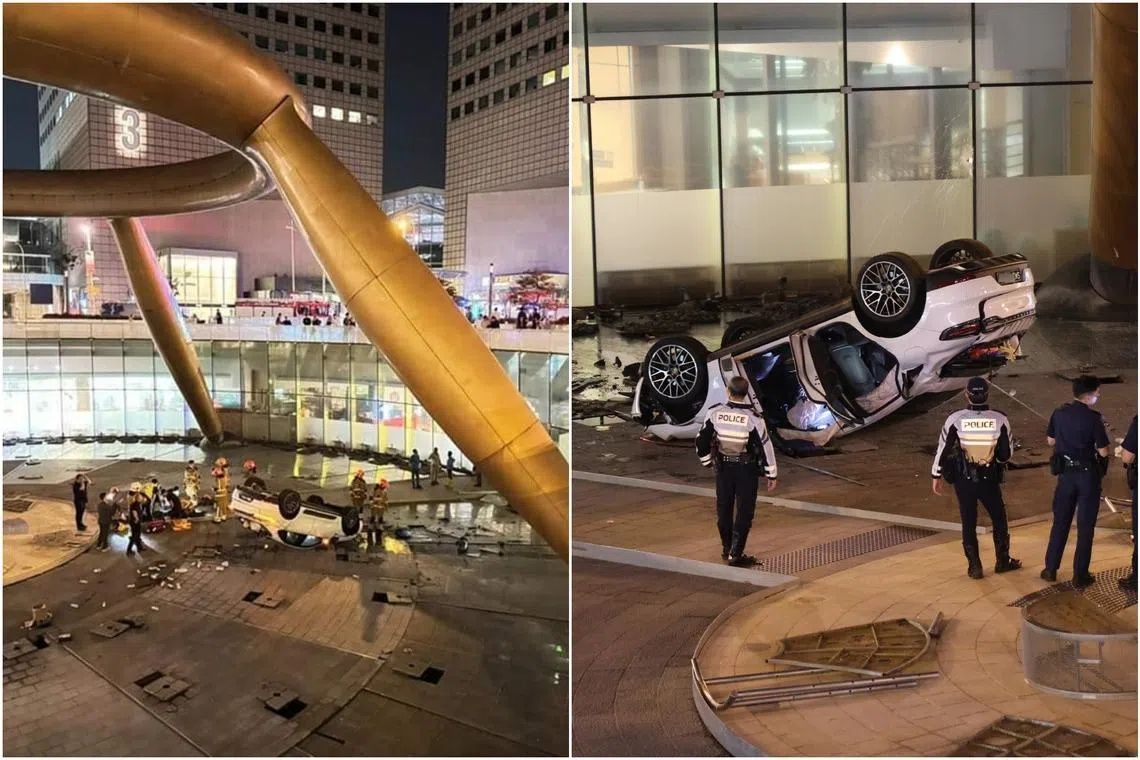
The incident occurred on the evening of 13 July 2024 when Then drove his car into the fountain's basement level, causing an estimated S$64,600 in damage. The court heard that he had consumed approximately one litre of beer over a six-hour period at a Suntec City bar, beginning at 6.15pm and ending around midnight. Before his drinking session, he had also taken either an antihistamine or a sleeping pill, a detail that raised questions about his judgment and state of mind before getting behind the wheel. The combination of medication and alcohol significantly impaired his cognitive and motor functions, though blood and breath alcohol levels were not formally recorded immediately after the accident since he was rushed to Tan Tock Seng Hospital with injuries including a lacerated scalp.
The sequence of events leading to the crash revealed a pattern of deteriorating vehicle control. Then had exited the carpark basement where he initially parked his car and was traveling along Temasek Boulevard when he lost focus. Despite clear directional signage requiring a left turn into a roundabout, he continued driving straight. His vehicle then crossed three traffic lanes before breaching the fountain's protective barricade and crashing into the basement area. The structural damage was extensive, necessitating a lorry crane to extract the vehicle from the water feature. Remarkably, three construction workers who were conducting maintenance in the basement managed to flee the area unharmed, though prosecutors emphasized that had they remained at the precise impact location, the consequences could have been far more tragic.
Then pleaded guilty to driving in a dangerous manner, demonstrating what the court characterized as highly irresponsible behavior. The prosecution, represented by Deputy Public Prosecutor Gladys Lim, made a compelling case for a custodial sentence, emphasizing the recklessness involved in consuming such a significant quantity of alcohol before operating a motor vehicle. The DPP highlighted that the offence not only caused substantial property damage but created genuine risk of serious injury or death to both pedestrians and workers in the vicinity. This prosecutorial stance reflected broader concerns across Singapore and the region about road safety and the disproportionate consequences of impaired driving.
The defence counsel from Invictus Law Corporation attempted to mitigate the sentence by seeking a mandatory treatment order instead of imprisonment. Lawyers Josephus Tan, Cory Wong and Devlin Mohyong argued that Then suffered from major depressive disorder at the time of the incident, according to an Institute of Mental Health assessment. They contended that this psychiatric condition had contributed causally to the offending behaviour, warranting therapeutic intervention rather than purely punitive detention. Under a mandatory treatment order system, offenders receive treatment addressing their underlying mental health conditions in lieu of conventional jail time, a mechanism designed to address root causes of criminal behaviour while reducing recidivism.
District Judge Koo Zhi Xuan ultimately rejected the defence's mitigation strategy, prioritizing deterrence over rehabilitation in this instance. The judge's decision underscored the judiciary's assessment that drink-driving represents such a fundamental breach of public safety that exemplary sentences are necessary. The ruling sends a clear signal that even where mental health factors may have contributed to the offence, the courts will not compromise on sentence severity when public safety is compromised. This approach has implications for how regional legal systems balance mental health considerations against deterrent principles in sentencing frameworks.
Singapore's stringent handling of drink-driving offences reflects a regional trend toward tougher penalties for impaired driving. Malaysia, Indonesia, Thailand and other Southeast Asian nations have similarly increased penalties and enforcement in recent years, recognizing that alcohol-related crashes remain a leading cause of road fatalities. The incident at Suntec City, an iconic commercial and tourist landmark, also highlighted how drink-driving incidents can impact public spaces and infrastructure, extending the consequences beyond immediate accident victims.
The fact that Then made full restitution for the nearly S$64,600 damage demonstrated some acceptance of responsibility and financial capacity to rectify the material harm caused. However, the court determined that compensation alone could not substitute for custodial punishment given the public safety dimension of the offence. This principle—that financial restitution does not eliminate the need for prison time in serious traffic offences—is increasingly adopted across Southeast Asian jurisdictions seeking to strengthen deterrence against dangerous driving.
The 2½-year driving disqualification represents a significant disruption to Then's daily life and mobility, particularly given his age. This collateral consequence of conviction often impacts employment prospects for those whose livelihood depends on driving privileges. Such extended bans form part of a graduated penalty structure designed to ensure that consequences remain proportionate to the severity of the breach, while providing sufficient time for assessment of whether the offender has genuinely reformed and learned from the consequences of impaired driving.
The Suntec City fountain crash serves as a cautionary reminder that alcohol-impaired driving endangers not only the driver but innocent bystanders, workers, and public assets. The fortuitous absence of worker casualties in this instance made the difference between a serious property crime and a potential manslaughter conviction. For Malaysian and Southeast Asian readers, the case underscores the critical importance of designated drivers, ride-sharing services, and public transport alternatives when consuming alcohol, particularly given the severe legal and life-altering consequences of conviction.

