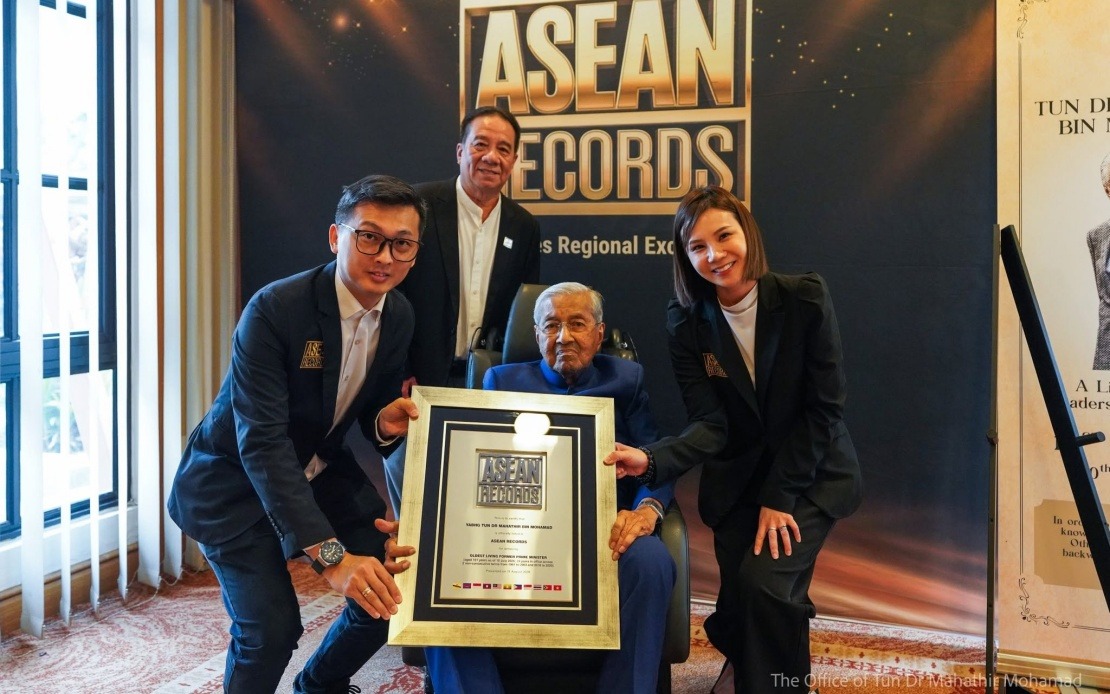
Tun Dr Mahathir Mohamad and Tun Dr Siti Hasmah Mohd Ali have been honoured with three record distinctions by ASEAN and ASIA Records, underscoring their remarkable longevity and unprecedented achievement as a centenarian couple. The recognition came during a formal ceremony at the Perdana Leadership Foundation in Kuala Lumpur, cementing what appears to be an unparalleled milestone in the political and personal histories of Southeast Asia and the broader Asian region.
Dr Mahathir, who turned 101 on July 10, has been formally recognised as the Oldest Living Former Prime Minister across ASEAN member states. This distinction reflects not only his advanced age but also his continuing prominence in Malaysian public discourse more than two decades after stepping down from the country's highest office. His recognition carries particular weight in a region where political longevity, both in tenure and in lifespan, remains relatively uncommon among former heads of government.
Dr Siti Hasmah, who celebrated her 100th birthday on July 12 just two days after her husband, received a complementary record as the Oldest Living Spouse of a Former Prime Minister. Her achievement is especially significant as it acknowledges the distinctive role she has played throughout Malaysia's modern political history, from her husband's first tenure as Prime Minister beginning in 1981 through his various returns to public service and political engagement in subsequent decades.
The couple's most distinctive honour came in their joint recognition as the First Former Head of Government and Spouse to Both Become Living Centenarians simultaneously. The ASEAN Records and ASIA Records adjudication teams conducted thorough verification to confirm that no similar case has been publicly documented anywhere in the ASEAN region or across major Asian markets, lending considerable weight to this unprecedented achievement. This finding underscores the rarity of such longevity paired with the political prominence required to qualify for the distinction.
The timing of these recognitions carried added significance, as they arrived during an exceptionally notable month for the couple. Beyond the individual birthday celebrations in July, Dr Mahathir and Dr Siti Hasmah marked their 70th wedding anniversary on August 5, a milestone that speaks to their enduring partnership across seven decades. The convergence of these three major personal and familial anniversaries within the span of a single month created a natural focal point for formal recognition of their life achievements.
The presentation of certificates took place under the auspices of ASEAN Records Advisory Board chairman Tan Sri Danny Ooi, with chief adjudicators Gillian Ooi and Eldrick Koh, who also serve as directors of both ASEAN and ASIA Records, overseeing the formal proceedings. This structure ensures that the records carry credibility within established frameworks for documenting achievements across the region, distinguishing them from informal or unverified claims of distinction.
Dr Mahathir's extended public profile since turning 100 last year has maintained considerable relevance to Malaysian political discourse. Unlike many retired leaders who fade from public view, the former Prime Minister has continued to offer commentary on contemporary governance issues and has remained active in various capacities. His sustained engagement, combined with his advancing age, has made him a living connection to Malaysia's earlier decades of independence and development, a role that carries both symbolic and substantive weight in the nation's collective memory.
The achievement also reflects broader patterns in global health and longevity that have enabled extended lifespans across the region. Malaysia, like several other ASEAN nations, has experienced significant improvements in healthcare infrastructure, living standards, and life expectancy over the past five decades. The fact that two individuals from the country's political elite have reached centenarian status speaks partly to these systemic improvements, though individual health practices and family longevity also play substantial roles.
For Malaysian readers and the broader Southeast Asian audience, the recognition of Dr Mahathir and Dr Siti Hasmah's achievements offers both a cultural moment and a reflection on changing demographics across the region. As populations age and healthcare advances extend active lifespans, the significance of centenarian achievements may evolve, yet the political and historical resonance of reaching such milestones will likely endure. The couple's continued vitality also raises questions about changing expectations for how former leaders remain engaged with public life in their later years, a pattern that varies significantly across different Asian political cultures.
The records themselves represent a formalisation of informal popular recognition that has surrounded the couple for some time. Malaysian media and public discourse have repeatedly noted the remarkable nature of their longevity, particularly given the demands and stresses traditionally associated with high political office. The official documentation through ASEAN and ASIA Records provides institutional recognition that may have implications beyond the immediate family, potentially influencing how discussions of aging leadership and intergenerational transitions unfold within Malaysian political circles and across the broader region.

