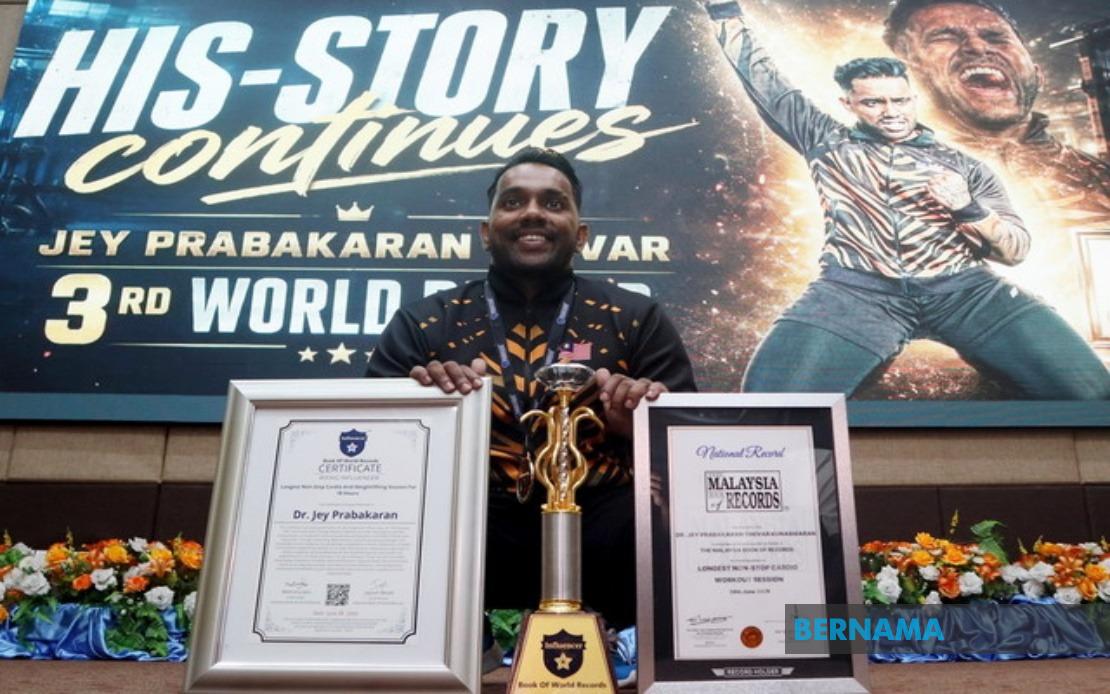
Malaysian fitness athlete K. Jey Prabakaran Thevar, professionally known as Dr Kjey, has cemented his place among the world's most determined endurance athletes by completing an 18-hour non-stop cardio and weightlifting marathon in Kuala Lipis, Pahang. The 29-year-old's remarkable achievement, completed last Sunday at Healthland Kuala Lipis between 4 am and 11 pm, marks his third world record entry and represents a profound personal tribute to his late father, Kunasigaran Suppiya Thevar, who passed away on March 3, 1999 — when Jey was merely a toddler. The dual recognition in both the Malaysia Book of Records and the Influencer Book of World Records underscores the growing prominence of Malaysian athletes in global fitness competitions, a development that reflects the country's expanding participation in niche sporting endeavours.
Growing up without paternal presence fundamentally shaped Jey's approach to personal achievement and resilience. In speaking with reporters, he articulated how the absence of his father became not a source of despair but rather a catalyst for ambition, driving him to pursue excellence in ways that might honour his family name internationally. This emotional dimension adds significant weight to his athletic accomplishments, transforming what might otherwise be viewed as routine fitness metrics into a deeply personal narrative about channelling loss into constructive action. The dedication reflects a distinctly Malaysian approach to sports achievement, where family bonds and ancestral honour often intertwine with physical performance.
Jey's progression through increasingly challenging endurance records demonstrates a methodical approach to record-breaking. His initial 12-hour cardio and weightlifting challenge in 2023 established his credentials as a serious contender in extreme fitness competitions. This was followed by a 15-hour attempt in 2024, where he also established an Asian record with a 13-hour performance that garnered international attention. The escalation to 18 hours represents a significant jump in physiological demands, requiring not merely incremental improvements in stamina but fundamental changes to how his body and mind function during extended exertion. Each progression has been thoroughly documented through official record bodies, ensuring credibility and preventing the kind of unverifiable claims that sometimes plague fitness communities online.
The preparation phase for this latest record revealed the extraordinary demands placed on elite endurance athletes. Jey completely restructured his dietary approach, transitioning to a vegetarian diet approximately six months prior to the attempt. This decision necessitated careful nutritional planning to ensure adequate protein intake and micronutrient availability while reducing overall body weight. By the time of the attempt, he had shed 32 kilograms, a substantial reduction that improved his cardiovascular efficiency and reduced the absolute workload his heart and muscles faced during the 18-hour period. Such dramatic physical transformation underscores the holistic nature of modern athletic preparation, encompassing nutrition, psychology, and biomechanics in integrated fashion.
During the attempt itself, Jey confronted the dual challenges of physical fatigue and mental deterioration, both of which intensify exponentially as hours accumulate beyond the 12-hour mark. Beyond the obvious muscular exhaustion and cardiovascular strain, extreme endurance events trigger overwhelming drowsiness as the body's circadian rhythms rebel against unnatural wakefulness. Maintaining focus, motivation, and proper form becomes increasingly difficult as cognitive function declines, creating a unique type of challenge that distinguishes endurance attempts from traditional strength competitions. Jey's success in maintaining exercise quality throughout 18 hours suggests exceptional mental fortitude alongside physical conditioning, a combination rarely encountered even among professional athletes.
As president of the Malaysian India Fitness Association, Jey occupies a position of influence within a growing community of fitness enthusiasts who represent the Indian-Malaysian demographic's contributions to the country's sporting culture. His visibility and achievements carry particular significance for younger members of this community, who may aspire to similar accomplishments while also taking pride in ethnic representation at international sporting forums. The association's prominence has grown alongside broader developments in Malaysia's fitness industry, which has experienced substantial expansion over the past decade driven by increasing health consciousness and access to modern facilities.
Jey's next target involves a national record attempt featuring 5,000 jumping jacks to be completed within five hours, scheduled to coincide with National Sports Day celebrations in October. This goal differs from his previous world record attempts by focusing on national rather than international recognition, and by emphasising a high-repetition exercise over sustained cardiovascular effort. The tactical shift suggests recognition that world records in extreme endurance activities face gradually diminishing returns as human physiological limits are approached, making alternative pathways to recognition and athletic contribution increasingly necessary.
Beyond the individual metrics, Jey's achievements contribute to Malaysia's global sporting profile in an era where diverse athletic pursuits command international attention. While traditional sports like badminton and football dominate Malaysian sporting discourse, athletes pursuing extreme endurance challenges expand the country's representation across broader athletic disciplines. This diversification strengthens Malaysia's overall standing within international sporting communities and provides inspiration to individuals pursuing non-traditional athletic paths. The inclusion of Malaysian records in internationally recognised books creates permanent documentation of achievements that might otherwise remain unknown to audiences outside immediate sporting circles.
The implications of Jey's work extend into public health messaging and lifestyle promotion. His deliberate emphasis on inspiring youth toward healthier living patterns positions athletic achievement as a vehicle for broader social benefit rather than pure competitive glory. In a region grappling with rising obesity rates and lifestyle-related health complications, visible examples of individuals transformed through disciplined fitness regimes carry particular relevance. Jey's vegetarian transition and significant weight loss serve as practical demonstrations that substantial physical transformation remains achievable through commitment and proper methodology, potentially influencing others to undertake similar lifestyle modifications.
Moving forward, Jey's trajectory will likely involve continued record attempts balanced against the practical limitations of extreme endurance athletics. The exponential physical toll of progressively longer challenges means that sustained world record attempts may eventually reach a plateau beyond which further attempts risk genuine health jeopardy. Jey's demonstrated wisdom in varying his target events and focusing periodically on national rather than international records suggests awareness of these constraints. His influence as association president and public figure may ultimately prove as significant as his individual achievements, as he models for Malaysian audiences how personal discipline, cultural pride, and family honour can integrate within modern athletic pursuits.

