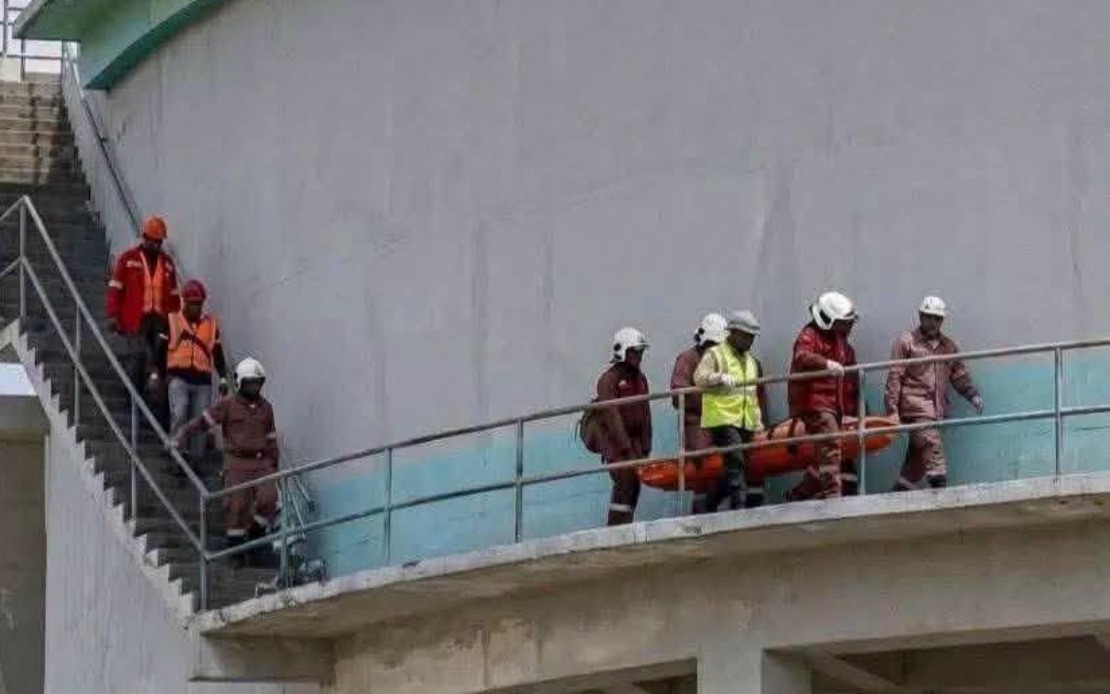
Malaysia's Department of Occupational Safety and Health (DOSH) has commenced a formal investigation into a workplace fatality that occurred during water tank cleaning operations at Menara Saujana Perdana 1 in Sungai Buloh, Selangor on June 16. The victim was an industrial trainee engaged in the maintenance activity, marking another tragedy in a sector where safety lapses have repeatedly claimed lives. DOSH Director-General Hazlina Yon confirmed that inspectors from the Selangor office have visited the premises and implemented measures to preserve the accident scene pending the completion of enquiries.
The investigation will proceed under the Occupational Safety and Health Act 1994, specifically examining whether employers and responsible parties met their statutory obligations under Sections 15, 17 and 18 of the legislation. These provisions establish a comprehensive framework imposing duties on employers, self-employed individuals and other stakeholders to maintain safe working conditions and protect the wellbeing of all personnel exposed to workplace hazards. Should the examination reveal breaches of occupational safety rules, DOSH has indicated it will pursue enforcement measures appropriate to the gravity of any violations identified.
Confined space operations represent one of the highest-risk categories of industrial work, particularly in Malaysia's context where such activities span construction, maintenance, sewage treatment, industrial cleaning and manufacturing sectors. Water tank inspection and cleaning specifically demands extraordinary caution because workers face multiple simultaneous dangers: oxygen depletion or enrichment, toxic gas accumulation, structural collapse, electrical hazards and the psychological stress of working in restrictive environments. The fatality in Sungai Buloh underscores how rapidly situations in confined spaces can deteriorate when proper protocols are absent or inadequately implemented.
Hazlina's statement emphasised that employers bear primary responsibility for conducting thorough risk assessments before authorising any confined space entry. This foundational requirement demands that supervisory personnel and safety officers map the specific hazards present in each environment and determine what control measures—ventilation systems, atmospheric monitoring equipment, rescue apparatus and trained personnel—are necessary before any worker approaches the site. The legal framework presumes that no confined space operation should proceed without this preliminary work completed and documented.
Particulars surrounding the deployment of the industrial trainee at Menara Saujana Perdana 1 are expected to feature prominently in DOSH's enquiries. Trainees and newly hired workers occupy a particularly vulnerable category in workplace fatality statistics because they often lack experiential understanding of hazard recognition and emergency response. Employers are statutorily required to provide these individuals with comprehensive occupational safety and health training tailored to their assigned duties, combined with hands-on briefings about the specific risks they will encounter. Equally important is the assignment of competent supervision—personnel with sufficient knowledge and authority to prevent unsafe acts and intervene when conditions deteriorate.
The incident carries wider implications for Malaysia's occupational safety culture, particularly within the facilities management and building services sectors. Water tank maintenance contracts are frequently awarded to smaller specialist firms operating on tight margins, potentially creating financial pressure to expedite work or economise on safety equipment and personnel. Additionally, subcontracting chains in building services can create ambiguity about who holds primary responsibility for worker safety—building owners, facilities management companies, cleaning contractors or the specific individuals conducting the work. DOSH has consistently highlighted this accountability gap as a factor in preventable fatalities.
Hazlina reiterated that all confined space operations must incorporate formal work permits issued before entry commences. These documents require authorised personnel to verify that atmospheric testing has been conducted, rescue equipment is positioned and tested, communication systems function properly and standby personnel are present and alert. In practice, permit systems often deteriorate into bureaucratic formalities rather than genuine safety mechanisms, with permits signed without actual verification occurring. Strengthening compliance with this requirement remains an ongoing challenge across Malaysian industries.
The regulatory emphasis on employer responsibility reflects the reality that workers often possess limited power to refuse unsafe assignments without jeopardising employment or progression. Even when individual workers recognise hazards, economic dependence frequently forces them to proceed regardless. Therefore, the legal framework correctly places primary accountability on employers and supervisory structures. However, enforcement remains inconsistent, and penalties imposed by DOSH are frequently modest relative to contractors' operational costs, creating insufficient deterrent effect.
Southeast Asian occupational safety experts observe that Malaysia's statutory framework is reasonably comprehensive compared to regional standards, yet implementation and enforcement gaps persist. The recurring pattern involves incidents in confined spaces despite decades of regulatory clarity about required precautions. This suggests that technical knowledge about safe procedures is not the limiting factor; rather, systemic pressures—cost-cutting, schedule pressure, chronic labour shortages and weak enforcement—generate the conditions where fatalities occur.
WITNESS statements collection will likely focus on whether atmospheric testing occurred, whether rescue equipment was available on site and accessible, whether the trainee received appropriate briefing and supervision, and whether individuals with relevant experience were present when the incident occurred. DOSH investigators will also examine whether the work permit system functioned as intended or operated merely as paperwork compliance. These details will determine whether the tragedy resulted from individual negligence or systemic failures in the contracting and supervision arrangements.
Looking forward, the investigation's findings will likely generate publicity within Malaysia's construction and facilities sectors, potentially prompting some organisations to strengthen their confined space protocols. However, sustained improvement requires consistent enforcement by DOSH and meaningful penalty levels that create genuine business incentives for safety investment. The department's message to employers—that safety and health must be prioritised ahead of schedule and cost considerations—represents the correct principle, though translating that principle into consistent workplace practice across Malaysia's diverse industrial landscape remains an ongoing challenge.