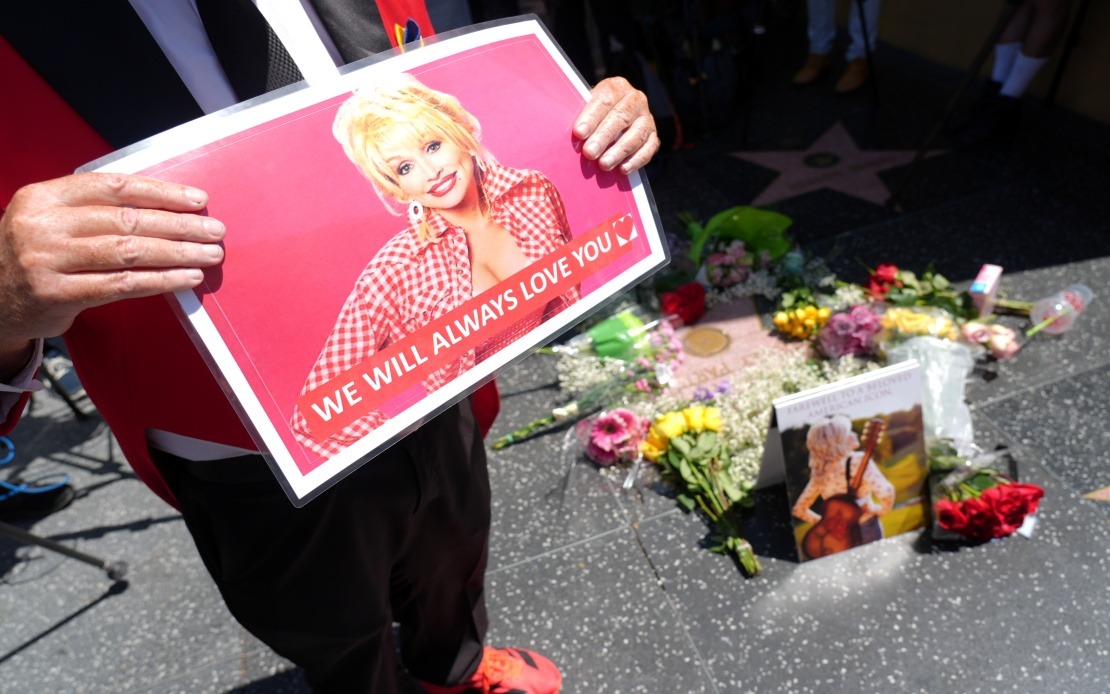
Dolly Parton, the towering figure of American country music whose influence extended across continents and generations, has died at the age of 80. The announcement came through her family via social media on Tuesday, delivered in a video message by her nephew Bryan Seaver. While the specific cause of her death remains undisclosed, the family's statement confirmed that the woman who shaped the sound of modern country music has passed away, leaving behind a legacy that transcends the genre itself and resonates with audiences far beyond the traditional country music heartland.
In recent months, Parton had been managing significant health challenges that forced her to make difficult decisions about her career schedule. She cancelled several public appearances and postponed her anticipated Las Vegas residency, a reflection of the seriousness of her condition. However, just days before her death, she had reached out to her devoted fanbase with reassuring words, indicating that she was responding positively to the medical treatment and medications prescribed to her. This optimistic message made the news of her passing particularly unexpected for many who had been following her health situation.
Parton's journey to becoming one of music's most celebrated figures began in humble circumstances in Sevierville, Tennessee, where she was born in 1946 into a large, working-class family. Rather than remaining limited by her modest background, she demonstrated an extraordinary musical gift from earliest childhood. By the age of ten, she was already performing on local radio stations, a remarkable achievement for someone so young. Her precocious talent continued to flourish, and at just thirteen years old, she recorded her debut single, "Puppy Love," and made her first appearance at Nashville's legendary Grand Ole Opry, the venue that would become synonymous with country music excellence.
The young Parton's determination to build a music career led her to Nashville in 1964, where she quickly shifted her focus from performance to songwriting. Her compositions began attracting attention from established artists who recognised her talent for crafting emotionally resonant material with universal appeal. This phase of her career proved instrumental in building her reputation as a serious musical craftsperson, not merely a performer. Her work caught the attention of Porter Wagoner, an influential figure in country music, who invited her to appear on his television variety show. From 1967 to 1974, Parton became a regular fixture on the programme, significantly raising her public profile and establishing her as a distinctive voice within the country music establishment.
The 1970s represented a transformative period during which Parton transitioned from being a successful supporting artist to a major solo force. It was during this decade that she recorded two of her most enduring compositions: "Jolene," a haunting ballad about heartbreak, and "I Will Always Love You," a powerfully affecting love song. While these tracks achieved substantial success within country music circles during their original release, their true global reach came later when Whitney Houston transformed "I Will Always Love You" into an international phenomenon, introducing Parton's songwriting to audiences who might never have encountered country music otherwise. This phenomenon illustrates how her creative work possessed a timeless quality that transcended genre boundaries and cultural contexts.
Beyond her contributions to music, Parton demonstrated a multifaceted career that extended into film and entertainment. She appeared in notable motion pictures including "9 to 5" alongside Jane Fonda and Lily Tomlin, and the acclaimed drama "Steel Magnolias," proving that her talents and charisma could translate effectively to the cinema. However, it was her philanthropic endeavours that perhaps revealed the deepest dimensions of her character and values. Through the Imagination Library, an initiative she founded, Parton has distributed free books to millions of children, recognising that access to literature and education represents a powerful tool for social mobility and personal development. This work became as integral to her identity as her music, reflecting her commitment to giving back to communities and creating opportunities for young people.
Over a career spanning more than six decades, Parton accumulated extraordinary commercial and critical achievements. Her record sales exceeded 100 million copies worldwide, a testament to the enduring appeal of her music across different eras and markets. She received eleven Grammy Awards, country music's highest honour, alongside numerous other prestigious recognitions from the industry. Perhaps most significantly for her legacy as a songwriter and artist of historical importance, she was inducted into both the Songwriters Hall of Fame and the Rock and Roll Hall of Fame, accolades that placed her among the most important creative figures in popular music history.
For Malaysian audiences and Southeast Asian music enthusiasts, Parton's passing marks the end of an era. While country music represents a distinctly American cultural form, Parton's work achieved a universality that transcended geographic and cultural boundaries. Her songs about love, loss, resilience, and human connection resonated with listeners globally because they addressed fundamental human experiences. The international success of "I Will Always Love You" demonstrated how authentic storytelling and emotional depth could bridge seemingly disparate musical traditions. Her influence on subsequent generations of musicians, particularly female artists who sought to blend commercial success with artistic integrity and philanthropic commitment, extended well beyond Nashville and shaped the broader landscape of popular music.
Parton's legacy serves as a reminder of how individual talent, combined with unwavering determination and genuine compassion for others, can create impact that endures across time and geography. She rose from poverty to become one of the most successful and respected figures in entertainment history, while maintaining a commitment to her origins and to helping others overcome similar challenges. Her passing closes a remarkable chapter in popular music history, but her influence through her vast catalogue of recordings, her contributions to film, and her philanthropic work will continue to shape culture and inspire future generations of artists and social advocates across the world.

