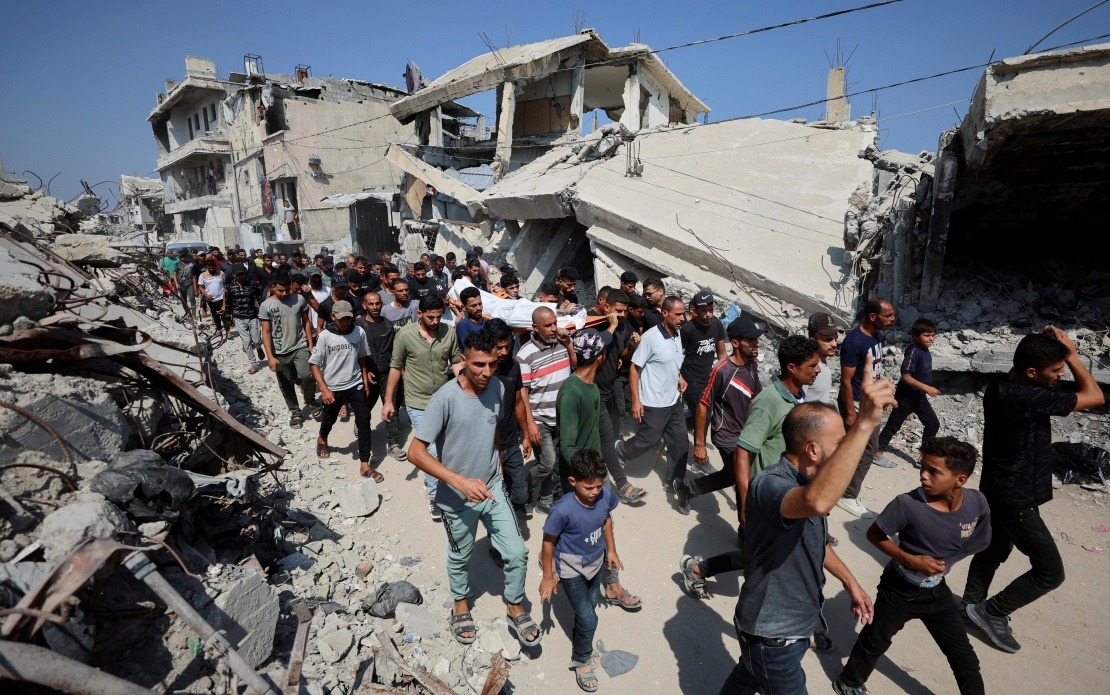
Doctors Without Borders (MSF) has condemned Israel's military establishment for closing investigative cases related to the deaths of its humanitarian staff working in Gaza, with the organisation asserting that the closures occurred without any formal criminal investigation being launched. The international medical charity made the declaration on Thursday following years of persistent calls for accountability, and after resorting to petitioning Israel's High Court due to the Military Advocate General's unresponsiveness to its demands for justice.
The termination of these cases represents a critical juncture in ongoing disputes over accountability for civilian deaths during the conflict in Gaza. MSF has consistently maintained that all available evidence points squarely to responsibility by the Israeli armed forces for the fatal incidents involving its personnel. The organisation emphasises that it had furnished Israeli military authorities with comprehensive identification details regarding its staff members and had ensured its operational vehicles bore clear markings and insignia to distinguish them from combatant targets.
Two specific incidents underscore the gravity of MSF's concerns about the closure decision. In November 2023, an attack on an MSF convoy resulted in the deaths of two individuals connected to the organisation's operations, including Alaa Al Shawa, who served as a volunteer assisting MSF medical personnel at Al-Shifa Hospital. Subsequently, in February 2024, another assault targeted an MSF shelter facility located in Khan Younis, resulting in fatalities among the family members of a staff member and injuries to six additional persons, the majority of whom were women or children.
These incidents form part of a broader pattern of casualties affecting humanitarian personnel across Gaza since the escalation of conflict in October 2023. MSF has documented fifteen of its own staff members killed by Israeli military operations during this period, contributing to a documented toll of approximately 1,700 healthcare workers who have perished across the same timeframe. This alarming casualty rate among medical professionals has significant ramifications for humanitarian assistance capacity and the provision of essential health services throughout the enclave.
The closure of investigative cases without criminal proceedings raises fundamental questions about the adequacy of internal military review mechanisms to address potential violations of international humanitarian law. MSF argues that self-investigation by military systems is inherently compromised and cannot substitute for genuinely independent, impartial, and transparent accountability processes. The organisation contends that such internal mechanisms have demonstrably failed to address conduct that may constitute war crimes under international law, particularly regarding incidents resulting in civilian deaths.
For Malaysian readers and policymakers in Southeast Asia, this situation illustrates broader challenges facing the international humanitarian system when military forces investigate their own alleged violations. The accountability deficit MSF identifies reflects tensions between national sovereignty and international humanitarian obligations that numerous regional nations navigate when dealing with security operations and civilian casualties. The precedent set by closure of cases without investigation may influence how other militaries approach similar situations, with potential implications for humanitarian workers across conflict zones where Southeast Asian nationals operate.
MSF's positioning of these case closures within the broader context of the conflict in Gaza reflects the organisation's assessment that individual incidents cannot be divorced from systemic patterns of alleged violations. The medical charity has explicitly linked the decision to what it characterises as ongoing conduct amounting to genocide against Palestinians within the Gaza territory. This framing represents MSF's conviction that isolated investigative outcomes must be understood within a framework of cumulative harm and potential systematic targeting of civilian populations.
The organisation has issued a unequivocal call for intervention by genuinely independent international investigative bodies, arguing that no existing internal Israeli legal mechanisms can provide the neutrality and impartiality necessary for credible accountability. This appeal resonates with longstanding debates within Southeast Asia regarding the role of international mechanisms in investigating alleged violations, particularly when national systems are perceived as lacking independence from executive or military influence.
MSF's assertion that no legitimate military objective can justify the indiscriminate loss of civilian life introduces a fundamental principle of proportionality into the humanitarian discourse surrounding the conflict. This argument challenges prevailing justifications offered for civilian casualties and reasserts established international humanitarian law principles that require combatants to distinguish between military targets and protected civilian populations, including designated humanitarian personnel and facilities.
Statistics compiled by Gaza's Health Ministry document the ongoing toll of the conflict, with 10 Palestinians killed and 25 injured during a single 24-hour period recently documented. The accumulated death toll since October 2023 has reached 73,417 individuals, with an additional 174,360 persons sustaining injuries. Health Ministry data also indicates that violations of ceasefire agreements have resulted in 1,283 additional Palestinian deaths and 4,248 injuries, reflecting continued instability despite nominal pause arrangements.
For Southeast Asian governments and civil society organisations, MSF's position underscores the tension between maintaining diplomatic relations with major powers and upholding international humanitarian principles. The case highlights how humanitarian organisations operate within constrained political environments where pursuit of accountability may conflict with broader strategic considerations. The inability of existing mechanisms to provide credible investigation and potential prosecution sets concerning precedents for situations where humanitarian personnel face danger across multiple conflict contexts throughout the region and globally.
The broader implications extend to questions of immunity and impunity within conflict situations. When military forces successfully insulate themselves from external investigation and oversight, the practical incentive to exercise restraint in operations affecting civilians diminishes significantly. This dynamic affects not only current operations in Gaza but also establishes normative expectations that may influence military behaviour in other regional conflicts where Southeast Asian nations maintain security interests or humanitarian engagement.
Moving forward, MSF's demand for independent international investigation represents a challenge to the existing international system's capacity to ensure accountability for alleged violations during armed conflicts. The case demonstrates how humanitarian organisations, despite their neutrality commitments and identification protocols, remain vulnerable to military action, and how institutional mechanisms within individual nation-states may prove inadequate for addressing legitimate accountability concerns raised by the international humanitarian community.

