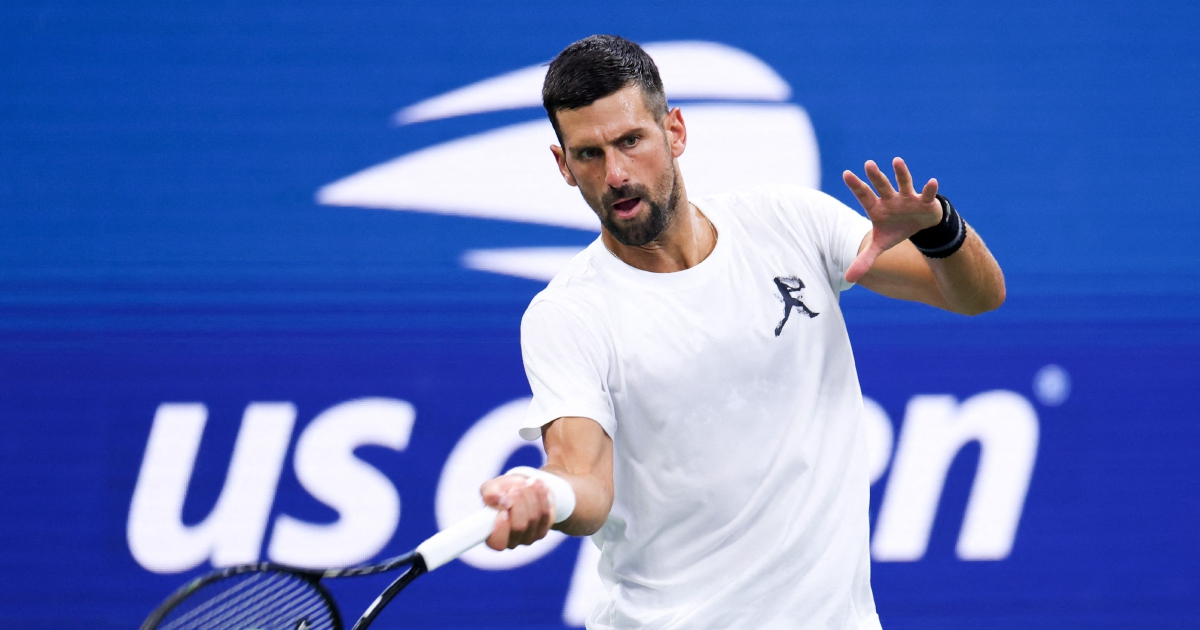
Novak Djokovic comes to the US Open with a singular mission: to inscribe his name alone in tennis history by winning his 25th Grand Slam title and surpassing Margaret Court's record that has stood for over four decades. The Serbian champion last claimed the trophy in 2023, reaching parity with Court's achievement of 24 major championships. Since that triumph, his pursuit of record number 25 has dominated his professional outlook, turning each tournament into a step towards immortalising his legacy in the sport.
Djokovic's hunger for this milestone reflects more than simple statistical ambition. In an era where generational shifts happen rapidly in professional tennis, the notion of standing alone atop the all-time list carries profound significance. The record has become almost mythical in tennis circles, representing not merely a number but a comprehensive validation of sustained excellence across multiple decades. For Djokovic, now competing in his fourth decade as a professional, the opportunity to eclipse this benchmark would cement his status as arguably the greatest player the sport has witnessed.
The path to US Open glory presents particular challenges for the 37-year-old Serbian. American hard courts demand a specific brand of aggressive tennis, and younger competitors like Jannik Sinner and Carlos Alcaraz have demonstrated formidable prowess on this surface throughout recent seasons. Djokovic must navigate not only the physical demands of a Grand Slam tournament but also the tactical adjustments required to compete against an increasingly powerful generation of rivals who have grown accustomed to his style and patterns of play.
Djokovic's preparation heading into this tournament carries distinctive weight compared to his typical pre-major routines. Beyond the standard conditioning and match sharpness that all elite competitors seek, he approaches the US Open aware that time works against him in professional tennis. Each tournament represents both an opportunity and a reminder that future chances may become scarcer. This psychological dimension adds intensity to his preparation, transforming the tournament into something beyond a mere sporting contest.
The Serbian's record at the US Open demonstrates his ability to perform under pressure on this particular stage. His 2023 victory showcased that his game remains capable of delivering when maximum stakes are involved. Yet the intervening period since that triumph has seen the landscape shift considerably. Younger competitors have matured, new talents have emerged, and the collective standard of play across the men's draw has intensified. Djokovic must demonstrate that his preparation translates into tournament performance against this heightened opposition.
For Malaysian and Southeast Asian tennis enthusiasts, Djokovic's pursuit carries international resonance. His rivalry with other generational talents has captivated global audiences, and the narrative of an aging champion pursuing one final record provides compelling drama that transcends national boundaries. The region's growing tennis engagement means this story connects with increasingly sophisticated local audiences who appreciate both the technical excellence and the human drama embedded within professional sport.
The broader implications of Djokovic's potential success extend beyond personal achievement. A 25th Grand Slam would reshape conversations about tennis longevity and peak performance windows. It would suggest that the traditional understanding of athletic decline does not necessarily apply uniformly across elite competitors. Djokovic's ability to remain competitive against younger, more physically explosive opponents challenges assumptions about athletic age and competitive trajectory.
Beyond the statistical achievement lies a narrative dimension that resonates across sports. The pursuit of records by aging athletes occupies a unique place in sporting culture, simultaneously inspiring and poignant. Djokovic represents a figure determined to extend his dominance beyond the point where conventional wisdom suggests decline becomes inevitable. Whether this determination translates into success remains uncertain, but the endeavour itself carries dramatic weight.
The US Open setting amplifies the significance of Djokovic's challenge. Grand Slam tournaments represent the sport's highest honour, and conquering one at this stage of his career would validate his sustained commitment to excellence. The American hard court environment, with its speed and unforgiving nature, demands peak physical and mental performance. Djokovic's preparation suggests he enters this competition believing such performance remains achievable despite his advancing years.
As the tournament approaches, Djokovic's presence brings additional commercial and narrative interest to the competition. The tennis world monitors not simply whether he can win but whether he can sustain the quality of play required to break through tough opponents across multiple matches. His pursuit transforms the US Open into a stage where both his legacy and the sport's future direction will be contested, making this tournament uniquely consequential for understanding modern professional tennis.

