Novak Djokovic arrives at the U.S. Open pursuing what would be a historic standalone record—his 25th Grand Slam title—under conditions more encouraging than those he has faced in recent years. With Jannik Sinner ruled out by a knee injury and Carlos Alcaraz coming back after more than four months away nursing a wrist problem, the 39-year-old Serb finds himself in an unusually advantageous position. Yet this road to New York glory is hardly without significant hurdles, chief among them Alexander Zverev, who has emerged as a formidable contender following his maiden major triumph at the French Open and subsequent appearance in the Wimbledon final.
Djokovic's dominance across tennis history cannot be overlooked, but the sport's landscape has shifted dramatically over recent seasons. Since capturing the U.S. Open title in 2023, the Serbian veteran has remained competitive at the major championships, yet Alcaraz and Sinner have collectively claimed ten of the previous eleven Grand Slam crowns, fundamentally reshaping the narrative around the game's hierarchy. The younger generation's repeated breakthroughs have stalled Djokovic's attempts to break clear of Margaret Court's all-time record, with Alcaraz and Sinner combining to defeat him five times across the last six major tournaments. That Australian Open final loss to Alcaraz earlier this year represented what many observers considered Djokovic's most realistic opportunity to add to his tally, making the current circumstances feel genuinely significant for his legacy.
What distinguishes Djokovic's mindset as he prepares for New York is not merely statistical analysis but rather a deeply rooted psychological resilience. In his recent documentary, the tennis icon invoked the Serbian concept of "inat"—a force of stubborn determination that emerges when external doubt mounts—as the driving philosophy behind his continued pursuit of greatness. This mentality, he explained, represents something fundamental to Serbian culture itself, a refusal to yield when the odds appear stacked against you. For a player approaching 40 with accumulated physical demands and limited preparation time, such conviction remains essential.
The injury circumstances surrounding the draw genuinely favour Djokovic's prospects. Sinner's absence removes one of the tournament's most formidable challengers at peak fitness, while Alcaraz's return from such an extended layoff introduces legitimate questions about whether he can rediscover the razor-sharp form that has defined his breakthrough dominance. Yet the American defending champion carries a proven track record of producing elite tennis when major tournaments demand it, suggesting premature dismissal would be foolish. Alcaraz's resilience and championship pedigree could yet overcome the uncertainty surrounding his physical readiness.
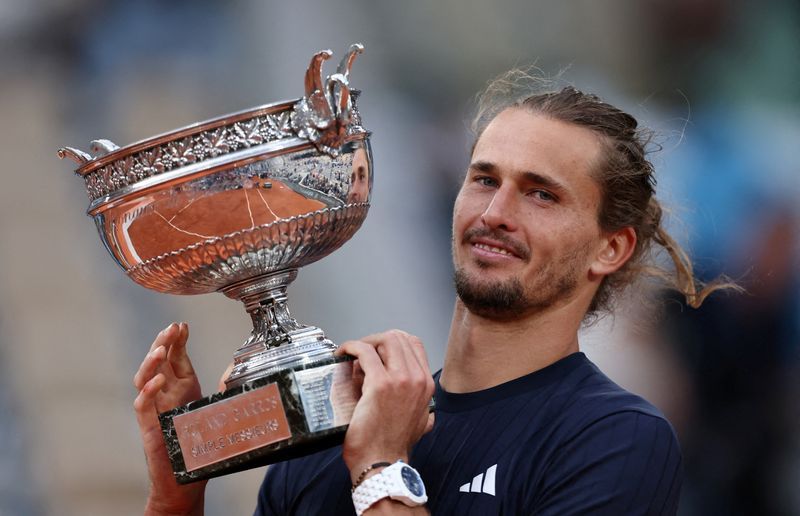
Zverev's emergence as a major championship winner cannot be overstated in assessing the tournament's landscape. After years of reaching the heights without converting opportunities, the German's French Open breakthrough represents a genuine watershed moment in his career trajectory. His run to the Wimbledon final immediately thereafter demonstrated that his major success was not merely a one-off achievement but rather evidence of sustained elevation in his play. Should Zverev maintain this trajectory into New York, he represents perhaps the clearest obstacle to Djokovic's path through the draw.
Roger Federer, observing from the sidelines, offered perspective that transcends statistical analysis. When the Swiss legend speaks about Djokovic's enduring capacity to contend, he speaks from intimate knowledge accumulated through decades of the highest-level competition. Federer's assertion that Djokovic "cannot be written off" whenever he enters a major carries weight precisely because it comes from someone who has witnessed firsthand his uncanny ability to elevate his game when the stakes matter most. This institutional memory of Djokovic's championship mentality remains relevant even in an era increasingly dominated by younger players.
The American contingent presents an interesting subplot within the broader narrative. Ben Shelton, riding momentum from his Canadian Open triumph, headlines homegrown hopes, though his inconsistency across major tournaments—particularly during opening weeks—raises questions about whether he possesses the sustained excellence required for a title run. Frances Tiafoe and Taylor Fritz, both recent finalists or champions at major warm-up events, represent the strongest American challenge in years, with Fritz's appearance in last year's final suggesting genuine progression toward ending a drought of American men's champions stretching back to 2003. Andy Roddick, himself the last American to claim the title, cautions that Shelton must prove he can establish control early before expecting to compete through the tournament's second week.
Beyond the established contenders, rising players including Arthur Fils and Rafael Jodar will seek to announce themselves on tennis's biggest stage. Felix Auger-Aliassime, having reached the semi-finals last year, enters as a competitor with knowledge of how to operate deep in major tournaments. These emerging talents represent the next generation that could eventually succeed the current wave of championship winners, yet none possess the experience or pedigree to be considered primary threats to Djokovic's ambitions.
For Malaysian and broader Southeast Asian readers, Djokovic's pursuit carries broader significance regarding an evolving sports narrative. The question of whether he can claim another major speaks to themes of athletic longevity, the psychological resilience required to compete at the absolute highest levels across decades, and the generational transitions that define professional sport. Djokovic's journey also demonstrates that competitive windows at the elite level need not close definitively, provided the champion's commitment and physical capacity remain aligned. His presence in New York, regardless of outcome, affirms that age represents merely one factor among many determining success at tennis's grandest stages.

