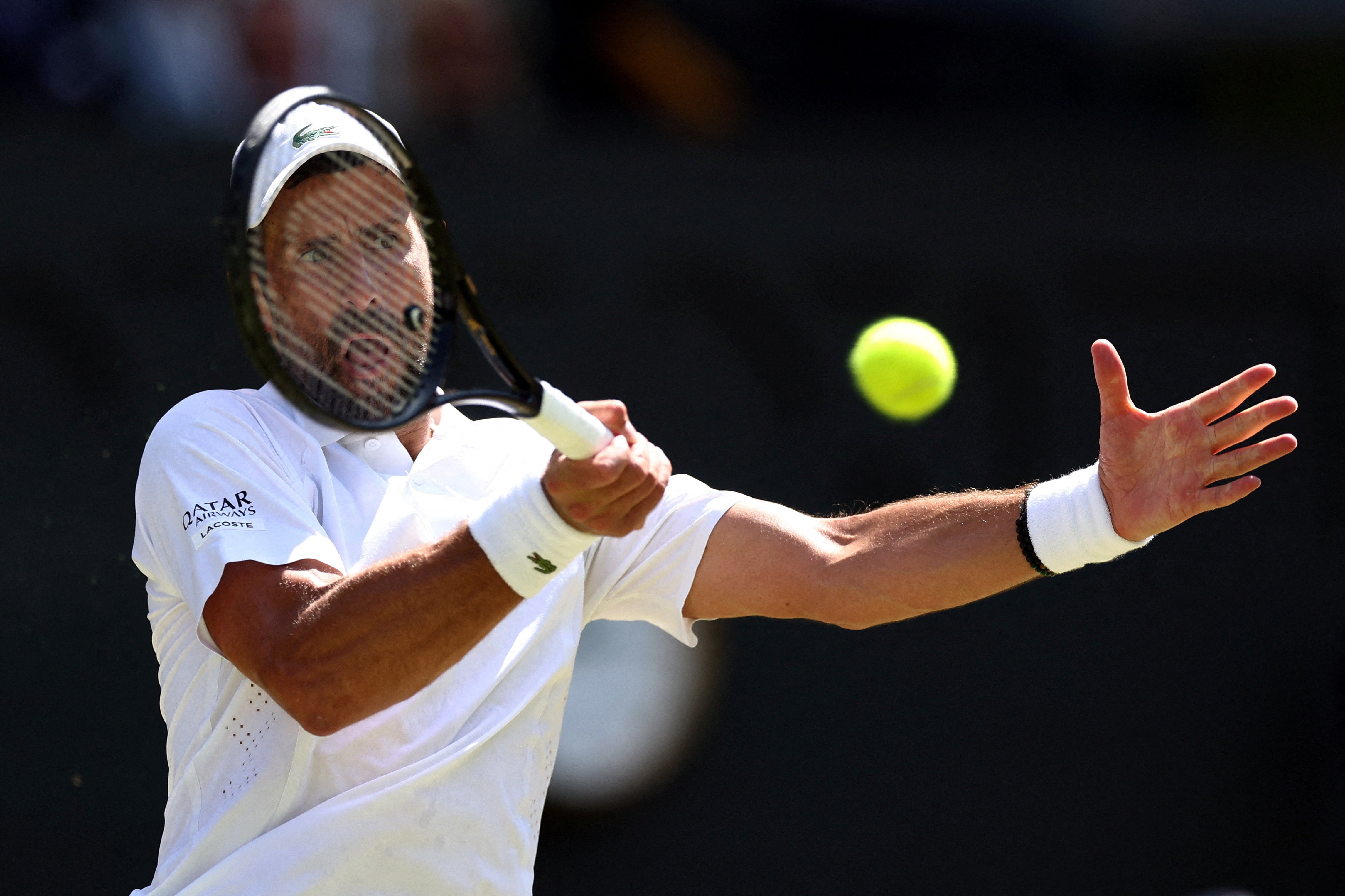
Novak Djokovic's path to the Wimbledon semifinals proved gruelling both physically and emotionally, as the 39-year-old Serbian star outlasted Canada's Felix Auger-Aliassime in the longest quarterfinal match in the tournament's storied history. The contest consumed five hours and 15 minutes of enthralling tennis across Centre Court, finishing merely six minutes before the competition's 11 pm curfew, leaving Djokovic with minimal recovery time before his semifinal meeting with defending champion Jannik Sinner.
The victory came at considerable cost. Djokovic struggled with an injury scare during the opening set, requiring a medical timeout after appearing to tweak his left calf muscle, yet he pushed through the pain to claim the first set in an extended tiebreak. The decision to persevere through physical discomfort, rather than risk losing momentum, proved decisive, but questions linger about his readiness for the increasingly demanding latter stages of the tournament.
The match's defining moment arrived when tournament referee Denise Parnell descended to Centre Court late in the second set to announce that the roof would be closed due to fading light. At precisely 7.40 pm, with the scores locked at one set apiece, the decision triggered an extraordinary confrontation that exposed the tension between rigid operational protocols and the realities of competitive sport. Djokovic, acutely aware that Auger-Aliassime represented a formidable indoor player capable of thriving under controlled conditions, immediately protested the ruling with visible frustration.
The Serbian competitor argued vociferously that sufficient daylight remained to complete another entire set under open-air conditions, challenging what he characterized as arbitrary rule enforcement. He referenced his own first-round encounter against Wu Yibing, where the roof remained open until approximately 8.30 pm, questioning the apparent inconsistency in how the tournament applied its curfew protocols. "We're an outdoor tournament," Djokovic declared, articulating the fundamental principle that should presumably govern decision-making at a grass-court championship.
Parnell countered by explaining that she sought to avoid repeating the problematic circumstances surrounding Sinner's fourth-round match against Shintaro Mochizuki, when deteriorating light conditions forced the roof closed mid-set, disrupting the contest's flow and competitive integrity. Her caution reflected genuine operational concerns, yet Djokovic dismissed her reasoning as irrelevant to their specific situation, declaring with evident annoyance that he remained unconcerned with Sinner's previous match circumstances.
Ironically, Auger-Aliassime's subsequent 14-minute service hold in the opening game of the third set—requiring both players to maintain intense concentration through an elongated game—vindicated Parnell's judgment. The Canadian's ability to extend individual games suggested that extended rallies might indeed have created the very lighting complications the referee sought to prevent. This sequence demonstrated how tournament officials must occasionally make unpopular decisions based on institutional experience and broader competitive fairness rather than individual match dynamics.
Despite the roof controversy and physical challenges, Djokovic reasserted his dominance by breaking Auger-Aliassime's serve to love—a particularly significant achievement given that the third seed had surrendered his serve only once during the entire tournament fortnight. This breakthrough proved instrumental in securing the third set and shifting momentum decisively. The fourth set proceeded to a tiebreak that Auger-Aliassime won convincingly, forcing a fifth-set decider that pushed both competitors toward exhaustion.
The deciding set reached a first-to-10 points tiebreak rather than the traditional seven-point format, reflecting modern Wimbledon regulations designed to prevent endless fifth-set marathons. Djokovic ultimately prevailed 10-4 in this climactic tiebreak, securing his advancement and a semifinal showdown with Sinner. The victory maintained his pursuit of an eighth Wimbledon title, a remarkable achievement for a player at 39 years old.
Following the extraordinary contest, Djokovic reflected philosophically on his achievement, crediting his success to emotional resilience and psychological fortitude as much as technical skill. "I did it with a racket, and a lot of heart," he explained, acknowledging the immense mental demands of such protracted contests. He highlighted the extreme tension characteristic of matches decided by the finest margins, emphasizing that managing nervous energy proved as crucial as physical conditioning.
Djokovic also expressed wistfulness about the timing of his advancement, noting that he wished the match represented the tournament's final rather than merely a semifinal. Such a conclusion would have granted him extended recovery time before facing Sinner, whose championship credentials and contemporary dominance on grass courts pose formidable challenges. The comment reveals anxiety about how his 39-year-old body will recover from such physical exertion before facing another elite opponent.
For Malaysian and Southeast Asian tennis enthusiasts, Djokovic's continued presence in major tournament semifinals remains significant. His longevity challenges conventional wisdom about athletic aging while simultaneously raising questions about sustainability and injury prevention at the highest competitive levels. The confrontation with tournament officials also highlights ongoing debates about how sporting competitions balance competitive integrity with operational requirements—tensions increasingly relevant as environmental and scheduling pressures mount across professional sports globally.
Djokovic's quarterfinal conquest demonstrated that exceptional will and experience can still overcome contemporary opponents' youth and athleticism, at least temporarily. However, the narrow margins of victory and visible physical struggles suggest that Sinner presents a qualitatively different challenge. The defending champion's youth, consistency, and comfort on grass represent precisely the type of sustained excellence that even legendary competitors find increasingly difficult to overcome.

