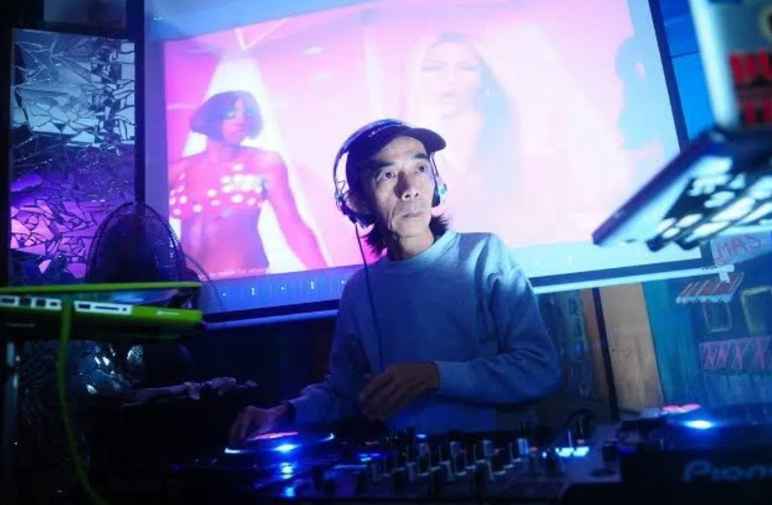
Andrew Chow, the iconic turntablist and DJ who became synonymous with Singapore's vibrant hip-hop movement, has passed away on August 3 following a battle with stomach cancer. He was 63. Known professionally as DJ Wiz, Chow left an indelible mark on the city-state's nightlife landscape, establishing himself as a central figure in cultivating home-grown hip-hop, R&B, and turntablism during an era when electronic music culture was still finding its footing in Southeast Asia.
Chow's most enduring professional association was with Zouk Singapore, the legendary nightclub located on Jiak Kim Street, where he held the position of resident DJ from the mid-1990s through the early 2010s. This tenure spanned nearly two decades during which the venue transformed into a cultural institution, with Chow's performances becoming essential experiences for enthusiasts of electronic music and hip-hop across the region. His residency coincided with a golden period of Singapore's clubbing scene, when venues like Zouk served as incubators for musical talent and cultural experimentation. Within the sprawling complex, Chow's presence at Phuture—a club nested within Zouk itself—became legendary among Friday night revellers who gathered to experience his distinctive mixing style and technical prowess.
The accolades that Chow accumulated throughout the 1990s and 2000s reflect his technical mastery and competitive standing within the global turntablism community. He claimed three victories in the DMC Singapore competition, one of Asia's most prestigious DJ championships, cementing his status among his peers. His international recognition grew when he triumphed at the Singapore leg of the 1998 Technics World DJ Championships, a global competition that brought together elite turntablists from across continents. These achievements underscored his ability to compete at the highest level while simultaneously serving as an ambassador for Singapore's emerging music culture on the world stage.
Beyond the trophy cases and competition results, Chow's most profound contribution lay in his role as a cultural custodian and mentor. Fellow turntablist Wayne Liu, known professionally as DJ KoFlow and now 45 years old, articulated this legacy in deeply personal terms, describing Chow as someone who devoted his life to nurturing hip-hop culture through his artistic practice. For Liu's generation of musicians, Chow represented not merely technical excellence but a commitment to building community around a genre that many in Singapore's establishment initially dismissed or misunderstood. His willingness to teach, perform, and advocate for hip-hop and turntablism helped establish these art forms as legitimate and respected expressions within Singapore's cultural landscape.
Chow's influence extended across multiple generations of clubgoers and musicians who witnessed his artistry firsthand. Kavan Spruyt, the 46-year-old founder of Rasa, a prominent nightlife and event venue, reflected on his own memories of watching Chow perform during the height of the big beat era. For Spruyt, these experiences—dancing for hours on Friday nights while observing Chow's command of the turntables—shaped his understanding of what excellence in DJ performance could entail. Spruyt described Chow as a "hero to many," acknowledging the aspirational quality his performances held for younger musicians and enthusiasts seeking to understand how technical skill could translate into emotional resonance and crowd connection.
Eddie Chan, performing as DJ Small and having maintained a friendship spanning four decades, offered another perspective on Chow's character and contributions. Chan characterised Chow not primarily through the lens of competition or technical achievement, but through the qualities of pedagogy and fraternity. As a teacher and mentor, Chow combined deep musical knowledge with an approachable demeanor that allowed younger artists to learn from his experience. Chan emphasised Chow's versatility across musical genres and his refusal to become rigidly committed to any single style, observing that his mixing and scratching capabilities remained consistently executed at the highest level across diverse musical contexts.
Chow's final public appearance came at the DMC Warm-Up Battle event held at Kossa nightclub on May 24, where he performed and participated as a judge. This engagement underscored his continued relevance and commitment to the competitive turntablism scene even as his health declined. The timing proved poignant, as he had been scheduled to receive the DMC Legacy Award at the upcoming DMC Singapore event on September 6 at Rasa—an honour recognising his lasting contributions to the art form and his role in establishing turntablism as a serious artistic discipline within Singapore's cultural ecosystem.
Chow's daughter, Abby Chow, 27, approached her father's memorial with a spirit reflective of his personality and values. Rather than requesting traditional funeral attire, she invited friends and fans to wear "colourful and stylish" clothing, insisting on a celebration of Chow's personal style and vitality rather than conventional expressions of grief. Her public messages revealed the depth of community appreciation for her father, with countless tributes flowing in through social media from musicians, clubgoers, and cultural figures whose lives he had touched. Abby noted that her father had passed peacefully and expressed gratitude for the recognition of his contributions, suggesting that such widespread acknowledgment would have brought him satisfaction.
The logistics of Chow's farewell reflected his Singapore roots and the community that knew him. His wake was held at Block 406 Ang Mo Kio Avenue 10, with the cortege scheduled to depart on August 8 at 4:15 pm, leading to cremation at Mandai Crematorium Hall 4 at 5 pm. For the Southeast Asian region more broadly, Chow's passing represents the loss of a pioneer who helped establish hip-hop and turntablism as legitimate artistic expressions during a period when Western cultural imports were still being negotiated and contextualised within local societies.
Chow's legacy extends beyond his technical achievements or competition victories. He demonstrated that Singapore, often perceived internationally as a sterile financial hub, could produce artists capable of contributing meaningfully to global popular culture. His decades-long commitment to cultivating hip-hop culture through performance, mentorship, and artistic innovation helped establish pathways for subsequent generations of Southeast Asian musicians to pursue electronic music and turntablism seriously. In this respect, DJ Wiz's influence will likely persist through the musicians he trained, the audiences he inspired, and the cultural infrastructure he helped build during his extensive career in one of Asia's most dynamic nightlife scenes.

