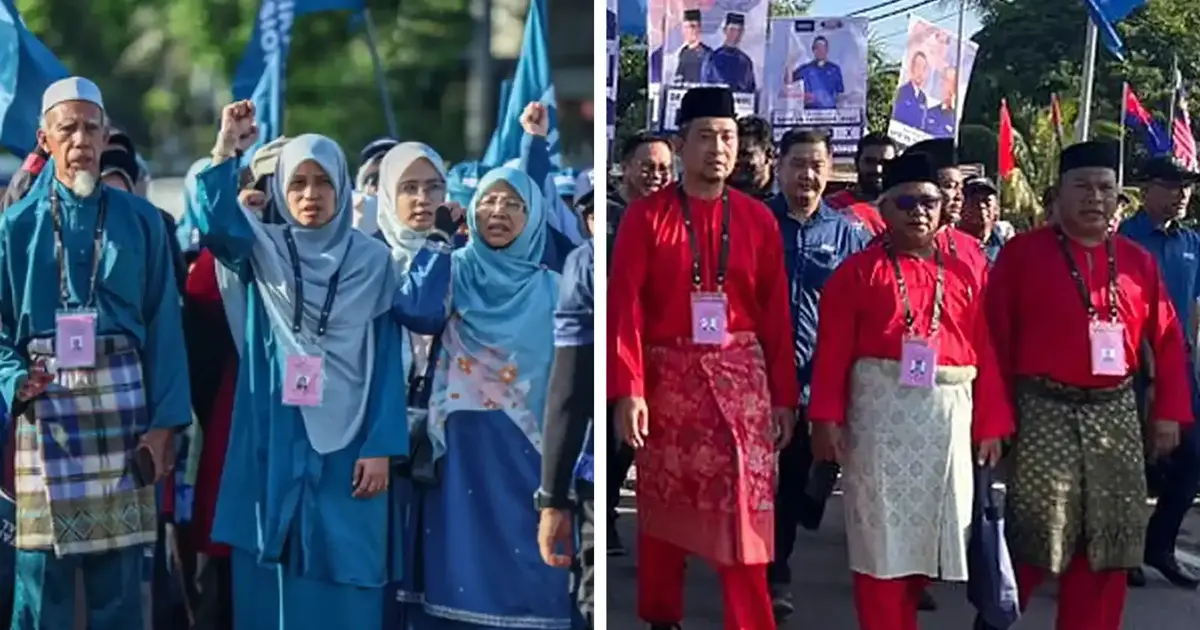
The credibility of Perikatan Nasional faces considerable strain as its two largest components, PAS and Bersatu, pursue increasingly divergent campaign strategies heading into the Johor state election. Political observers warn that this fracturing within the coalition risks damaging the bloc's appeal among voters who have grown accustomed to viewing it as a coherent political force capable of delivering unified governance.
The fragmentation becomes particularly consequential in Johor, a state historically regarded as a bellwether for national political sentiment. Analysts emphasize that voters in the state have demonstrated sophisticated capacity to penalize coalitions perceived as internally divided or lacking clear strategic direction. When political coalitions project weakness or lack of consensus on fundamental policy matters, electorate responses typically manifest through reduced turnout or strategic vote-switching to opposition camps perceived as more stable and organized.
PAS and Bersatu have operated with distinct messaging frameworks and campaign priorities that increasingly diverge from established coalition messaging. This tactical separation signals to observers that internal cohesion within Perikatan Nasional may be more fragile than the coalition's public statements suggest. The disconnect between party-level campaigns and coalition-level objectives creates confusion among voters attempting to evaluate the coherence and reliability of the political choice before them.
Historical precedent in Malaysian politics demonstrates that coalition fragmentation during election campaigns substantially diminishes the bloc's competitive advantage. When voters cannot discern unified direction from a coalition's component parties, they often default to supporting rival blocs perceived as organizationally tighter and more ideologically aligned. This dynamic has proven particularly damaging to coalitions that fail to present synchronized messaging about governance priorities and policy direction.
The Johor context amplifies these concerns because the state's electorate possesses considerable swing-voter capacity. These persuadable voters typically assess coalition stability as a crucial factor in electoral decision-making. If Perikatan Nasional's internal divisions become too visible during the campaign period, swing voters may view the coalition as insufficiently unified to effectively administer state governance, potentially shifting their support toward rival coalitions positioned as more cohesive political units.
PAS and Bersatu's separate campaign trajectories also risk creating administrative coordination problems should Perikatan Nasional win the election. Voters may reasonably question whether a government composed of visibly divided component parties can effectively implement coherent policy frameworks or manage resource allocation fairly across constituencies. This perception of potential governance dysfunction can substantially depress electoral support among moderate swing voters prioritizing administrative competence and stable government.
The timing of internal coalition tensions adds strategic disadvantage. Election campaigns require sustained message discipline and coordinated resource deployment across campaign machinery. When party leaderships pursue divergent priorities, campaign infrastructure experiences reduced efficiency as volunteers and campaign workers receive mixed directional signals about resource allocation and messaging emphasis. This operational friction directly translates into reduced campaign effectiveness relative to rival coalitions maintaining tighter organizational discipline.
Analysts note that Bersatu's position within the coalition has become increasingly complicated by broader national political dynamics. The party's coalition partnerships have shifted multiple times in recent years, creating voter uncertainty about its strategic commitments. PAS, conversely, operates from a longer-established organizational base with clearer ideological identity. These asymmetries mean that unified messaging becomes substantially more challenging to achieve and maintain throughout an election campaign period.
Regional political dynamics further compound the coalition's difficulties. Neighbouring states' political developments influence voter perceptions about coalition competence and internal stability. Should other states governed by Perikatan Nasional experience visible internal tensions between PAS and Bersatu, these problems cascade into voter consciousness during the Johor campaign. Voters increasingly assess political parties through multi-level governance performance, extending beyond single-state considerations into broader coalition performance across the federation.
The financial and organizational implications of campaign division cannot be overlooked. When coalition components pursue separate campaign activities, aggregate spending increases while efficiency diminishes. Voter exposure to mixed messaging requires higher frequency of communication to achieve equivalent persuasion compared to unified campaigns with consistent messaging. This cost disadvantage proves particularly consequential in states like Johor where media markets are competitive and advertising costs substantial.
Voter fatigue represents another significant consequence of divided coalition campaigns. When multiple messages emanate simultaneously from ostensibly aligned parties, voters experience confusion and decreased motivation to engage with campaign messaging. This psychological disengagement particularly affects swing voters whose electoral participation often remains contingent on perceiving clear, comprehensible choices between unified political alternatives. Campaign confusion amplifies abstention rates among persuadable voter segments.
The trajectory of Perikatan Nasional's Johor campaign will significantly influence the coalition's national standing heading into subsequent electoral contests. A campaign marked by visible internal division provides opposition coalitions with substantial ammunition for challenging the bloc's credentials as a unified governing force. Conversely, should Perikatan Nasional successfully impose campaign discipline and present unified messaging despite internal tensions, the coalition might successfully rebuild voter confidence. The coming weeks will prove crucial in determining whether these internal divisions become visible campaign liabilities or remain successfully compartmentalized within party structures.

