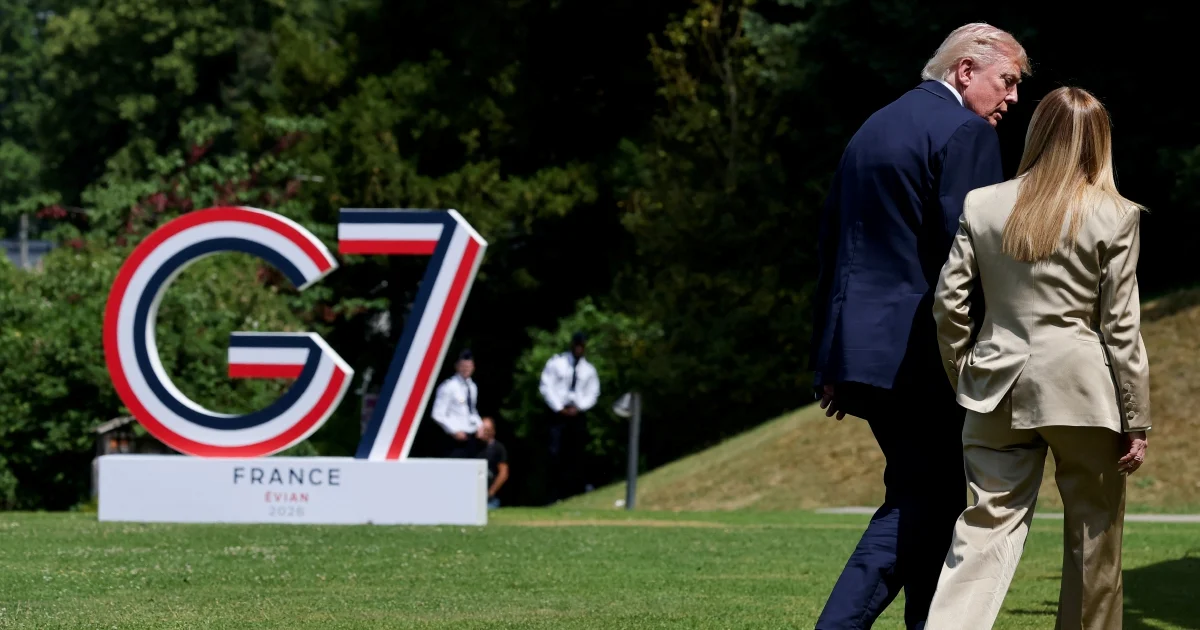
Relations between Italy and the United States have deteriorated sharply following a diplomatic incident on Friday, with Rome expressing deep displeasure at remarks attributed to US President Donald Trump that appeared to diminish Prime Minister Giorgia Meloni's standing. The controversy centres on Trump's reported characterisation of Meloni as having sought a photograph opportunity with him, a comment that Italian officials have interpreted as belittling and disrespectful to their nation's leader.
The fallout from Trump's words proved immediate and consequential. Italy's foreign minister responded by withdrawing from an already-scheduled trip to the United States, a highly visible form of protest that signals Rome's serious objection to the American president's conduct. Such cancellations, when made by senior government figures, traditionally convey more than mere irritation; they represent a deliberate rupture in bilateral engagement and carry symbolic weight far beyond the missed meetings themselves. The decision to publicly withdraw underscores how the Italian government views the incident not as a minor verbal gaffe but as a substantial breach of diplomatic protocol and respect.
For context, the relationship between Italy and the United States has historically formed a cornerstone of European-American ties, rooted in NATO membership, shared security interests, and cultural connections. Meloni, who leads the right-wing Brothers of Italy party, has positioned herself as a strong ally of Washington, particularly within the broader European framework. Her government has generally maintained closer coordination with the Trump administration compared to other European capitals. This makes the current friction particularly noteworthy, as it disrupts what has otherwise been a relatively aligned bilateral relationship during Trump's second term.
The incident reveals underlying tensions within Western political circles regarding how leaders should treat one another and what constitutes appropriate diplomatic behaviour. Trump's reported comments, whether intended as humorous or not, struck many Italian observers as unpresidential and beneath the dignity expected in exchanges between allied nations' top officials. The framing of a bilateral photo opportunity as something Meloni "begged" for carries a condescending undertone that Italian officials felt compelled to address. In Italian political culture, where regional pride and national dignity carry considerable weight, such slights do not pass unnoticed or unmarked.
The broader ramifications extend beyond Italian-American relations to encompass how Trump's second administration approaches diplomacy with traditional European allies. Europe has watched closely as Trump has signalled intentions to reshape transatlantic relationships, including questioning NATO contributions and suggesting reduced American commitment to European security matters. Individual incidents such as this one can accumulate, potentially eroding the goodwill that any administration needs to navigate complex geopolitical challenges. For Italy specifically, the country walks a delicate line between European integration under the European Union framework and maintaining strong ties with Washington.
Meloni's government faces domestic political considerations as well. Her coalition partners and opposition members have seized on the Trump comments as evidence of Italian vulnerability or mishandling of the relationship with Washington. Domestically, appearing weak in international dealings carries political costs, particularly for a conservative nationalist government that campaigns partly on restoring Italian strength and prestige. The foreign minister's decision to cancel the US visit therefore carries domestic political benefit, demonstrating to Italian voters that their government will not tolerate disrespect from any quarter, including the United States.
The timing of this dispute carries additional significance given ongoing developments across multiple policy areas where Italy and the United States must cooperate. Ukraine, trade negotiations, NATO burden-sharing, and Mediterranean security all involve Italian interests and American positions. Diplomatic friction, even if not escalating to formal sanctions or trade disputes, can impede smooth collaboration on these fronts. Both governments have incentive to contain the damage, yet pride and domestic political considerations can complicate quick reconciliation.
For Malaysia and other Southeast Asian nations observing from afar, the incident offers instructive lessons about navigating relationships with powerful nations that operate without consistent deference to traditional diplomatic norms. A leader's words and tone carry material consequences for bilateral relations, and smaller or ally nations must decide when to protest and when to absorb perceived slights. Italy's response suggests a threshold beyond which even committed allies will formally object, providing a useful reference point for other governments calibrating their own responses to similar situations.
The row also underscores the unpredictability that has characterised Trump's approach to international engagement across both his administrations. European leaders, long accustomed to more measured American presidential conduct, have repeatedly found themselves responding to unexpected remarks or policy announcements. For allies seeking stable partnerships with Washington, this unpredictability presents ongoing challenges in long-term planning and commitment.
Moving forward, both governments will likely seek ways to de-escalate without either side appearing to capitulate. Italian officials may pursue quiet back-channel discussions, while the Trump administration might offer clarifications or contextual reframing of the original comments. However, the damage to goodwill has been done, and Italian political leaders must respond in ways that satisfy domestic audiences while avoiding further deterioration. The foreign minister's cancelled visit serves as a warning flag that respect for allied leaders remains a baseline expectation, even in an era of increasingly transactional diplomacy.

%22%2F%3E%3C%2Fpattern%3E%3C%2Fdefs%3E%3Crect%20width%3D%22100%25%22%20height%3D%22100%25%22%20fill%3D%22url(%23ph29wsrg)%22%2F%3E%3Crect%20width%3D%22100%25%22%20height%3D%22100%25%22%20fill%3D%22url(%23ph29wsrp)%22%2F%3E%3Ctext%20x%3D%2250%25%22%20y%3D%2250%25%22%20text-anchor%3D%22middle%22%20dominant-baseline%3D%22central%22%20fill%3D%22rgba(255%2C255%2C255%2C0.95)%22%20font-family%3D%22Georgia%2C%20'Times%20New%20Roman'%2C%20serif%22%20font-weight%3D%22700%22%20font-size%3D%22272%22%20letter-spacing%3D%22-0.02em%22%3EAnwar%3C%2Ftext%3E%3C%2Fsvg%3E)