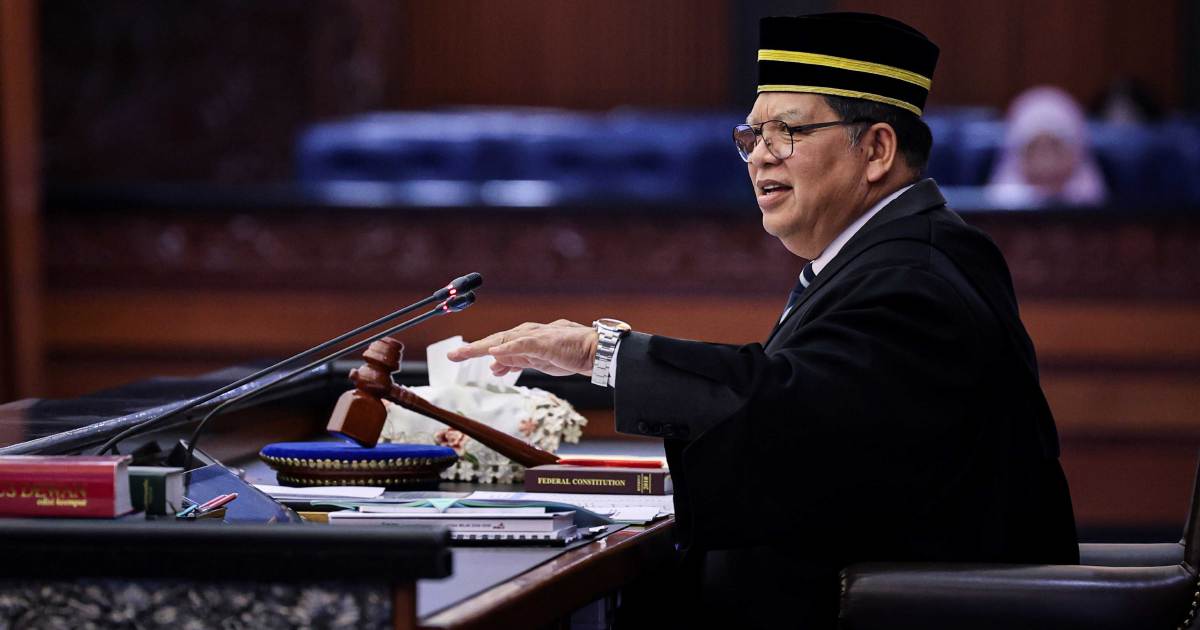
The chief custodian of parliamentary procedure in Malaysia has moved to reinforce disciplinary standards in the lower house, sending a clear message to elected representatives about the expectations governing their attendance. Tan Sri Johari Abdul, in his capacity as Dewan Rakyat Speaker, underscored the importance of regular participation in parliamentary sittings, emphasising that legislators should not absent themselves from proceedings without justifiable cause.
Parliamentary attendance has long been a contentious issue in Malaysian politics, with sporadic reports of members failing to show up for crucial debates and votes. This recurring pattern has drawn criticism from various quarters, including civil society organisations and fellow lawmakers who view persistent absenteeism as a dereliction of duty to constituents. The Speaker's intervention represents an attempt to establish clearer norms and reinforce expectations that have, historically, lacked consistent enforcement mechanisms.
The Speaker's authority to maintain order and discipline within the chamber extends to monitoring attendance patterns and ensuring compliance with parliamentary conventions. While formal penalties for absence exist, their application has sometimes appeared inconsistent, leading to perceptions that some members face greater scrutiny than others. By issuing this reminder, Tan Sri Johari Abdul signals an intention to tighten accountability measures and ensure that the legislative process is not undermined by inadequate representation.
Various legitimate reasons for absence have been recognised under parliamentary standing orders, including serious illness, urgent family matters, and official government duties. However, distinguishing between acceptable and unacceptable grounds for missing sittings has occasionally sparked debate. The Speaker's reminder implicitly acknowledges that while legitimate circumstances do arise, they should remain exceptions rather than becoming habitual patterns of non-participation.
The issue carries particular significance in Malaysia's current political environment, where coalition politics and shifting parliamentary mathematics have made each vote potentially consequential. Slim working majorities in recent parliamentary sessions have heightened awareness of attendance rates, as absences can directly impact the outcome of legislative business. This context makes the Speaker's intervention timely, as consistent attendance becomes strategically important for both government and opposition blocs seeking to advance their respective agendas.
Consituency representation forms the bedrock of democratic legitimacy, and voters reasonably expect their elected representatives to be present in parliament during sittings. Chronic absenteeism can undermine public confidence in elected institutions and suggest to constituents that their representatives do not take their parliamentary responsibilities seriously. The Speaker's reminder reinforces the principle that membership in parliament carries fundamental obligations that cannot be casually set aside.
Enforcement of attendance standards requires cooperation from all stakeholders within parliament, including party whips who are traditionally responsible for ensuring their members' participation. The Speaker's statement may serve as implicit pressure on party leadership to exert greater discipline over their members' attendance records. This collaborative approach to maintaining parliamentary standards has proven more effective than unilateral action by the Speaker alone.
Previous speakers have grappled with similar challenges, attempting to balance respect for members' legitimate scheduling conflicts against the need for consistent participation. The establishment of clear expectations, as Tan Sri Johari Abdul has done, provides a reference point for future decisions about whether particular absences warrant investigation or sanction. This clarity can help reduce disputes over whether a particular member's absence was justified or represented a breach of parliamentary duty.
The practical implications of the Speaker's reminder extend beyond individual accountability to affect the overall functioning of parliament. Sessions with thin attendance reduce the quality of debate and can diminish public confidence in legislative proceedings. Parliamentary committees, debate sessions, and votes all lose legitimacy when members are conspicuously absent, creating perception problems that damage the institution's standing with the public.
Looking forward, this reminder establishes a benchmark for parliamentary conduct that will likely influence discussions about any future amendments to standing orders or disciplinary procedures. Should attendance problems persist despite the Speaker's intervention, legislators may eventually face pressure to implement more formal and stringent consequences for unjustified absences. The Speaker's approach thus represents an intermediate step, attempting persuasion and clarification before escalating to punitive measures.
For Malaysian constituents and observers of parliamentary affairs, the Speaker's statement signals renewed attention to institutional standards and procedural integrity. It demonstrates that parliament's leadership recognises challenges to legislative discipline and is prepared to address them directly. Whether the reminder proves sufficient to significantly improve attendance rates or whether additional measures become necessary will become apparent in subsequent parliamentary sessions.